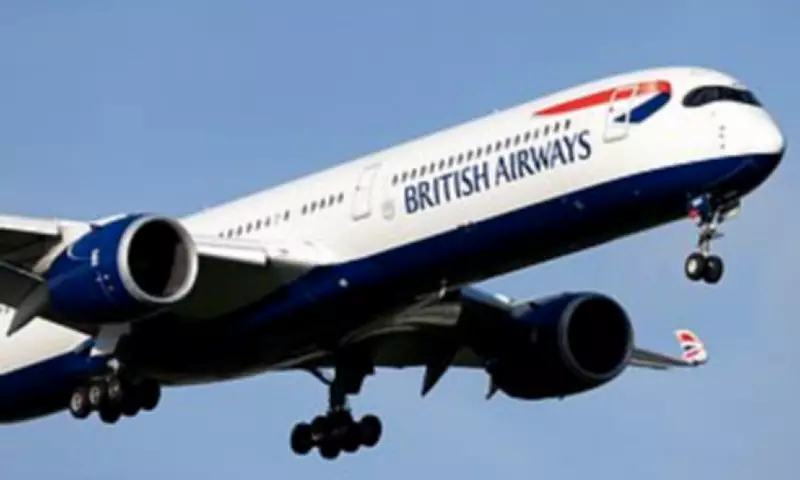
A British Airways flight bound for London declared an emergency shortly after departing from Glasgow Airport today, forcing an unexpected return to its origin. Flight BA1481, scheduled to travel from Glasgow to London Heathrow Airport, took off at 2.10pm, approximately fifteen minutes behind its planned departure time.
Emergency Procedure Activated Mid-Flight
The pilot reportedly initiated a critical aviation emergency procedure known as squawking 7700 shortly after takeoff. Data from the widely used flight tracking application FlightRadar24 indicates the aircraft began circling the skies above South Lanarkshire following the declaration. Shortly afterwards, the flight turned back and landed safely at Glasgow Airport.
Reason for Emergency Squawk Remains Unclear
The specific reason for issuing the squawk 7700 code is still unknown. In aviation, this type of warning is a universal signal for a general emergency. It can relate to various critical situations onboard an aircraft, including potential engine trouble, serious medical issues among passengers or crew, or even an onboard fire.

A statement released by British Airways confirmed the flight landed safely following reports of a technical issue with the aircraft. The airline added: 'We’ve apologised to our customers for the delay. Our teams are working to get their journeys back on track.'
Flight Becomes Most Tracked Globally
According to reports from Glasgow Live, the incident propelled Flight BA1481 to become the most tracked flight globally on FlightRadar24 today, highlighting significant public and aviation community interest in the unfolding situation.
How Squawk Codes Function in Aviation
Air traffic controllers utilise squawk codes, which are specific transponder codes, to swiftly identify and manage emergency scenarios. When an aircraft experiences an emergency event, its squawk code is typically switched to 7700. This new number then appears prominently on air traffic controllers' screens, which track the flight alongside vital information such as the aircraft's current speed and altitude. The code serves as an immediate alert to Air Traffic Control, enabling them to prioritise and handle the incident efficiently.
The flight had taken off from Glasgow Airport but was compelled to return, underscoring the procedural response to the declared emergency.
Recent Similar Incident Involving easyJet
This event follows another recent aviation incident where an easyJet flight was also forced to land after a squawk code was issued. Flight EZY3211 departed from Edinburgh Airport in Scotland on February 3 just after 11.10am, with its final destination set to be Fuerteventura in the Canary Islands, where landing was planned for around 4pm.
However, two hours into the journey, a 7700 squawk code was issued, leading to an unscheduled landing in Portugal. This pattern highlights the ongoing use and critical importance of emergency squawk procedures in ensuring passenger and crew safety during unforeseen in-flight issues.