
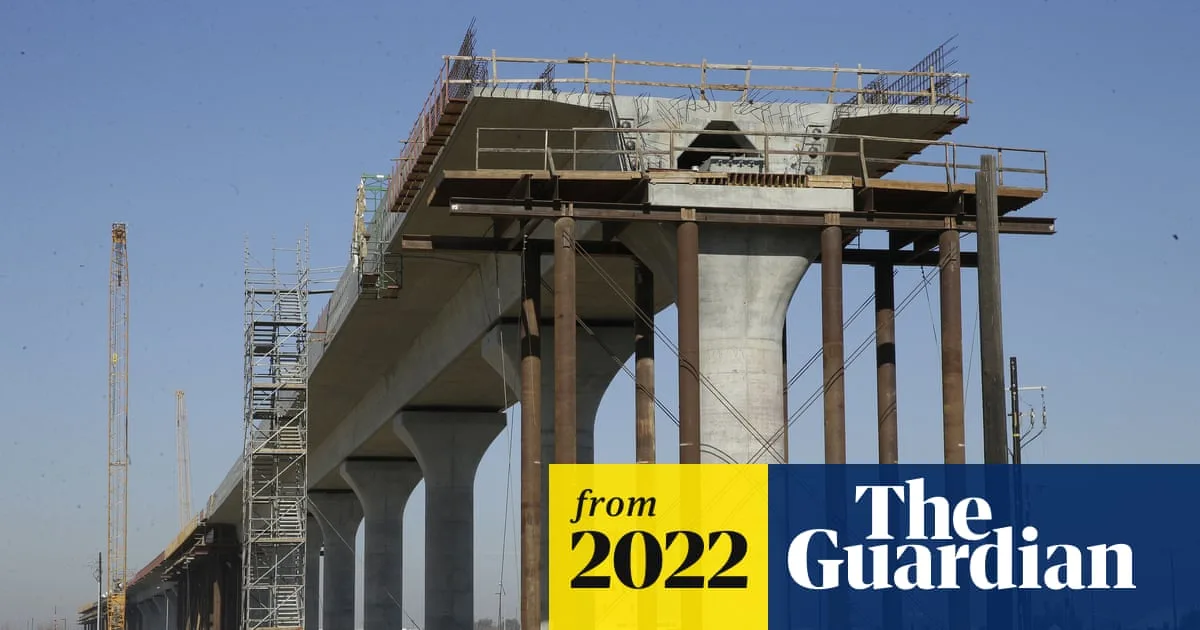
In 2008, California voters approved a dream: a high-speed rail line connecting Los Angeles and San Francisco in under three hours, eventually extending across the desert to Las Vegas and up the west coast. Fourteen years and roughly $5bn later, not a single mile of track has been laid, and the ambitious project faces an uncertain future.
Governor Gavin Newsom has abandoned the original 500-mile route due to skyrocketing costs, instead focusing on a 172-mile segment in the Central Valley from Merced to Bakersfield. Even that modest stretch may not begin passenger service until 2030, despite a $97.5bn state budget surplus and billions in federal funds from the Infrastructure Investment and Jobs Act.
Proponents argue the Central Valley segment can serve as a proof of concept, but critics call it a 'train to nowhere'. Quentin Kopp, a former legislator who championed the project for 20 years, described it as 'dreamland' and a 'stupid waste of money', noting it largely duplicates an existing Amtrak route and will never cover its costs.
The high-speed rail authority insists the timeline is realistic and sees 'robust demand', but acknowledges the line may not break even. The Las Vegas extension—once a key part of the vision—remains a distant prospect, with no concrete plans or funding in place.




