
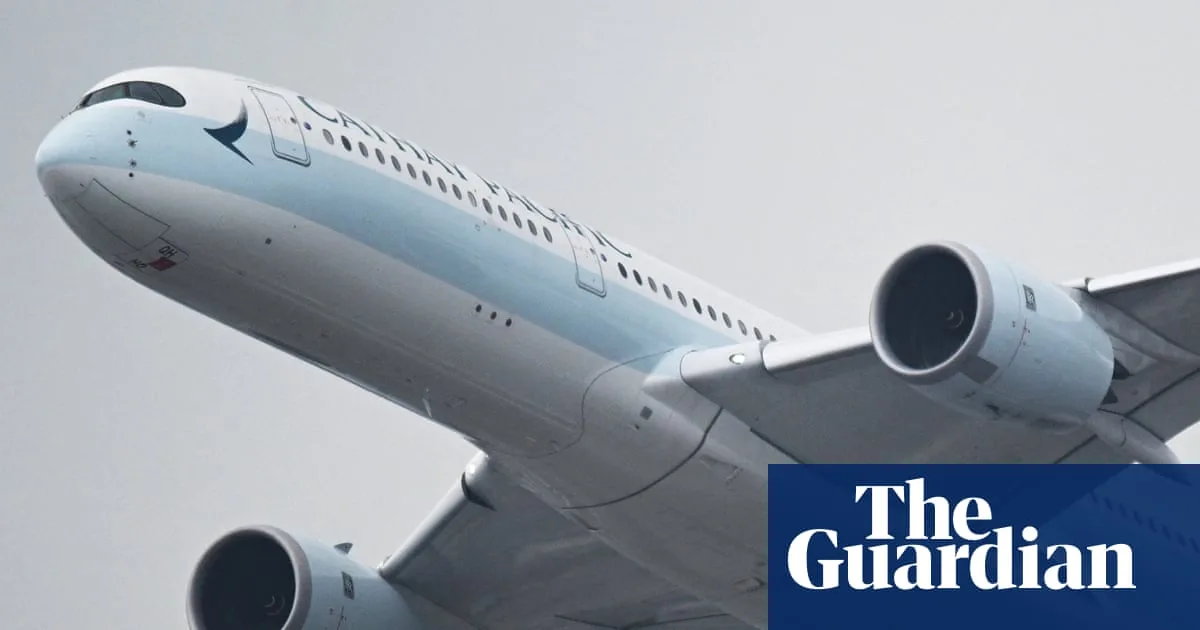
Cathay Pacific, AirAsia and Thai Airways have joined a growing number of airlines increasing air fares as the conflict in the Middle East drives up oil prices and disrupts supply. The US and Israel's war on Iran has sent oil prices soaring while restricting access to refineries, with experts warning that fares could remain elevated for months even if the conflict ends.
Cathay Pacific's chief executive, Ronald Lam, told investors on Wednesday that the airline planned to increase fuel surcharges after hedging none of the refiner's margin and only 30% of its fuel costs. “Since jet fuel has almost doubled [in price], I think we’ll be making an announcement about increasing fuel surcharges for both travel and cargo in due course,” he said.
AirAsia announced it would temporarily increase fares and fuel surcharges on Thursday, promising to re-adjust as market conditions changed. Thai Airways authorities expect air fares to increase by 10% to 15%. Qantas and Air New Zealand lifted prices earlier this week, with Air New Zealand cancelling thousands of flights from 16 March to 3 May, affecting about 44,000 passengers.
Flight cancellations and disruptions through the Middle East have driven up prices in the short term by pushing international travellers onto alternative routes, generating surging demand. Cathay Pacific has attracted attention for selling A$39,577 business class return trips from Sydney to London in mid-April, with economy class fares for the same route costing more than A$3,000.
Long routes with few carriers are likely to see the biggest price increases, especially those formerly serviced by airlines such as Emirates, Etihad and Qatar, according to Ellis Taylor, analyst at Cirium. Australian connections to Europe, North America and north Asia would probably see prices rise higher and faster. However, domestic flights and those to nearby south-east Asian destinations such as Bali may not see drastic increases due to lower fuel usage and more carriers.
Customers hoping to fly in coming months should book immediately to avoid widespread price hikes of up to 30%, according to transport professor Rico Merkert of the University of Sydney. Even if hostilities ended immediately, it would take about two months for airlines to lower forward booking prices. For travellers planning to fly in September or later, it may be better to wait in case the war ends soon.




