

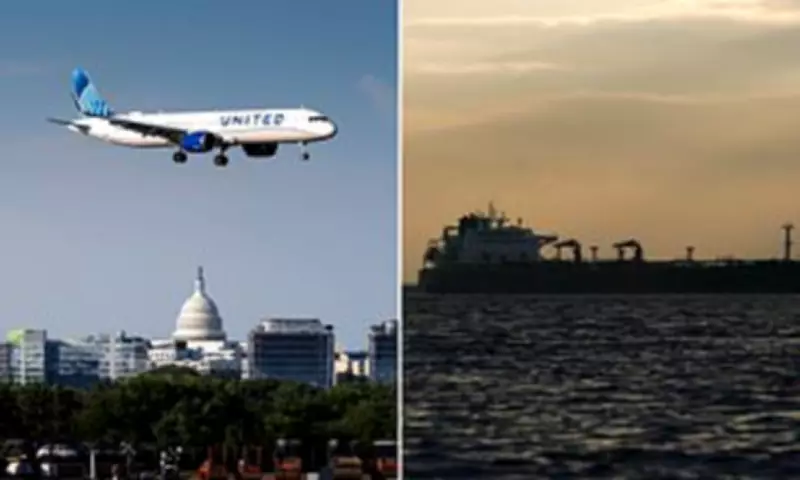
Airlines Implement Fare Hikes as Jet Fuel Costs Skyrocket
Travellers planning Easter or summer getaways must prepare for substantially higher air ticket prices, with major global airlines announcing widespread fare increases this week. The surge is directly linked to soaring aviation fuel costs, which have nearly doubled in recent weeks due to escalating Middle East tensions.
Fuel Supply Crisis Drives Price Spikes
The conflict between the US, Israel, and Iran, now entering its third week, has triggered a dramatic rise in crude oil prices, increasing by approximately one-third. Jet fuel has been hit even harder, with costs escalating rapidly after the effective closure of the Strait of Hormuz. This critical transit route between the Persian Gulf and the Gulf of Oman normally supplies around half of the jet fuel used by European-based airlines.
Before the initial strikes on Iran on February 28th, jet fuel bound for north-west Europe was priced at about $830 per tonne. In the subsequent weeks, this figure has climbed to over $1,500 per tonne, representing an almost 100% increase that airlines are now passing directly to consumers through higher fares.

Immediate Impact on Traveller Wallets
Dr Sen, founder of Market Intelligence at Energy Aspects, warned the Commons Treasury this week that these dramatic jet fuel price rises would have an almost immediate effect on what passengers pay for their seats. "Everyone is talking about crude oil but there are prices for jet fuel that have gone above $300 [a barrel] - it is crazy what is going on," she stated.
"So much production is focused in the Middle East… it is not going to be possible to replace that through other sources. I am expecting quite significant rises in air fares. Some airlines hedge against price rises which will help a bit, but we should absolutely be expecting higher air fares for at least the next couple of months."
Global Airlines Respond with Fare Adjustments
Major carriers worldwide have begun implementing fare increases to offset rising fuel costs. Air France announced economy class fares for short-haul destinations would rise by 50 euros (£43) to reflect the rocketing jet fuel prices. Scandinavian airline SAS and Australian carrier Qantas were among the first to announce price adjustments, particularly affecting routes transiting through the Middle East.
United Airlines CEO Scott Kirby indicated last week that profits would take a "meaningful" hit due to the Middle East conflict, warning that fares would likely rise quickly if oil prices continued their upward trajectory. Air New Zealand has implemented increases of NZ$20 (£8.80) on one-way short-haul international services and NZ$90 (£39.00) on one-way long-haul flights.

Comprehensive List of Airlines Implementing Surcharges
- Qantas: Increased prices on long-haul routes, especially those transiting through the Middle East.
- United Airlines: Preparing for potential fare increases if oil prices continue rising.
- Air France and KLM: Both carriers have raised fares, with Air France implementing a 50 euro (£43) increase on economy return flights.
- Norwegian: Confirmed price adjustments to factor in elevated fuel costs.
- Norse Atlantic Airways: Will reflect increased fuel prices in current ticket prices for destinations including Los Angeles, Cape Town, and Phuket.
- SAS Scandinavian Airlines: Adjusted flight prices to cover rising aviation fuel costs.
- Air Transat: Increased fuel surcharges on European routes and raised fares on peak travel dates.
- Air Canada: Continuously adjusting fares to reflect higher fuel costs.
- Air India: Introduced surcharges on both domestic and international routes.
- AirAsia: Announced temporary ticket price increases due to fuel surcharges.
- Hong Kong Airlines: Implementing surcharges of up to 35% on air fares.
- Cathay Pacific Airways: Added $72.90 (£54) on flights between Hong Kong and Europe/North America.
- Thai Airways: Implementing fuel surcharge increases of up to 15% per ticket.
- Vietnam Airlines: Operating costs have risen 70% due to fuel price increases, prompting requests for government assistance.
Hedging Strategies Provide Limited Protection
While some airlines have implemented hedging strategies to mitigate fuel price volatility, these offer only temporary relief. IAG, the parent company of British Airways, stated that its successful hedging strategy meant it had no immediate plans for price rises. However, most carriers lack such comprehensive protection against market fluctuations.
Major European low-cost carriers including Wizz Air, Ryanair, easyJet, and Jet2 have yet to comment on whether they will implement fare increases. Industry analysts suggest that as fuel costs continue to climb, virtually all airlines will eventually need to adjust their pricing structures to maintain profitability.
Travellers with existing bookings will not face additional charges, but those planning new trips should anticipate significantly higher costs, particularly for routes dependent on Middle Eastern fuel supplies. The situation remains fluid, with further fare adjustments likely as the geopolitical situation evolves and fuel markets continue to react.





