

Airlines Brace for Groundings and Furloughs Amid Deepening Jet Fuel Crisis
The global aviation industry is facing an unprecedented crisis as the conflict in Iran has sent jet fuel prices soaring, forcing airlines to consider grounding planes and furloughing cabin crew. Since US-Israeli strikes began on February 28, the war has doubled kerosene costs, upended critical routes between Asia and Europe, and tightened fuel supplies, creating a perfect storm for carriers worldwide.
Carriers Take Drastic Measures to Mitigate Soaring Costs
Major airlines are implementing emergency measures to cope with the financial strain. Qantas Airways has delayed a planned share buyback, citing volatile fuel prices, while warning of spiralling operational costs. Lufthansa CEO Carsten Spohr has indicated that grounding aircraft "may be unavoidable" as kerosene availability becomes critical at key Asian airports. Similarly, Virgin Atlantic has flagged a looming supply crunch, with CEO Corneel Koster noting the airline has only about six weeks of secure jet fuel supplies before uncertainty intensifies.
In South Korea, low-cost carrier T'way Air plans to furlough some cabin crew without pay in May and June, marking one of the first staffing reductions directly linked to the crisis. Fuel, typically airlines' second-largest cost after labour, now accounts for approximately 27% of operating expenses, with prices more than doubling since the conflict began.

EU Border Chaos Compounds Travel Disruptions
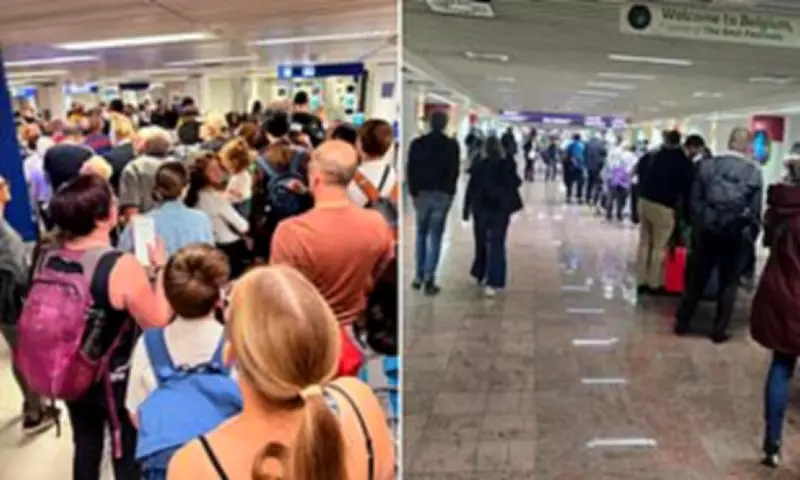
Compounding the fuel crisis, the introduction of new EU border rules - the Entry/Exit System (EES) - is causing significant delays at airports across Europe. The system requires travellers from third-party countries, including the UK, to provide fingerprints and photos upon entering the Schengen area, leading to long queues and missed flights.
Passengers have faced chaotic scenes at airports including Milan Linate, Geneva, Lisbon, Malta, Brussels, and Amsterdam, with some travellers stuck at passport control after their flights have departed. Rory Boland, editor of Which? Travel, warns that delays could be "significantly worse over the summer" and advises concerned travellers to book package holidays that offer refunds if flights are cancelled.
Industry Calls for Emergency Intervention
European airlines have urgently called on Brussels to implement emergency measures to cushion the impact of the crisis. Proposed interventions include EU-level kerosene purchasing, a temporary suspension of the bloc's carbon market for aviation, and the scrapping of certain aviation taxes. The Airports Council International Europe (ACI) has warned that Europe could face a systemic jet fuel shortage within three weeks if action is not taken.
Analysts note that the turmoil may spur industry consolidation, with stronger airlines gaining market share from weaker rivals. United Airlines CEO Scott Kirby reportedly discussed potential merger opportunities with American Airlines just days before the strikes on Iran, highlighting the strategic shifts underway.
Financial Exposure and Strategic Adjustments
The financial impact varies across carriers based on their hedging strategies. Several airlines, including SAS, are completely unhedged, leaving them fully exposed to soaring fuel costs. Delta Air Lines anticipates its jet fuel bill this quarter will be approximately $2 billion higher than last year. While Qantas has hedged much of its crude exposure, it remains vulnerable to the spike in jet fuel spreads.
To offset rising costs, airlines are adjusting their operations. Qantas is raising fares and shifting capacity toward stronger routes like Europe, while trimming domestic capacity by about 5% in the June quarter. Lufthansa is relying on record revenues from Asian routes to help mitigate kerosene costs but has prepared contingency plans that could involve cutting capacity by 2.5% to 5% and grounding 20 to 40 older, less fuel-efficient aircraft.

Long-Term Supply Challenges Persist
Despite a two-week ceasefire, the Strait of Hormuz remains closed, removing roughly one-fifth of global oil and liquefied natural gas supplies from the market. Refineries damaged during the conflict will require time to repair, prolonging supply constraints. UBS analyst Jarrod Castle notes that December jet kerosene futures prices are still up more than 50% year-on-year, indicating sustained pressure.
Flight capacity, particularly from the Middle East and into Europe, has significantly shrunk and is not expected to recover to pre-conflict levels in the near future. The convergence of fuel shortages, geopolitical instability, and operational disruptions presents one of the most challenging environments for aviation since the pandemic, with summer travel season poised to test the industry's resilience.





