
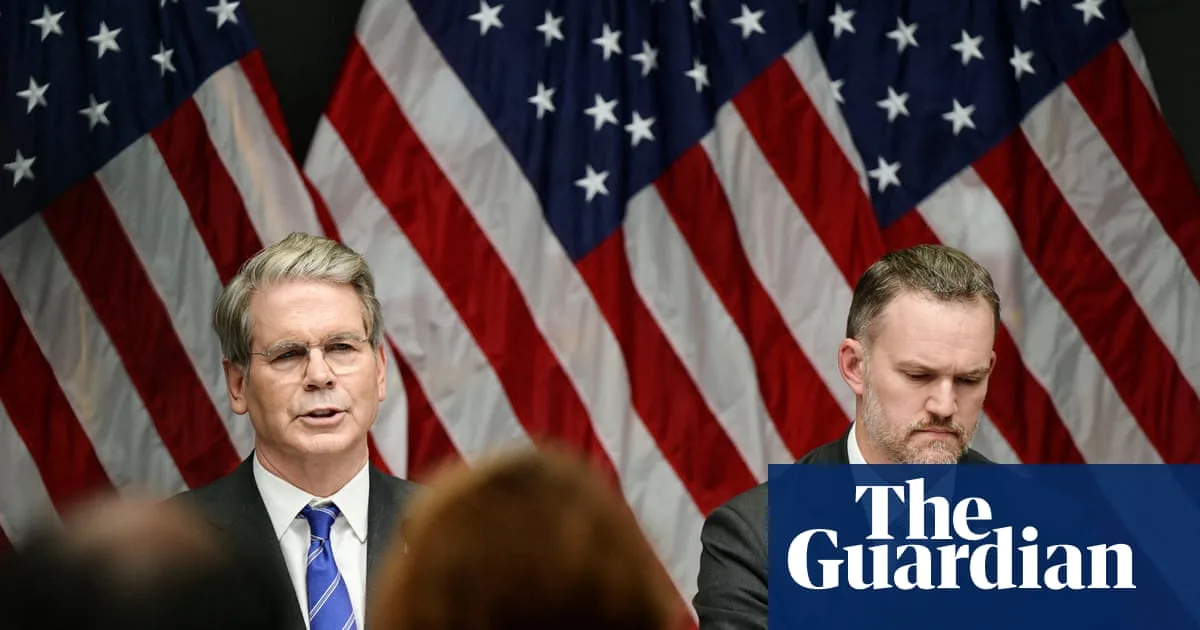
US and Chinese negotiators have agreed in principle to extend the deadline for escalating tariffs, following two days of talks in Stockholm that failed to resolve the trade dispute. However, US representatives said any extension would require approval from President Donald Trump.
Beijing's top trade negotiator, Li Chenggang, confirmed the extension of the truce struck in mid-May, which was due to expire on 12 August, to allow for further talks. He did not specify when or for how long the pause would be extended.
US Trade Representative Jamieson Greer stressed that President Trump would have the final say on any extension. US Treasury Secretary Scott Bessent, who joined the talks, said he warned Chinese officials that continued purchases of Russian oil could lead to high US tariffs under secondary sanctions legislation.
China has retaliated against Trump's threatened tariffs with its own duties on US goods and restrictions on rare earth metals and components used by American defence and tech firms. Meanwhile, Trump is set to impose additional tariffs on Mexico and Canada from Friday, and other countries including Vietnam and Cambodia are seeking extensions to avoid tariff hikes.
Pascal Lamy, former WTO director general, noted that many US trade agreements lack detail and require further negotiation, creating uncertainty. He described the recent US-EU deal as 'not half-baked, but maybe just two-thirds baked'. The IMF upgraded its global growth forecast to 3% after the scaling back of some tariff threats, but warned of risks from a potential rebound in tariff rates.




