UK and EU Scrutinise US Supreme Court Decision on Trump Tariffs
The UK government and the European Union are actively assessing the implications of a recent US Supreme Court ruling that overturned Donald Trump's global tariffs, with business groups responding cautiously to the announcement.
Government Responses and Trade Expectations
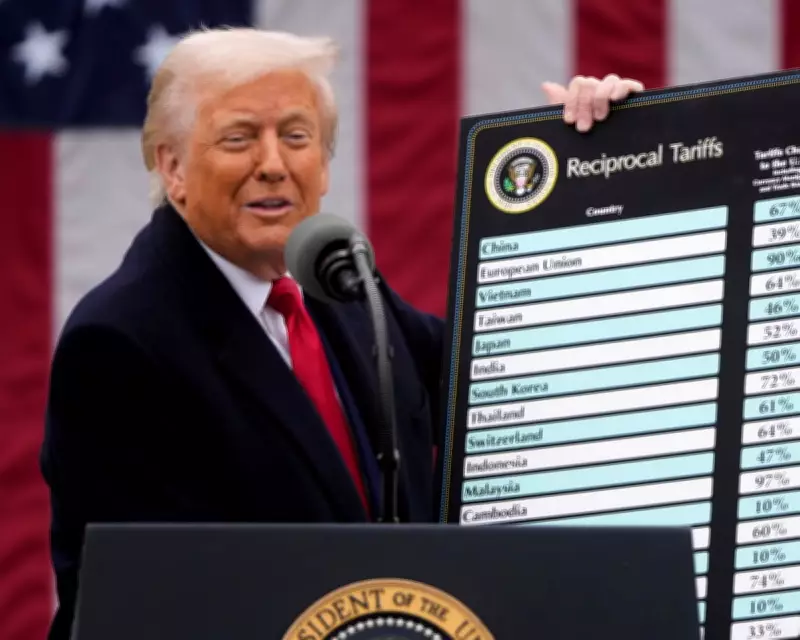
A spokesperson for Downing Street stated: "The UK government is working with the US to understand how the overturning of Donald Trump's tariffs by the Supreme Court will affect the UK but expects our privileged trading position with the US to continue." The UK had previously secured a tariff deal with the US, imposing a 10% rate on all imports from Britain, compared to a blanket 15% rate for the EU.
The EU, meanwhile, is analysing the ruling while continuing efforts to reduce tariffs on European exports. An EU spokesperson noted: "We remain in close contact with the US administration as we seek clarity on the steps they intend to take in response to this ruling. Businesses on both sides of the Atlantic depend on stability and predictability in the trading relationship. We therefore continue to advocate for low tariffs and to work towards reducing them." The EU had agreed to the 15% tariff rate with the US last July, but 50% tariffs on steel remain in effect.

Business Reactions and Market Impacts
Companies affected by the tariffs may be eligible for refunds from the US administration, though the process is expected to be complex. John Denton, secretary general of the International Chambers of Commerce, highlighted "fresh uncertainty" for businesses trading with the US, warning that refund claims could be administratively challenging due to US import procedures.
William Bain, head of trade policy at the British Chambers of Commerce, remarked that while the Supreme Court clarified executive power usage for tariffs, it did "little to clear the murky waters for business." He cautioned that Trump could potentially use the 1974 Trade Act to impose even higher tariffs, beyond the additional 10% levies already affecting the UK and Australia in many goods sectors.
An aerospace industry insider expressed relief at the ruling but noted concerns about geopolitical tensions, stating: "It's a relief that this has been declared, but I don't think it's that helpful for geopolitical tensions. We still have quite an unpredictable US administration, and I don't think taking this sort of public chastising is going to go well for some trade relationships."
Financial Market Reactions
Following the Supreme Court ruling, the UK's FTSE 100 index reached a new intraday high and closed 0.56% higher. Exporters saw gains, with Diageo, impacted by tariffs on Scottish whisky and Mexican tequila, jumping 3.9%, and Burberry rising 3.3%. European carmakers like Stellantis also benefited, with a 2% increase.
In the US, government bond prices fell, raising borrowing costs as investors anticipated reduced tariff income and potential refunds for companies. The dollar weakened slightly in response to these developments.
Ongoing Tariff Concerns and Future Outlook
It is understood that tariffs on products such as steel will not be affected and are likely to remain in place. Experts warn that the White House might shift to broader product-based tariffs, potentially affecting sectors like computer chips and agriculture with even more draconian measures. The ruling adds to the uncertainty for international trade, with businesses and governments closely monitoring the US administration's next steps.