Trump's 15% Global Tariff Sparks Chaos After Supreme Court Ruling
Donald Trump has announced the imposition of a 15% tariff rate on most exports to the United States, following a landmark US Supreme Court decision that declared his previous round of levies illegal. This move has plunged global trade into a state of confusion and uncertainty, as economies worldwide scramble to reassess their positions.
Supreme Court Ruling Overturns Previous Tariff Regime
The US Supreme Court ruled that much of Trump's tariff regime was illegal, infuriating the president and introducing fresh layers of complexity into an already volatile international trade landscape. Global markets came under significant pressure on Monday as investors struggled to interpret the implications of this decision.
The immediate consequence is that nearly every nation, including those that had negotiated preferential deals, will now face a uniform 15% tariff on most exports to the US effective from Tuesday. This blanket rate has left trading partners bewildered, with many questioning the value of concessions they made in earlier agreements.

Global Trade Deals Thrown Into Disarray
For months, officials from the United Kingdom, the European Union, South Korea, Indonesia, and beyond worked tirelessly to hammer out trade deals with the Trump administration. These agreements often involved reluctant concessions to secure lower tariff rates. Now, many of these countries find themselves in worse positions than if they had never struck deals at all.
"To be very frank, it's a real mess," said Itsunori Onodera, a senior figure in Japanese Prime Minister Sanae Takaichi's Liberal Democratic Party, during an interview with Fuji Television on Sunday.
The European Union has paused ratification of its trade deal with the US, demanding "full clarity" on a trade platform that has become increasingly opaque. Countries that secured agreements with Trump are no longer certain what those deals mean today, let alone in the future.
Winners and Losers in the New Tariff Landscape
Under the previous regime, tariff rates varied significantly between nations. Countries like China and India faced tariffs far above the global average, while Canada, Mexico, and most European exporters enjoyed rates well below it. The new 15% rate compresses this spread dramatically, creating unexpected winners and losers.
China, India, and Brazil have effectively received significant tariff cuts without making any compromises. Meanwhile, countries like the UK may now face higher tariffs despite having made substantial concessions in their negotiations.
Johannes Fritz, CEO of the St Gallen Endowment for Prosperity Through Trade, noted in a blog post: "The new 15% rate compresses this spread significantly, creating a more uniform but chaotic trading environment."
Negotiations Stalled as Uncertainty Grows
The Supreme Court ruling has forced many countries to reconsider their trade strategies. A delegation of Indian officials postponed their scheduled visit to Washington for trade talks this week, reflecting the growing uncertainty.
Arvind Subramanian, former chief economic adviser to India's government and now at the Peterson Institute for International Economics, commented: "I think these negotiations are going to be on hold for a while, until the US itself figures out what it can, and cannot, do. The administration's hand has been weakened, certainly."
However, Subramanian cautioned that Trump still possesses numerous levers to inflict economic pain on trading partners, suggesting that the removal of one tool doesn't prevent the use of others.
Trump's Response and Legal Maneuvering
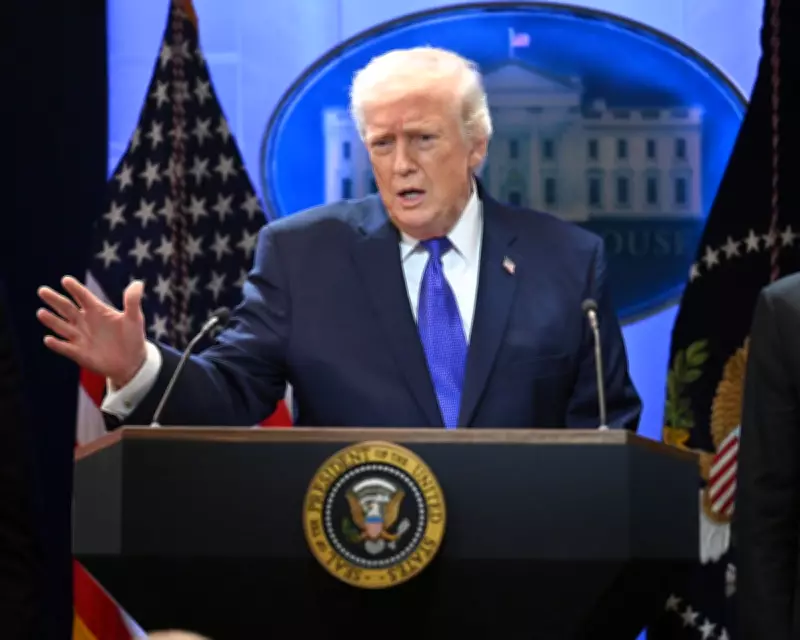
Trump, positioning himself as an economic strongman, has urged bewildered trading partners to maintain their side of deals while threatening to impose new tariffs in what he describes as a "much more powerful and obnoxious way" on those who fail to comply.
The Trump administration is currently relying on Section 122 of the Trade Act of 1974, a provision never before used in this manner, which allows tariffs of up to 15% for a maximum of 150 days. After this period expires in July, the White House has indicated plans to use Section 301 of the same law to launch investigations that could lead to additional tariffs.

Jamieson Greer, the US Trade Representative, emphasized during an appearance on ABC's This Week: "The policy hasn't changed." Yet the legal and practical landscape has shifted dramatically.
Economic Impact and Contradictory Outcomes
While the Trump administration claims that tariffs enable the US to tax the world, analysis by the New York Federal Reserve reveals that 90% of the economic burden has fallen on American companies and consumers. Official statistics from last week showed the US goods trade deficit widened to its highest level on record in December.
Paradoxically, some of Trump's prime targets appear to be navigating the volatility with surprising success. Chinese exports rose 6.1% last year according to official data, with strong growth in other markets offsetting a 19.5% drop in exports to the US. Indian exports to the world increased 2.2% between April and January, while exports to the US specifically rose 5.85%. Japanese exports jumped 16.8% in January, with increased trade to China countering a 5% decline in US exports.
As Trump insists that America is "WINNING" thanks to his tariff policies, a growing number of Americans are paying the price for his trade agenda. Meanwhile, many of the countries in his sights report they're managing reasonably well despite the turbulence.