US Supreme Court Overturns Trump Tariffs, Yet Global Trade Uncertainty Persists
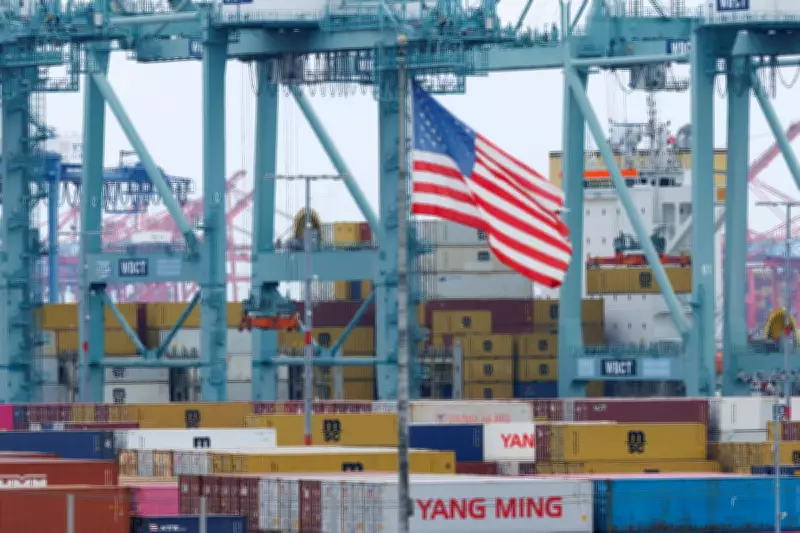
Shipping containers from China sit at the Port of Los Angeles in San Pedro, California, on 5 November 2025. The US Supreme Court has just declared Donald Trump's boldest tariffs illegal, but international businesses and governments remain uncertain about what comes next. The court ruled that the president cannot enact tariffs in peacetime using the International Emergency Economic Powers Act (IEEPA), prompting the White House to announce it will quickly replace the levies through other, potentially more cumbersome means.
Businesses Face Murky Waters Despite Legal Clarity
William Bain, head of trade policy at the British Chambers of Commerce, stated that while the decision "gives clarity on the president's executive powers to raise tariffs, it does little to clear the murky waters for business." The ruling applies only to the IEEPA and not to other trade policy tools available to Trump. Bain noted that different legislation has been used for other US tariffs, such as those on steel and aluminium, and the president retains options to maintain his current regime, including using the 1974 Trade Act to impose even higher tariffs than the additional 10% levies on the UK.
The decision also failed to clarify whether US importers will receive refunds for paid levies or whether foreign exports can share any rebate based on trading terms. This lack of detail adds to the confusion for companies navigating international trade.

International Reactions and Concerns
Olof Gill, a European Commission spokesman, said: "We take note of the ruling by the US Supreme Court and are analysing it carefully. We remain in close contact with the US administration as we seek clarity on the steps they intend to take in response to this ruling. Businesses on both sides of the Atlantic depend on stability and predictability in the trading relationship. We therefore continue to advocate for low tariffs and to work towards reducing them."
The Canadian Chamber of Commerce warned against viewing the ruling as "a reset of US trade policy." President Candace Laing cautioned that Canada should prepare for new, blunter mechanisms to reassert trade pressure, potentially with broader and more disruptive effects. Dominic LeBlanc, Canada's minister for international trade, emphasised that businesses still need support and promised continued collaboration with the US to foster growth.
In Germany, the industry group BDI called the ruling a "strong signal for the rules-based trading system," adding that it proves the separation of powers in the USA remains robust. For India, former trade official Ajay Srivastava noted that the decision means most Indian exports to the US will no longer face tariffs, but it also renders recent trade deals with countries like the UK, Japan, and the EU one-sided and potentially useless.
US Business Groups Celebrate but Urge Caution
US business groups welcomed the ruling, seeing it as an opportunity for the White House to adopt a more careful trade approach. Learning Resources, the company that first sued the Trump administration over reciprocal tariffs, stated that the decision "is a powerful reaffirmation of the rule of law and constitutional separation of powers that our country is built upon." The US National Retail Federation added that it provides much-needed certainty for businesses and manufacturers, enabling global supply chains to operate without ambiguity.
Joshua Bolten, CEO of the Business Roundtable, encouraged the administration to recalibrate its approach, focusing on targeted actions to address specific unfair trade practices and national security concerns. He stressed the importance of coordination with allies to combat trade challenges from non-market economies and highlighted that a stable trading system with more focused tariffs would help unleash America's full economic potential.
Despite the legal victory, the overarching message from global stakeholders is clear: uncertainty lingers, and businesses must brace for potential new trade measures as the White House seeks alternative paths to implement its policies.