Supreme Court Delivers Blow to Trump's Tariff Agenda
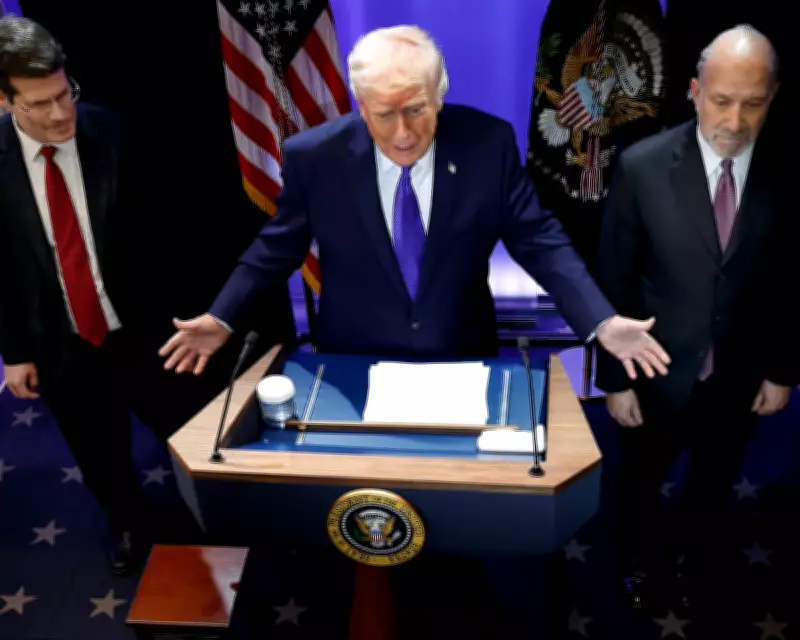
The United States Supreme Court has delivered a significant ruling against former President Donald Trump, declaring his use of executive powers to impose sweeping global tariffs as unlawful. In a decisive 6-3 decision, the court found that the 1977 law Trump relied upon did not grant him the authority to introduce tariffs across the world. This judgment marks a major setback for a central pillar of Trump's economic and geopolitical strategy during his second term.
Constitutional Principles Upheld
Stephanie Rickard, a professor of political economy at the London School of Economics, explains that the ruling reinforces a longstanding constitutional principle: taxation falls squarely within the remit of Congress. "Congress has in the past given the president a lot of leeway in trade policy and negotiating trade agreements," Rickard notes. "Now, however, there is a growing belief that the president has gone too far."
The court determined that while a president can act during a national emergency, tariffs were not a lawful method to address such crises. This decision represents the first time the Supreme Court has struck down a major policy from Trump's second term, highlighting a shift in judicial scrutiny.

Unprecedented Tariff Policies
Trump's tariff approach has been described as unprecedented, even by his own standards. Unlike traditional tariffs that target specific products, Trump imposed broad levies on entire countries and sectors. For instance, he enacted blanket tariffs on Chinese imports and imposed duties on steel and aluminium from allies, including the European Union.
"Tariffs are usually really specific to protect a particular product," Rickard clarifies. "Trump is doing something different. He has decided to use tariffs in this very blunt way." The president justified these measures by arguing they reduce reliance on foreign manufacturing and generate revenue for the US government, even promising to write cheques to Americans using tariff funds.
Public and Political Backlash
The backlash against Trump's tariff policies extends beyond Congress to the general public. With the cost of living crisis intensifying in the US, consumers are increasingly aware that they bear the brunt of these tariffs through higher prices. "We see public opinion changing as consumers start to realise that they're the ones paying," Rickard observes. This shift is particularly notable given Trump's election promise to tackle everyday grocery costs.
Even within his own party, there has been pushback. "Congress has said this is not helping consumers in the United States. This is not helping the United States with its allies," Rickard adds. "And so we have seen some pushback, even from Republican legislators."
Global Confusion and Market Reactions
Internationally, Trump's tariff announcements have sown widespread confusion. For some countries, like Brazil and China, his latest flat tariff policy could prove beneficial, potentially lowering rates by 13.6 and 7.1 percentage points respectively. However, for nations like the UK, which negotiated a 10% tariff arrangement, such a move would represent a worse deal.
Market reactions have been more muted than expected, possibly because uncertainty is already priced in. "Trump has this history of announcing tariffs, walking back, announcing them, walking back, and then signing bilateral deals," Rickard suggests. "So some of that uncertainty is just priced in at the moment."
Legal and Political Ramifications
Despite this ruling, Rickard cautions against overinterpreting it as a broader break between the Supreme Court and Trump. "The ruling was very specific about taxation and tariffs," she says. "So we wouldn't want to over-interpret this and say the Supreme Court is reining in Trump." Nevertheless, it removes one of his key threats in trade negotiations.

The administration is already exploring alternative legal avenues to impose tariffs, such as launching investigations into alleged unfair trade practices. Additionally, the 15% tariffs Trump announced can legally remain in place for only 150 days, bringing their impact close to the upcoming midterm elections. "Prices are still really high, particularly on things like beef and coffee," Rickard notes. "It's an issue that will absolutely be brought into the midterm elections."
Looking Ahead
As countries and businesses adopt a wait-and-see approach, the global trade landscape remains uncertain. Rickard emphasises that "no one wins from a trade war," and most nations are hesitant to engage in tit-for-tat retaliation. The Supreme Court's decision may have clipped Trump's wings temporarily, but the saga of tariffs and trade tensions is far from over, with significant implications for the US constitution, international relations, and the world economy.