Russia's Oil Revenue Crisis Deepens as Sanctions Target Putin's War Chest
Russia's vital oil and gas revenues, which have long financed its military campaign in Ukraine, have dramatically collapsed to their lowest levels in years. This sharp decline coincides with the approaching fourth anniversary of the full-scale invasion and results from a concerted new wave of punitive measures from the United States and the European Union. Additional pressure stems from US President Donald Trump's tariff actions against India and an intensified crackdown on the so-called 'shadow fleet' of tankers designed to circumvent international sanctions.
Precipitous Drop in State Revenue
The financial impact on the Kremlin is severe and immediate. In January, Russian state revenues from taxing the oil and gas industries plummeted to 393 billion rubles, equivalent to approximately $5.1 billion. This figure represents a stark drop from 587 billion rubles ($7.6 billion) in December and a dramatic fall from 1.12 trillion rubles ($14.5 billion) recorded in January 2025. According to Janis Kluge, an expert on the Russian economy at the German Institute for International and Security Affairs, this is the lowest revenue level since the COVID-19 pandemic.
The resulting revenue shortfall is compelling President Vladimir Putin to implement emergency fiscal measures, including borrowing heavily from domestic Russian banks and increasing various taxes. While these actions are currently maintaining state finances on a precarious balance, they exacerbate existing strains within a war economy already grappling with slowing growth and persistent inflation.

A New and More Aggressive Sanctions Regime
The architecture of international sanctions has evolved significantly. To pressure the Kremlin into halting its aggression in Ukraine, the Trump administration imposed direct sanctions on Russia's two largest oil companies, Rosneft and Lukoil, effective from 21 November. This move means any entity purchasing or shipping their oil risks being severed from the critical US banking system—a formidable deterrent for multinational corporations.
Simultaneously, on 21 January, the European Union initiated a ban on fuel refined from Russian crude oil, closing a loophole that previously allowed Russian oil to be processed elsewhere and then imported into Europe as gasoline or diesel. Ursula von der Leyen, head of the EU's executive commission, has further proposed a comprehensive ban on shipping services for Russian oil, asserting that such sanctions provide essential leverage. "We must be clear-eyed: Russia will only come to the table with genuine intent if it is pressured to do so," she stated.
These latest measures represent a strategic escalation beyond the earlier G7 oil price cap of $60 per barrel, which was enforced through insurers and shippers. While that cap temporarily reduced revenues, Russia circumvented it by developing a vast 'shadow fleet' of aging tankers, allowing income to rebound. The new approach aims for a more comprehensive blockade.
Global Pressure and the Indian Conundrum
Significant pressure is also being applied to major buyers of Russian oil, notably India. President Trump recently agreed to lower tariffs on Indian goods, citing an understanding that India would halt Russian crude imports. While Indian Prime Minister Narendra Modi has not publicly commented, foreign affairs spokesman Randhir Jaiswal emphasized India's strategy of "diversifying our energy sourcing in keeping with objective market conditions."
Data indicates this pressure is having an effect. Russian oil shipments to India have declined from a peak of 2 million barrels per day in October to 1.3 million per day in December, according to analyses from the Kyiv School of Economics and the U.S. Energy Information Administration. However, analysts from data firm Kpler suggest "India is unlikely to fully disengage in the near term" from cheap Russian energy, highlighting the complex economic calculus involved.

The Domino Effect on Pricing and Logistics
The sanctions are creating a cascading series of challenges for Russian oil exports. Buyers are now demanding steeper discounts to offset the risks of violating US sanctions and the logistical headaches of arranging alternative payment methods that bypass wary banks. The discount for Russia's primary export crude, Urals blend, widened to about $25 per barrel in December, with Urals trading below $38 per barrel compared to the international benchmark Brent crude at around $62.50.
Since Russian oil production taxes are directly tied to the price of oil, these deep discounts directly slash state revenues. "It’s a cascading or domino effect," explained Mark Esposito, a senior analyst at S&P Global Energy. He noted that the combined sanctions on crude and refined products like diesel create "a dynamic sanctions package, a one-two punch" impacting the entire flow of Russian petroleum.
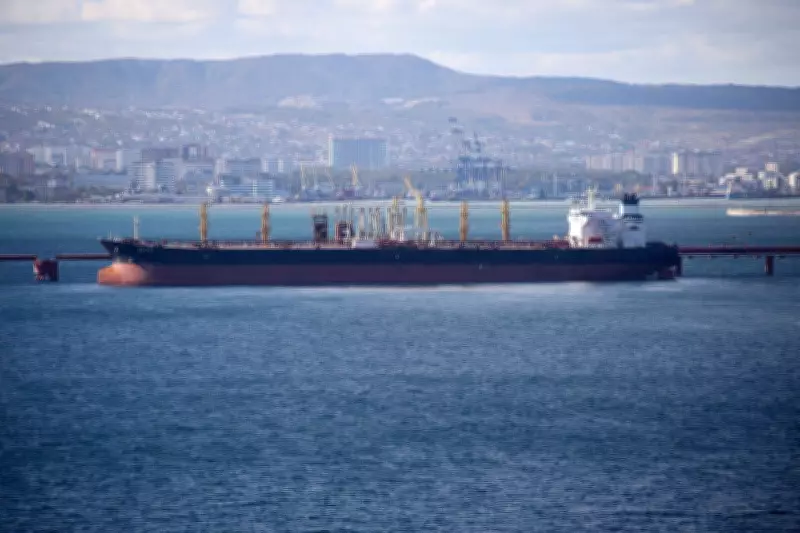
This reluctance to accept delivery has led to a massive buildup of approximately 125 million barrels of oil idling in tankers at sea. The scarcity of compliant shipping capacity has driven costs sky-high, with rates for very large oil tankers reaching $125,000 per day—a cost directly attributable to the sanctions regime.
Strained Budget in a Stalling Economy
The revenue crisis is unfolding against a backdrop of severe economic strain. Russia's economic growth has effectively stalled as the initial stimulus from war-related spending diminishes and acute labor shortages constrain business expansion. Gross domestic product increased a mere 0.1 per cent in the third quarter, with forecasts for the current year ranging between 0.6 and 0.9 per cent—a sharp decline from the over 4 per cent growth seen in 2023 and 2024. Slower growth translates directly into lower general tax revenue, compounding the oil shortfall.
"I think the Kremlin is worried about the overall balance of the budget, because it coincides with the economic downturn," said Janis Kluge. "And at the same time the costs of the war are not decreasing."
The Kremlin's Risky Fiscal Response
In response, the Kremlin has turned to higher taxes and increased domestic borrowing to plug the budget gap. The State Duma, Russia's parliament, has raised the value-added tax on consumer goods from 20 per cent to 22 per cent and increased levies on car imports, cigarettes, and alcohol. The government is also borrowing more from compliant domestic banks and can still tap into a national wealth fund for reserves.
While these measures provide temporary financial breathing room, they carry significant long-term risks. Raising taxes can further suppress economic growth, and increased borrowing threatens to worsen inflation, which the central bank has struggled to control with interest rates as high as 16 per cent.
The cumulative financial pressure may eventually influence strategic decisions. "Give it six months or a year, and it could also affect their thinking about the war," Kluge speculated. "I don’t think they will seek a peace deal because of this, but they might want to lower the intensity of the fighting, focus on certain areas of the front and slow the war down. This would be the response if it’s getting too expensive." The sustainability of Russia's war economy is now under unprecedented strain as the financial foundations of Putin's campaign face their most serious challenge yet.