In a significant development for global resource security, Japan has announced the successful retrieval of deep-sea sediment containing rare earth minerals from the seabed near a remote Pacific island. This pioneering operation represents a strategic move to diminish the nation's heavy reliance on China for these critical materials.
A World-First Achievement in Deep-Sea Mining
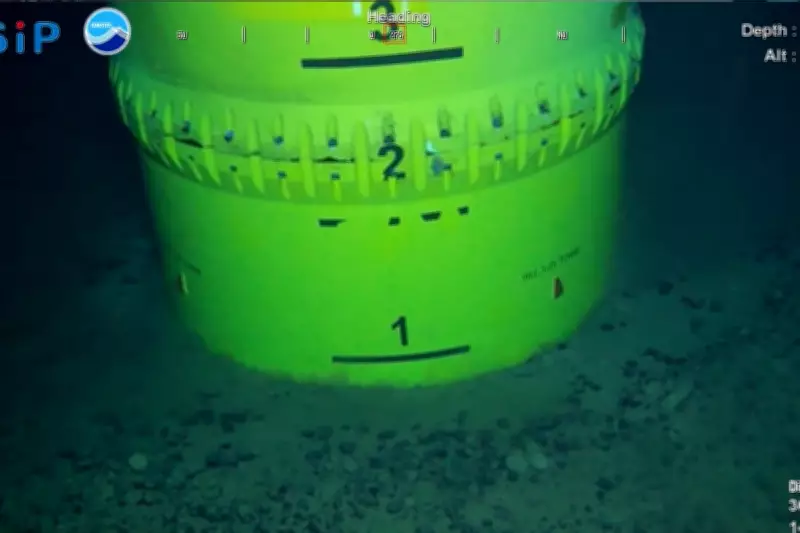
The Japanese government confirmed on Monday that the deep-sea drilling vessel Chikyu had gathered the mineral-rich mud from a depth of nearly 6,000 metres near Minamitorishima Island. Prime Minister Sanae Takaichi heralded the test retrieval as a global first at such depths, stating it marks the initial step toward industrialising domestically produced rare earth elements.
Strategic Motivations Behind the Mission
This endeavour is driven by Japan's urgent need to build resilient supply chains for rare earths and other critical minerals. China currently dominates global production of heavy rare earths, which are essential for manufacturing powerful, heat-resistant magnets used in defence systems and electric vehicles. Recent geopolitical tensions have heightened concerns about over-dependence on a single nation.

These concerns were amplified after China recently suspended exports to Japan of dual-use goods with potential military applications, raising fears that rare earth exports could be next. Prime Minister Takaichi's previous comments regarding potential Japanese involvement in scenarios involving Taiwan have further strained relations between the two nations.
The Minamitorishima Deposits: A Potential Century-Scale Resource
Japanese researchers originally discovered substantial deposits rich with critical minerals around Minamitorishima during the 2010s. These deposits contain high-concentration rare earths estimated to be sufficient for hundreds of years of consumption.
Under the Strategic Innovation Promotion Program, Japan has been conducting extensive research, development, and feasibility studies on these seabed resources. Deputy Chief Cabinet Secretary Masanao Ozaki described the successful sediment retrieval as "a meaningful achievement from the perspectives of economic security and comprehensive ocean development."
The Path to Industrialisation
Officials acknowledge that moving toward full-scale industrialisation of rare earth mud mining requires demonstrating the complete process chain. This includes mining, separation, refining, and verifying economic viability based on ongoing test results. Specific details, including the precise amount of rare earth elements contained in the retrieved sediment, are still undergoing analysis.
Operational Details and Regional Context
The research vessel Chikyu, meaning 'Earth', departed last month for Minamitorishima, located approximately 1,950 kilometres southeast of Tokyo. It arrived at the mining site on January 17th, with the first batch of rare earth sediment successfully retrieved on February 1st. The operation is being conducted by Japan's Agency for Marine-Earth Science and Technology.
The region has seen increased strategic attention, with Japan's Self-Defense Forces reporting sightings of Chinese naval vessels near Minamitorishima last year. This underscores the broader geopolitical significance of securing resources in these waters.
This breakthrough positions Japan at the forefront of deep-sea mineral exploration, offering a potential blueprint for other nations seeking to diversify their sources of critical materials essential for modern technology, defence, and the green energy transition.