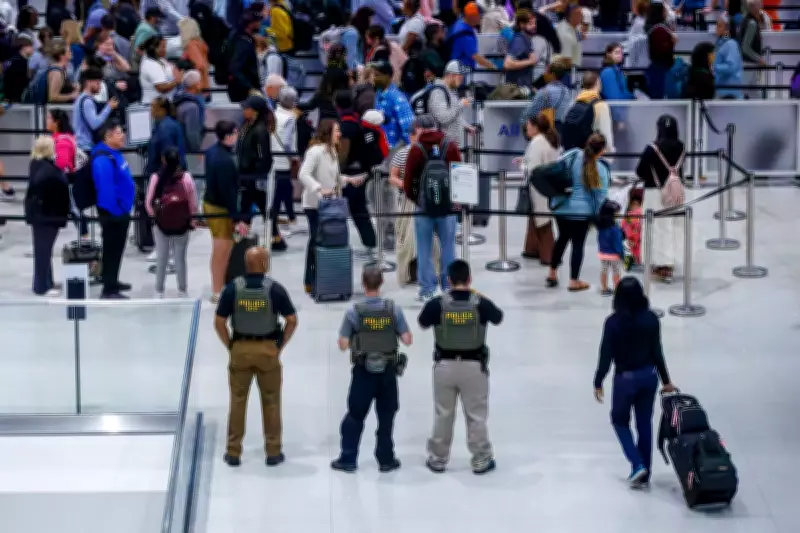
ICE Officers Deployed to Airports Amid Shutdown, Raising Security and Tension Concerns
The Trump administration has dispatched Immigration and Customs Enforcement officers to select airports across the United States in an effort to alleviate long security lines exacerbated by staffing shortages during a partial government shutdown. However, these ICE officers lack formal training in aviation safety, and their central role in President Donald Trump's contentious immigration enforcement agenda is prompting questions about their effectiveness in reducing wait times and whether their presence could heighten tensions with travelers.
An Imperfect Solution to Staffing Crunch
Substituting ICE officers for Transportation Security Administration workers represents an imperfect solution to an increasingly dire travel situation, according to industry analysts. Keith Jeffries, a former head of TSA security at Los Angeles International Airport, noted that while ICE officers might handle some duties, such as staffing exit lanes to free up TSA agents for security tasks, they are ill-equipped for core screening functions.
Jeffries, now a vice president at K2 Security Screening, emphasized that TSA agents undergo extensive classroom training in security procedures, followed by weeks or months of on-the-job training. "There is just zero chance for them to be operating X-rays, conducting bag checks and pat-downs," he said, highlighting the specialized nature of airport security work.

Limited Training and Potential Tensions
ICE officers receive their own specialized training, which focuses on areas like firearms, driving, immigration law for deportation officers, and complex criminal investigations for Homeland Security Investigations agents. This training has little overlap with airport security protocols. Zach Griff, author of the travel blog "From the Tray Table," expressed cautious optimism about ICE assistance but stressed it is not a real solution to airport problems, as integrating them into baggage screening is highly challenging.
The presence of ICE officers, who are typically armed, at airports could stoke tensions, especially given the high emotions surrounding immigration enforcement. Griff pointed out, "There are going to be people who are going to be uncomfortable seeing ICE agents at the airport." Jeffries added that ICE's involvement might attract protesters, potentially diverting airport security resources away from passenger screening.
Political and Operational Controversies
President Trump has suggested that airports are "fertile territory" for immigration enforcement, though he clarified that ICE officers are primarily there to help. This ambiguity has fueled concerns among Democrats, with Senate Minority Leader Chuck Schumer stating, "Everywhere ICE goes, trouble follows. We've seen that, and it is highly likely the airports will be no exception."
The deployment is also entangled in broader political disputes, such as the controversy over ICE officers wearing masks. Critics argue masks allow officers to evade accountability, while ICE leadership says they protect against doxxing. Democrats have linked funding for the Department of Homeland Security to restrictions on mask use, further complicating the situation.
Long-Term Solutions Needed
As long wait times persist at some airports, with ICE officers observed standing near security lines without screening passengers, analysts agree that the only sustainable fix is to resolve the congressional impasse and fully fund the DHS. Jeffries concluded, "There is no substitute — and I don't even think ICE would disagree with that." The ongoing shutdown continues to strain airport operations, making this deployment a temporary and contentious measure in a larger political battle.