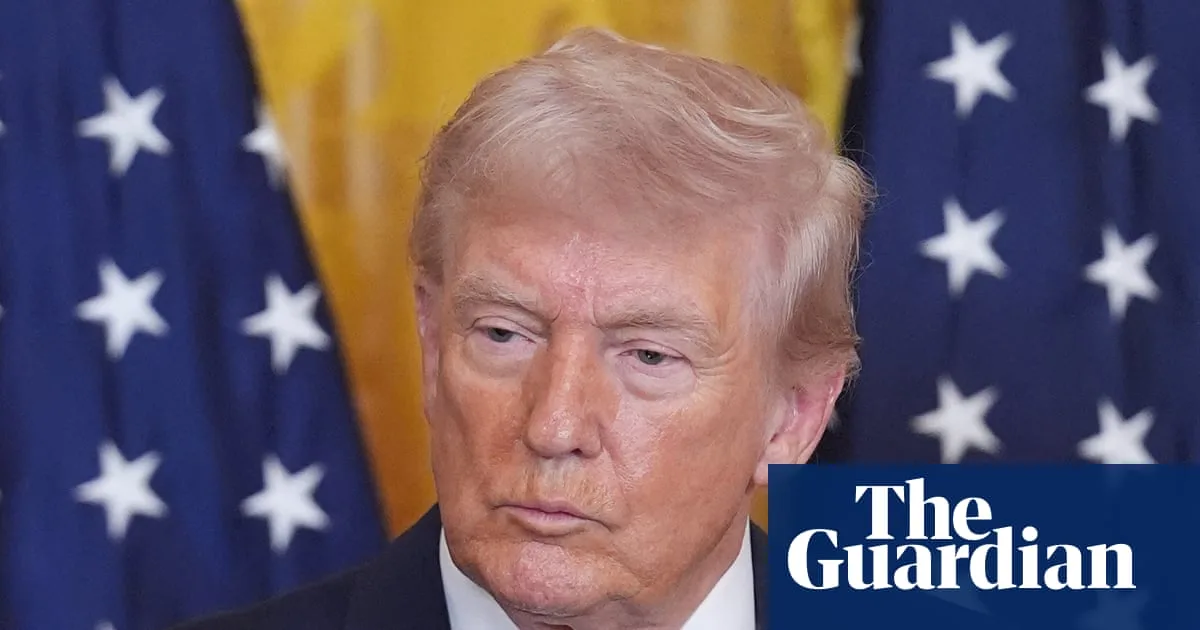
In a significant and rare bipartisan move, the House of Representatives voted on Wednesday to terminate President Donald Trump's emergency tariffs imposed on Canada. This action represents a direct congressional challenge to the White House's economic agenda, highlighting growing tensions over trade policy.
A Unusual Coalition Forms Against Tariffs
Six Republicans joined the majority of Democrats in supporting the resolution, which seeks to cancel the 35 percent tariffs justified by a 2025 emergency declaration. The Republican defectors included Representatives Don Bacon, Thomas Massie of Kentucky, Kevin Kiley of California, Jeff Hurd of Colorado, Dan Newhouse of Washington, and Brian Fitzpatrick of Pennsylvania.
"For months, Republicans blocked a vote on Trump's illegal tariffs, choosing procedural games over their responsibility to the people they represent," stated Representative Gregory Meeks, the New York Democrat who sponsored the resolution. "Today, Democrats, joined by several Republicans, were able to force that vote and put Republicans on record. The question was simple: stand with working families and lower costs, or keep prices high out of loyalty to Donald Trump?"
Procedural Shift Enables the Vote
The vote became possible after House Speaker Mike Johnson failed to extend a procedural block during a vote on Tuesday. Previously, the House had prevented challenges to Trump's tariffs from reaching the floor. This procedural shift cleared the way for Wednesday's outcome, allowing the resolution to proceed.
Representative Don Bacon, one of the Republicans voting against the tariffs, emphasized congressional responsibility in a Facebook post earlier on Wednesday. "We cannot and should not outsource our responsibilities," he wrote. "As an old-fashioned conservative, I know tariffs are a tax on American consumers. I know some disagree. But this debate and vote should occur in the House."
Legal and Political Hurdles Remain
Despite the House vote, the resolution is unlikely to become law. It would require a two-thirds majority in both the House and Senate to override a probable veto from President Trump. This high threshold makes enactment challenging, but the vote serves as a symbolic rebuke and sets a precedent for future actions.
President Trump responded swiftly on Truth Social, warning of electoral consequences. "Any Republican, in the House or the Senate, that votes against TARIFFS will seriously suffer the consequences come Election time, and that includes Primaries!" he declared. His allies have defended the tariffs as essential tools for economic policy.
Speaker Johnson reiterated this support in an interview with Fox Business. "The tariffs have been a tool that the president has used very effectively to level the playing field and put America back on top, and I think it's wrong for Congress to step in the middle of that," he stated.
Economic Impact and Public Opinion
The tariffs have generated substantial revenues but have failed to achieve one of their core objectives: boosting U.S. manufacturing jobs. Instead, the manufacturing sector has continued to contract, raising questions about the effectiveness of Trump's trade tactics.
Public opinion further complicates the issue. A recent Pew survey revealed that 60 percent of Americans disapprove of Trump's substantial tariff increases, including those threatened against Canada. This disapproval underscores the political risks associated with the policy.
Broader Legal and Trade Context
The legality of Trump's tariffs remains under scrutiny, with the Supreme Court currently considering whether the president had the emergency authority to impose them. This legal vulnerability adds another layer of uncertainty to the trade measures.
Democrats are planning similar challenges to Trump's tariffs on other nations, such as Mexico, China, and Brazil, indicating a broader strategy to counter the administration's trade agenda. Despite these threats, Trump has remained committed to his hardline approach.
Reports suggest he is considering withdrawing the U.S. from the North American free trade pact negotiated during his first term. Additionally, a separate dispute with Canada over a bridge project connecting Ontario and Michigan further strains bilateral relations, highlighting the ongoing tensions in U.S.-Canada trade dynamics.






