
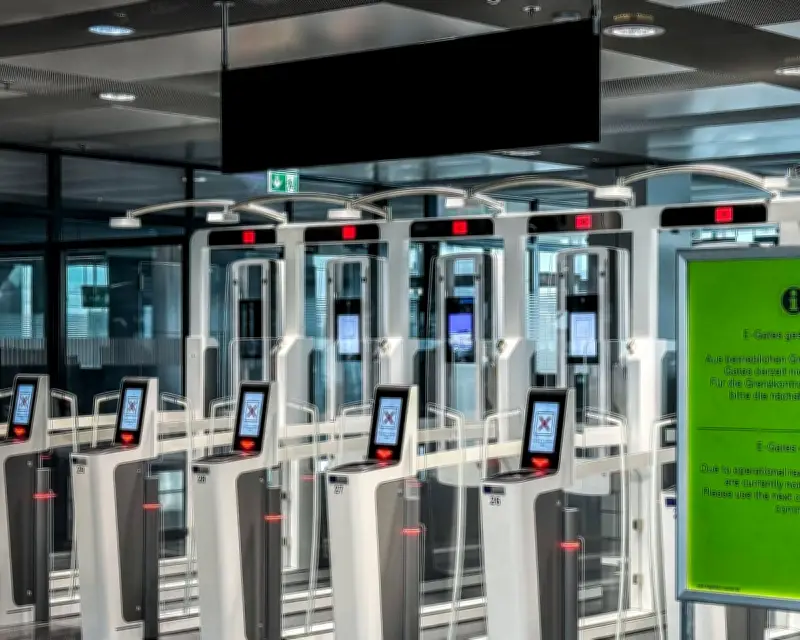
British nationals will soon benefit from shorter passport queues at Swiss airports and border crossings following a £5.2bn trade deal finalised by Prime Minister Keir Starmer, likely his last major international agreement in office. Starting later this year, UK passport holders can use e-gates at Zurich airport for exit checks, with Basel and Geneva—key hubs for business and winter sports travel—following in 2025.
Roaming Charges Scrapped and Trade Terms Secured
As part of the agreement, mobile phone roaming charges between the UK and Switzerland will be eliminated. The deal also preserves existing trading terms for medicines, cars, art, jewellery, photographic materials, and other goods. The UK’s Department for Business and Trade aims to “unlock £5.2bn a year in additional UK services exports to Switzerland in the long run.” Switzerland is currently the UK’s sixth-largest market for services, worth approximately £30bn annually, predominantly in financial and services sectors.
Starmer’s Sixth Landmark Agreement
Starmer described the deal as the “sixth landmark agreement” of his two-year premiership, joining tariff deals with the US and trade agreements with India, South Korea, and Gulf states. “Whether you’re growing a business or travelling for work, this agreement is about making life easier and creating more opportunity for people across the UK,” Starmer said. “British firms will find it easier to sell their expertise in one of our most important markets in Europe, supporting jobs and investment here at home.”
Business and Industry Reactions
Rain Newton-Smith, chief executive of the CBI business lobby group, praised the deal for recognising “real opportunities for growth” in services, which she called the UK’s “super power.” The agreement also introduces visa-free travel for up to 90 days per year for UK services professionals to Switzerland, simplifying immigration processes for business travellers. For longer stays, the visa route with sponsor companies in Britain remains, but the UK now permits visa-free travel for up to 90 days for companies bringing personnel to deliver short-term contracts.
Pharmaceutical Protections and Border Efficiency
City of London Corporation policy chair Chris Hayward termed the deal “gold standard,” highlighting that reducing border friction through e-gates “and allowing business travellers more time to do business” had been a priority. Both sides agreed to maintain existing pharmaceutical patent protections. Richard Torbett, chief executive of the Association of the British Pharmaceutical Industry, noted that both parties “made explicit their commitment to maintain a strong and proportionate intellectual property regime.” This came amid reports that the UK, under pressure from the Department of Health and Social Care, had considered reducing patent protection lengths to allow the NHS quicker access to cheaper generic drugs. Mark Samuels, chief executive of Medicines UK, which represents suppliers of nine out of ten NHS medicines, said the deal ensures “safeguarding the NHS’s access to affordable generic medicines by maintaining current terms of protection in the UK domestic system.”




