Is there a better sensation for a traveller than when a train speeds out of a tunnel? The sudden flood of light, that howling rush of air. Clearly, it’s not just me who thinks trains are the new (old) planes, with 2025 having seen a 7% rise in UK train travel, and more Europeans than ever looking to hit the rails.
It’s late December, and I’m heading out on a slow-train journey across the historic railways of the Swiss Alps and the Italian lakes. It’s a trip of roughly 1,800 miles (2,900km), crossing five countries, almost entirely by scenic daytime trains. What is clear from the off is how easy, and slightly disorientating, this type of train travel can be: drifting through stations, across platforms and over borders, it’s hard to believe we’ve hit three countries in less than a day – the UK, France and Switzerland – such is the ease of each passport stop. Gone are the sweaty finger scans of airport border control, replaced by the most polite immigration police I’ve ever encountered.
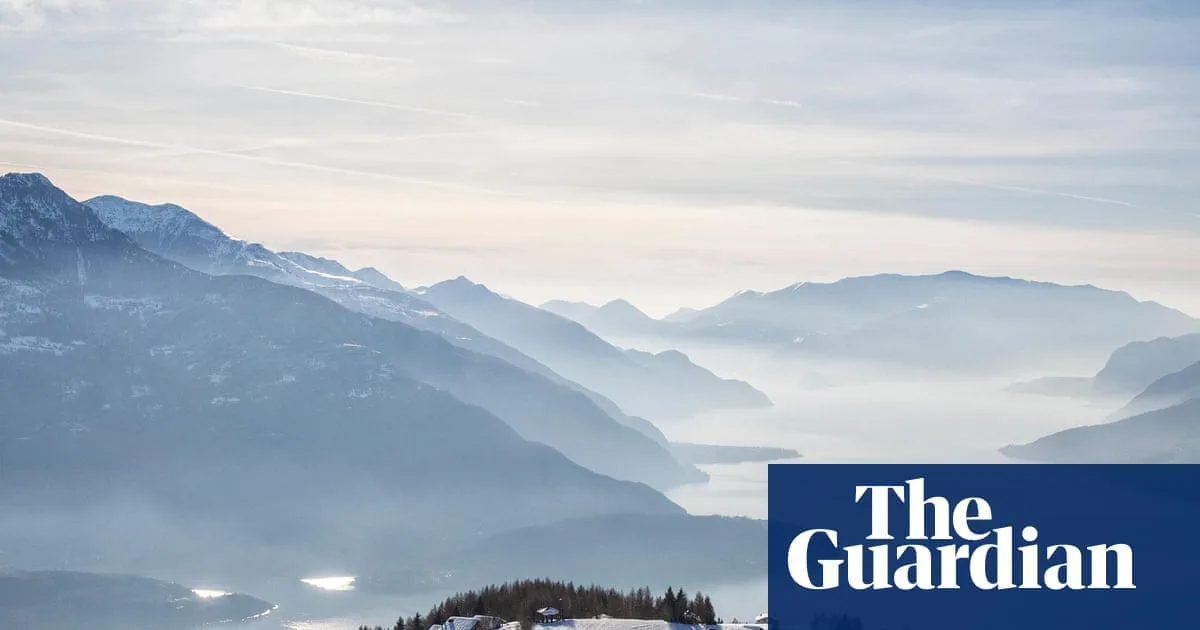
Outside, the French countryside soon blurs into Swiss hills, all behind a thin veil of white, wintry light. As we roll into Zurich, we catch our first glimpse of the milky Alpine peaks. Next morning, we’re greeted with crisp blue skies for our mountain ascent via one of Europe’s most historic train routes, the Matterhorn Gotthard railway. The original line opened in 1882 and was the railroad that changed Europe, slicing a path through inhospitable mountains and isolated villages. We catch one of the historic trains (the IR46) – keen to avoid anything routed through the Gotthard base tunnel, which bypasses the beauty.
Phones duly on charge (as is slow-train travel etiquette), we sit back and gawp out of the window for three hours, eating Swiss truffles as the tracks snake the mythic Alps via the famous Gotthard “spirals” – corkscrew tracks built inside the mountains for a steady ascent. At Göschenen, we opt for a lunch stop via a short, even steeper rack-and-pinion route high into the former garrison town of Andermatt, now reinvented as a chic ski retreat. A comforting lunch at the excellent Biselli, along with several glasses of Swiss Ticino red, takes the edge off a dense mist that has crept over the rest of the day’s rail route.
Thankfully, Italy soon pushes back, with clear skies and terracotta valley towns lingering in the distance. At Chiasso, another border is crossed, bringing with it a welcome drop in the cost of a cappuccino (from 5CHF to €2) and the sight of one of Italy’s most famous lakes up ahead. By dusk, we’re at Lake Como. Bags dropped, we catch the last of the light with an easy passeggiata round the perimeter of the famous lake, mercifully lacking its high-season crowds. Next morning, having got into the swing of slow-train transience, we pack up in record time and take coffee at the station. For our final stop, we’re heading in the direction of a much-needed metropolis. Ditching Milan – Italy’s least interesting city – we roll into Turin, one of its most underappreciated.