

Exclusive: Lancashire Travel Firm's £1 Million Repatriation Operation
In a remarkable display of corporate responsibility, the managing director of a Lancashire-based holiday company has orchestrated a complex rescue mission to bring British holidaymakers home from Asia. Dan Acarnley, who leads Distant Journeys, personally chartered an aircraft to ferry over 400 stranded passengers from Colombo in Sri Lanka directly to London Stansted Airport.
The Gulf Hub Crisis and Insurance Void
All the affected travellers were originally booked on airlines operating through Gulf hubs: Emirates via Dubai, Etihad via Abu Dhabi, and Qatar Airways via Doha. These transit points found themselves on the Foreign Office's no-go list following Iranian attacks across the Middle East region. While Emirates and Etihad have since resumed substantial flight operations from Asia to the UK via the United Arab Emirates, passengers utilizing these routes are deliberately acting against Foreign, Commonwealth & Development Office advice.
Critically, travel insurance policies become invalid for any claims resulting from an Iranian attack while passengers are transiting through these airports. This created a perfect storm of logistical and safety concerns for tour operators with clients overseas.

The Sudden Onset of a Crisis
"The end of February was a really interesting time for Distant Journeys," Mr. Acarnley revealed. "We woke up on the morning of 28 February to news of the attack on Iran and escalating conflict in the Middle East. At that point, we had close to 1,000 customers overseas, many due to return via major Gulf hubs such as Abu Dhabi, Dubai, and Doha. The Foreign Office quickly advised against all non-essential travel to the region."
Travel firms are generally expected to comply fully with FCDO warnings. Although the Foreign Office makes exceptions for "airside transit" in some locations where travel warnings exist—including parts of Mexico and Ecuador—the advice for Gulf nations was unequivocal: changing planes there was considered too risky.
The Scramble for Solutions
"It became clear very quickly that we needed to act fast to ensure customers could return home safely," Acarnley stated. The initial strategy involved exploring commercial rerouting options: alternative airlines and flight paths that completely avoided restricted regions. Where feasible, the company rebooked hundreds of customers, though availability proved extremely volatile.
"Availability would appear and disappear quickly," Acarnley explained, "so our teams worked around the clock to secure flights." However, it soon became apparent that for many customers, particularly those in Asia, no viable commercial alternatives existed that circumvented the Middle East. Without decisive intervention, some travellers faced the prospect of being stranded for weeks.
Stranded Travellers' Plight
Among those awaiting repatriation were Jeff and Wendy Spencer from Surrey, who were stuck on the Indonesian island of Bali. Mr. Spencer told The Independent: "While to many, being stuck in Bali due to the ongoing conflict may sound like paradise, I can assure you the feeling wears off in the rainy season nine days into a three-day stopover. It feels like Hotel California—you can check out any time you like, but you can never leave."
The Charter Decision and Logistical Masterstroke
Faced with this mounting crisis, Distant Journeys made the bold decision to charter an aircraft large enough to bring all stranded clients directly back to the UK while completely avoiding the Gulf region. Mr. Acarnley detailed the planning: "We identified Sri Lanka as the most suitable hub—it was centrally located and we already had over 100 customers there. We then arranged to bring customers from across the region—India, Nepal, Bali, Cambodia, Laos, Thailand, and Singapore—into one place and operate a single repatriation flight to the UK."

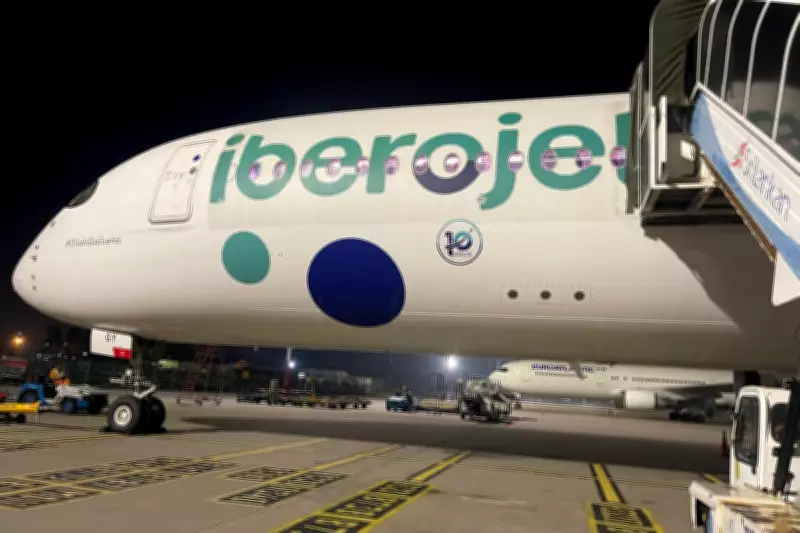
Sri Lanka offered the additional advantage of not having India's complex visa requirements, simplifying the consolidation process. However, securing an appropriate aircraft presented significant challenges. "Aircraft availability was extremely limited," Acarnley noted, "as governments and other organizations were also seeking aircraft. Eventually, we secured an Airbus A350 operated by Iberojet, departing on the evening of 15 March."
The Repatriation Flight Experience
The company dispatched several executives to coordinate the complex mission on the ground. The Iberojet aircraft, which operated at near-full capacity, was configured for economy class only. Passengers who had originally booked premium cabins via Gulf carriers were informed they could request partial refunds of their fares.
The 11-hour flight, designated E9 692, followed a carefully plotted route over India, Pakistan, Afghanistan, Turkmenistan, the Caspian Sea, Azerbaijan, and Georgia before proceeding over northern Turkey and the Balkans en route to Stansted.
Upon landing at Stansted, Jeff and Wendy Spencer found themselves 12 days behind their original schedule. They had been flown from Bali via Bangkok to Colombo, with Distant Journeys covering all associated costs: the additional flights, Sri Lankan visas, hotel accommodation, and ground transfers.
Mr. Spencer described the flight experience: "The flight crew were attentive, serving a choice of chicken or noodles-based meal and a ham croissant before landing. I have had much worse on many flights. Not licensed for alcohol, but the passengers were all relaxed and sleepy anyway. The plane had an entertainment system, but either golden oldies or Iberian specials. But everyone we speak to is happy with their support when it matters."
The Financial and Operational Impact
The entire repatriation exercise is estimated to have cost Distant Journeys approximately £1 million. More than half of this expenditure covered the aircraft charter itself, with additional costs incurred for intra-Asia flights and onward transportation within the UK.
Reflecting on the operation, Mr. Acarnley emphasized: "It reinforces the value of booking with a responsible tour operator. In situations like this, customers rely on us to provide support, guidance, and solutions." The overwhelming response from passengers, he noted, was simply gratitude for being brought home safely.
In the aftermath of this crisis, Distant Journeys is now witnessing strong demand for alternative destinations such as Latin America and Canada—regions perceived as less vulnerable to Middle Eastern geopolitical instability.





