

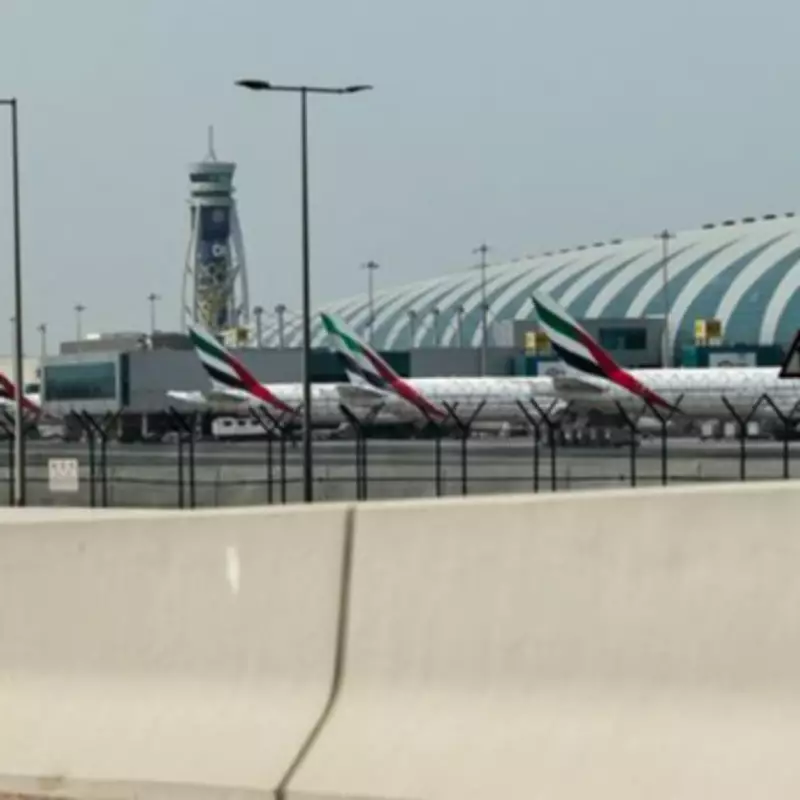
As military action between the US-Israel coalition and Iran escalates, a prominent travel specialist has issued a crucial 'big' warning for British travellers with flights booked to or through key Gulf hubs like Dubai, Qatar, and Abu Dhabi. The ongoing conflict has plunged the Middle East into travel chaos, with airports across the region suspending operations due to hostilities and counter-attacks.
Mass Stranding and Evacuation Efforts
It is estimated that more than 100,000 British nationals have been left stranded in the affected area as major airports, including those in Qatar, Abu Dhabi, and Dubai, shut down their services. Government officials confirmed that over 2,000 passengers were successfully evacuated from the United Arab Emirates on repatriation flights landing in the UK on Wednesday. However, uncertainty persists regarding the conflict's duration, casting significant doubt over countless travel plans, especially given the critical role these Gulf airports play as connection hubs for journeys to Asia and Australasia.
Expert Guidance: Do Not Panic Cancel
Appearing on ITV's Lorraine programme, travel specialist Claer Barrett delivered what she described as 'vital' guidance for those with imminent travel arrangements. Her central message was emphatic: "My big message to everyone watching is don't panic and hit the cancel button, because if you cancel a flight, a holiday, whatever, yourself, you won't have as many rights as if the airline cancels the flight."

Barrett elaborated on passenger rights concerning flights: "So if an airline cancels your flight, as long as you're flying with a UK airline or departing or flying back to a UK or EU airport, you're legally entitled to choose. So if they cancel you, you can say, 'Well, I want a refund, I want my money back,' or, 'I want a different flight with a different airline, I want to be rerouted' or offered assistance if you were stuck somewhere. So it's important not to cancel yourself."
Proactive Monitoring and Insurance
For travellers with holidays planned in the affected region, Barrett advised closely monitoring the airline's official website to determine if plans will be impacted, as conditions vary across different locations. She also stressed the importance of keeping an eye on the Foreign, Commonwealth & Development Office (FCDO) website, which issues critical 'do not travel' warnings.
"And for goodness' sake, make sure that you've got your travel insurance in place when you book your holiday," Barrett urged. "This is the advice that me and other consumer experts give, because something could happen before you go and you'd need to make a claim."
The Security of Package Holidays
Package holidays, where flights and accommodation are booked together from a single provider, often offer better protection and can be more economical. In the UK, these are safeguarded by the Package Travel Regulations (PTRs), and those including a flight are protected by the Atol scheme. All travel firms selling such packages to UK customers are legally required to hold an Atol licence.
This protection ensures repatriation during crises, as seen in 2019 when the collapse of Thomas Cook led to the UK government flying back nearly 150,000 holidaymakers in the largest peacetime repatriation in British history. Consumers are also entitled to refunds if the package is cancelled and compensation for subpar trips due to various factors.
Claer Barrett highlighted this advantage: "So we've covered flights, but package holidays, you're much better protected with a package holiday because most of them, anyway, are reaching out proactively, I'm hearing, to customers who do have packages booked to the Middle East. And most of them are offering people for no charge the ability to either move their holiday dates or, in many cases, change destination, you know, so you still have your holiday but you go somewhere else. So speak to your tour operator and see what they can do for you."
As flights to and from the United Arab Emirates remain severely disrupted, Barrett's advice underscores the importance of patience, informed decision-making, and leveraging consumer protections rather than hastily cancelling arrangements.






