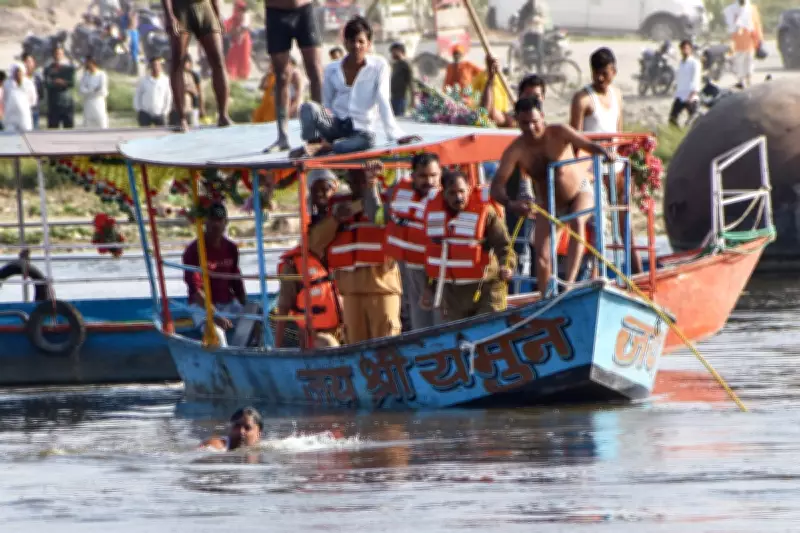
Overcrowded Tourist Boat Capsizes in Northern India, Killing at Least 10
Officials in northern India have confirmed that at least 10 people have died after an overcrowded tourist boat capsized in the Yamuna river on Friday. The tragic incident occurred near the prominent Hindu pilgrimage site of Vrindavan in Uttar Pradesh state, casting a shadow over what was meant to be a spiritual journey for many visitors.
Details of the Fatal Capsizing
The privately operated vessel, which had a maximum capacity of approximately 15 passengers, was carrying around 25 individuals when it overturned midstream. Preliminary investigations by local authorities indicate that strong winds caused the boat to sway violently before it collided with a pontoon bridge, leading to the catastrophic capsizing.
Senior administrative officer Chandraprakash Singh provided a grim update, stating that 15 people were successfully rescued from the turbulent waters. However, four of those rescued remain in critical condition, fighting for their lives in nearby medical facilities. The deceased, all Indian nationals, included six women among the victims, highlighting the widespread impact of this disaster.

Safety Failures and Operator Flight
Officials conducting the initial assessment revealed several alarming safety deficiencies. Most passengers were not wearing life jackets at the time of the accident, significantly reducing their chances of survival in the fast-moving river currents. Furthermore, the boat appeared to be poorly maintained, raising serious questions about regulatory oversight and operator responsibility.
In a disturbing development, authorities confirmed that the boat operator fled the scene immediately following the capsizing, abandoning both passengers and any responsibility for the tragedy. This has complicated rescue efforts and subsequent investigations into the exact causes of the accident.
Broader Context and Historical Precedents
The tourists involved in this incident were part of a larger group of approximately 150 people visiting the Vrindavan area, a major destination for Hindu pilgrims. This tragedy has disrupted what should have been a peaceful religious excursion, leaving families devastated and communities in mourning.
Boat accidents remain distressingly common throughout India, where many vessels regularly operate beyond their safe capacity limits while lacking adequate safety equipment. This latest incident echoes previous disasters, including a 2023 tourist boat capsizing in southern India that claimed at least 22 lives. These recurring tragedies underscore systemic issues in maritime safety regulations and enforcement across the country.
The Yamuna river capsizing serves as a stark reminder of the human cost when safety protocols are ignored and vessels are operated beyond their intended limits. As rescue operations transition to recovery efforts, questions about accountability and preventive measures will undoubtedly dominate public discourse in the coming days.