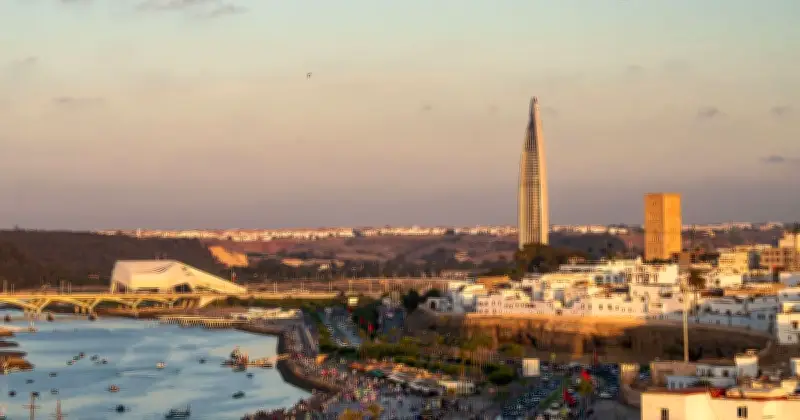
Morocco's capital Rabat has been named one of Lonely Planet's 50 places to visit in 2027, with direct flights from the UK from as little as £15 one way.
The historical coastal city, which sits just three hours from the UK, appears on the travel guide's annual Best in Travel list alongside destinations such as The Vento in Italy, Killary Fjord in Ireland, Bocas del Toro in Panama and Oman.
A coastal capital with beaches and culture
Lonely Planet's Sally Kirby highlights Rabat's blend of attractions. "Alongside beautifully preserved archaeological sites, there’s a thriving coastal city culture in Rabat, with sandy beaches, cinemas, galleries, restaurants, festivals and shopping," she writes. "I love waking up in a traditional riad, spending a day exploring historic sites and hitting the beach for a sunset surf at Oudaya. For dinner, I go to Rabat’s leafy embassy district."
Rabat attracts a fraction of the tourists who flock to Marrakech, yet it is Morocco's capital, full of rich history, impressive architecture and things to do. Listed as a UNESCO World Heritage city for its blend of tradition and modernity, the riverside region features manicured green spaces and an efficient tramway linking its districts.
Historic landmarks and gardens
The biggest attraction is Kasbah des Oudaias, a 12th-century citadel located within the Kasbah's medieval gates. Originally built as a military fortress to protect the region, the preserved landmark now has a Mediterranean feel, filled with artisan shops and cobbled streets. The fortress overlooks the Atlantic and the Bou Regreg river, with blue-and-white painted lanes that make it Rabat's most photogenic spot, particularly at golden hour.
Next to the kasbah is an Andalusian garden with a museum of Moroccan jewelry and costume at its centre. Like Marrakech's Majorelle Gardens, the Andalusian Gardens were built during the French Protectorate in Morocco, following the Andalusian style.
The Chellah Necropolis is another major draw. The ancient site, first used by the Phoenicians and later the Roman city of Sala Colonia around AD 40, was abandoned in the 12th century. In the 13th and 14th centuries, Marinid sultans turned the ruins into a royal necropolis and religious complex. The unfinished Hassan Tower, begun in the 1190s, stands among rows of broken columns on a vast esplanade, opposite the Mausoleum of Mohammed V, a masterpiece of Moroccan craftsmanship with carved plaster, zellige tilework and ceremonial guards.
Markets, museums and beaches
Rabat's medina is calmer and less hassle than those of Marrakech or Fez, with stalls selling spices, leather, textiles and sweets. Rue des Consuls, once home to foreign diplomats, is known for carpets and handicrafts. The Mohammed VI Museum of Modern and Contemporary Art, opened in 2014, showcases Moroccan and international art in a striking modern building, with rotating exhibitions covering painting, sculpture and photography.
Rabat enjoys warm weather year-round, with December temperatures often around 20C. Nearby Skhirat Beach is a Blue Flag recipient with endless golden sand, strong Atlantic waves and terraced seaside restaurants. Plage des Nations, about 45 minutes north of Rabat toward Kenitra, is a wide, clean stretch of golden sand popular for surfing, long beach walks and panoramic Atlantic views.
Ryanair flies direct from Manchester and London Stansted to Rabat, with flights from as little as £15 one way this December.