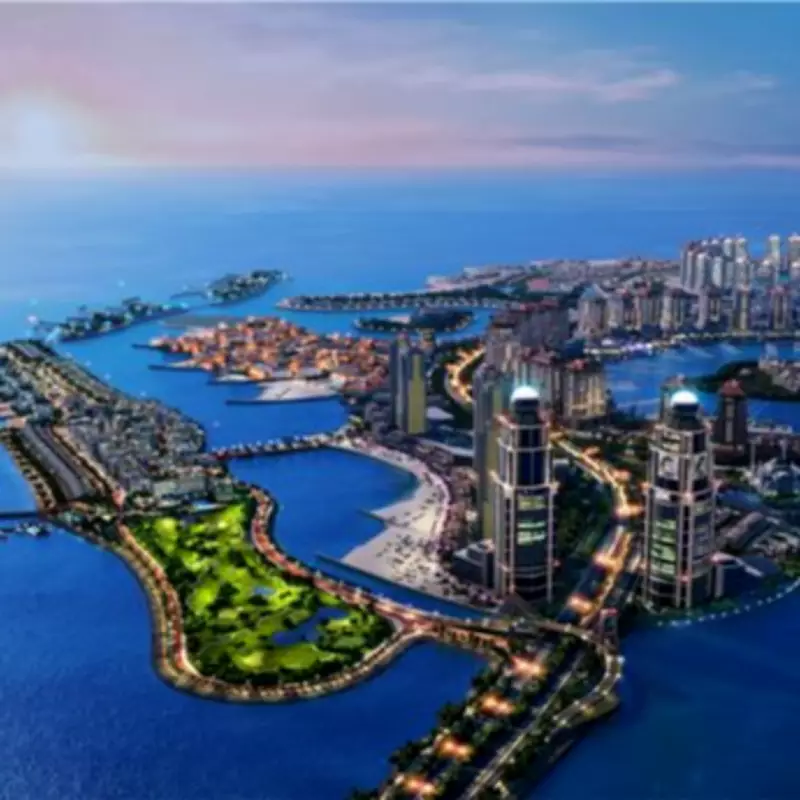
In regions where summer temperatures frequently soar above 40 degrees Celsius, daily life often becomes confined to air-conditioned interiors. However, a groundbreaking development on one of Qatar's man-made islands is transforming this reality, enabling residents and tourists to enjoy the outdoors in comfort even during the most intense heatwaves.
A Climate-Controlled Oasis in the Persian Gulf
Gewan Island, part of an artificial archipelago extending into the Persian Gulf and connected to mainland Doha via multi-lane bridges, has introduced an innovative solution to combat extreme heat. At its heart lies the Crystal Walkway, a 450-meter-long promenade lined with luxury shops, restaurants, and apartment buildings. Beneath visitors' feet, thousands of crystals are arranged into artworks depicting polar landscapes and oceans—ironic symbols of environments also threatened by climate change.
The Artificial Forest That Cools the Air
The most striking feature of Gewan Island is its man-made 'forest,' consisting of giant tree-shaped sculptures along the promenade. These structures are capped with hexagonal designs adorned with crystals and equipped with solar panels that help power the area's outdoor air conditioning system. Small holes along the tree trunks blast out ice-cold air, while the sculptures' design traps this chilled atmosphere underneath, maintaining temperatures between 21 and 23 degrees Celsius.

This cooling mechanism uses ten tons of crystals in its construction and is complemented by mini fountains that spray cold water, enhancing the refreshing ambiance. The system provides a welcome respite from Qatar's summer heat, which has reached up to 50 degrees Celsius in recent years, as documented by the BBC.
A Growing Trend in Outdoor Climate Control
While outdoor air conditioning might seem unusual to outsiders, it represents a growing trend in Doha's efforts to adapt to rising temperatures. According to Time Out Doha, at least ten locations in the city now feature similar systems, including parks, jogging tracks, and dining areas. For instance, Oxygen Park offers air-conditioned walkways, and 21 High Street mall uses vented floors to keep temperatures at 20 degrees Celsius for shoppers.
Near Gewan Island, Pearl Island—another artificial development—boasts luxury residences, boutiques, and man-made beaches, often paired with five-star hotels. These innovations reflect a broader shift towards creating livable outdoor spaces in regions where climate change is making traditional outdoor activities increasingly challenging.
Implications for Tourism and Daily Life
The introduction of such cooling technologies not only enhances tourist experiences but also improves the quality of life for locals who might otherwise be confined indoors during peak heat. By enabling year-round outdoor strolls and activities, Gewan Island's system addresses both practical and recreational needs in a warming world.
As global temperatures continue to rise, similar adaptations may become more common in hot climates, blending engineering with artistry to create sustainable, comfortable environments. This project underscores how innovation can mitigate the impacts of extreme weather, offering a glimpse into future urban design in heat-prone regions.