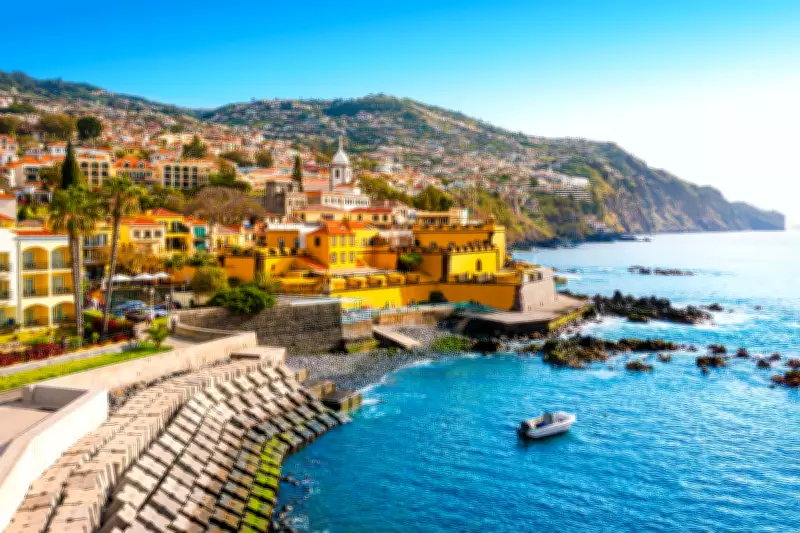
Madeira: The Perfect Spring Island Escape Defies Age Expectations
The Independent's journalism is supported by our readers. When you purchase through links on our site, we may earn commission.
Travel Feature: Madeira's Allure for All Ages
Dubbed the pride of Portugal, Madeira – with its mild weather, stunning landscapes, and vibrant culture – offers the ideal spring break destination. Whether you're seeking a hiking adventure, relaxation, or delicious cuisine and wine at budget-friendly prices, Madeira defies all expectations, says Tessa Dunlop.
Sunday 29 March 2026 06:00 BST

The small queue at the airport gate for my flight to Funchal is sedate and elderly. I am reminded of a millennial friend, Jennifer, laughing at me on Instagram. "Ha ha! Madeira. When I went, I was the youngest person there!" An appropriate destination for my 84-year-old mother, who is flying in from Edinburgh to join me on an island quest to find dead relatives. At least that was the plan.
"Excuse me, madam, this is not your flight. We are BA, you are flying EasyJet to Funchal." Clattering across Gatwick's south terminal, I made the plane with minutes to spare. The gate was heaving with a clientele impossibly different from the one I'd left behind: young, cosmopolitan, and braced for action. On board, sandwiched between two marathon runners, I glimpsed a Madeira very different to the one I was expecting.
Thirty-one-year-old Frances had optimistically booked in a wine-tasting session before her 26-mile endurance test, and personal trainer Kaman was eyeing up a new PB, excited about a volcanic island with undulating terrain and a semi-tropical climate to run and hike in. To hell with grey skies when sunny Madeira is only three-and-a-half hours away.
Mum had already bonded with taxi driver Roberto by the time I arrived ("did you know there are 180 tunnels on Madeira?") and was tackling the cobbled incline to our Funchal flat with a pair of walking sticks. "Darling, it's just Heaven!"
Madeira's Restorative Climate and Historic Charm
The rainy season in Madeira generally runs from November to March, but located off the coast of northwest Africa, whatever the time of the year the archipelago's clement weather and bold splashes of colour – bougainvillaea pink, mimosa yellow, poinsettia red – are a welcome respite from the less predictable, colder UK.
Madeira's restorative qualities have long been celebrated: far from Vienna's prying eyes and harsh seasons, Sisi, Austria-Hungary's Empress Elizabeth, spent expanses of time enjoying the Atlantic breeze. Decades later, in 1950, Winston Churchill arrived with his easel, capturing the harbour's iridescent sunsets. Both stayed at the island's renowned Reid's Palace Hotel, a British imperial behemoth stacked up with late Victorian-swagger on the cliff face of Funchal. I booked us in for afternoon tea – a post-colonial treat once we'd conquered the island.
Here a disclaimer is required. Mum's ancestors were mid-19th-century players in a Madeira wine trade that Britain dominated after the warring French closed their ports in the 1800s. Armed with the address of a local cemetery, a photograph of Edwardian ladies and gents looking conspicuously English and great-great-great Uncle Power's 1914 guide book, our travels had a faintly embarrassing EM Forster overtone, one compounded upon arrival at the sizeable Anglican church. (Holy Trinity is tucked up a side street and in 1822 was built without a steeple or bell to save the blushes of the Catholic locals).
An enormous coffee morning split onto a sunlit lawn; guffawing, ancient Anglophones – Americans, Canadians, and English galore – introduce us to a picture of King Charles, speed-dial the local British cemetery (2000 dead including my great-great-great-great-grandfather) and welcome us back for a full blown service the following morning. "Gosh," said mum, "it might be England in the 1970s."

We took refuge in our first glass of Madeira wine (richer than sherry, with a sweet nursery rush), ate fried octopus in Theo's ("thank goodness everyone in here seems to be Portuguese") and consulted the 1914 guidebook. Back then oxen-carts were commonplace and roads a novelty on an island a little bigger than the Isle of Wight, but today I strongly recommend hiring a car – if only for the adrenalin rush.
Exploring Rural Madeira and Its Modern Infrastructure
Drive out of the capital (a challenge if you don't like hill-starts!) and Funchal's mosaic-patterned squares, red tiled roofs and international atmosphere quickly give way to rural Portugal - there is no doubting who this island belongs to. The roadside cafés and crosses, small catholic churches and careworn locals are a welcome antidote to the extraordinary 20th century EU-funded infrastructure strapped into the steep volcanic landscape.
Tunnels, some up to 3km long, others unlit, are the hallmark of modern Madeira. It is hard to imagine how it once was, until the confused sat-nav erroneously spits us out onto a coastal road where no one understands our English, and are offended by Mum's Spanish.
We're heading to the western end of the island; the Boa Morte viewpoint in the parish of Ponta do Pargo promises easy walking for mum and a halfway house for me (secretly longing to tackle Madeira's tempting peaks, shrouded in columns of Tolkienesque mist). The clang of wind-chimes, and a solitary cow offset a coastal vista peppered with vast cacti and red-hot-pokers: a curious combination of familiar and exotic framing a carefully restored pathway to Boa Morte's tip.
We meet a Polish couple and quite by chance a big cheese from Madeira's tourist board. He points out Calhau das Achadas da Cruz, an emerald green oasis at sea level, accessible only by cable car, famed for its agricultural vitality and remote appeal. Madeira, he tells us, is leaning heavily into its recreational credentials, looking to upscale from an erstwhile "OAP" reputation. A lack of sandy beaches stops the grockles with buckets and spades; nowadays this island seeks to attract hiking parties, adventurers and athletes.
It is the latter who stop our progress back in Funchal. The road is heaving with marathon runners and we arrive late at a hotel more reminiscent of London's West End than Madeira. The harbour view ringed with a rainbow is magical, but as Andra, a glamorous Romanian friend (one of the post-Covid digital nomad generation) points out, similar views are available for free all over the island. Footing a €300 bill for dry sandwiches and a glass of champagne in a city where prices compare with Eastern Europe, I'm tempted to agree.
Our morning coffee and pastel de nata for less than €5 prove much more palatable, and are a precursor to an exceptional final night of Portuguese hospitality.
A Night of Fado and Family Warmth
Sabor a Fado was a recommendation from a friend and our curiosity is piqued. "You have the last two seats," we're told, and with renewed joie de vivre, mum tackles the narrow alleys down to the old town. We arrive expecting sizzling meat on hot stone plates, and we come away feeling like rock stars.
"We Sousas are a family, and we hope you will feel like family. There will be music and breaks for you to get to know each other." Silvia Sousa, her comely arm wrapped casually around mother's shoulder, starts singing Fado in a beautiful contralto voice. Cue a smorgasbord of fadistas and food. Silvia clears our plates, the unsmiling guitar player does his thing, and Uncle works the room with baritone notes and a pirate beard.
The snug restaurant – dramatic black and white murals and mottos in Portuguese and English ("listen to your parents") – fills with a warm, bottom-up glow. A handsome Dutchman engages Mum in conversation. I swap numbers with his dentist wife, and the German woman beyond her. We film the Fado-guitar player, who finally smiles. Hurrah! Mum is buzzing, and a second fado singing waitress hugs her. "Oh yes, this is Madeira. Everyone together." We spill into the night, our cup overflowing.
In the words of great-great-great Uncle Power's guide book: onwards "to the island of Madeira, the pride of Portugal".
How to Do It
Flights: EasyJet operates daily flights to Funchal from several UK airports.
Eating: We ate at Sabor a Fado (open from 7.30pm every evening except Mondays. Book on +351 925 612 259) and Theo's Restaurant (email info@kampo.pt) and had afternoon tea at Reid's Palace Hotel.
Where to Stay:
- Best for luxury: The Cliff Bay Hotel in Funchal is renowned for its plush, super-sized beds and Michelin-starred restaurant. Its remarkable outdoor pool has breathtaking views of the ocean, and guests don't have to leave the grounds for direct access to the sea.
- Best for budget: Jaca Hostel is a cheery but affordable place for stay – known for its lively atmosphere and delicious home cooking. There's a mix of dorms and private rooms, some looking out to the striking Penha d'Águia rock formation.
- Best for families: Enotel Lido is ideal for guests of all ages. Parents can take advantage of the kids club, which offers daily entertainment, including live music, thematic shows and competitions. The four restaurants and bars on-site cater to every taste, and the chefs can easily whip up a special meal for babies.