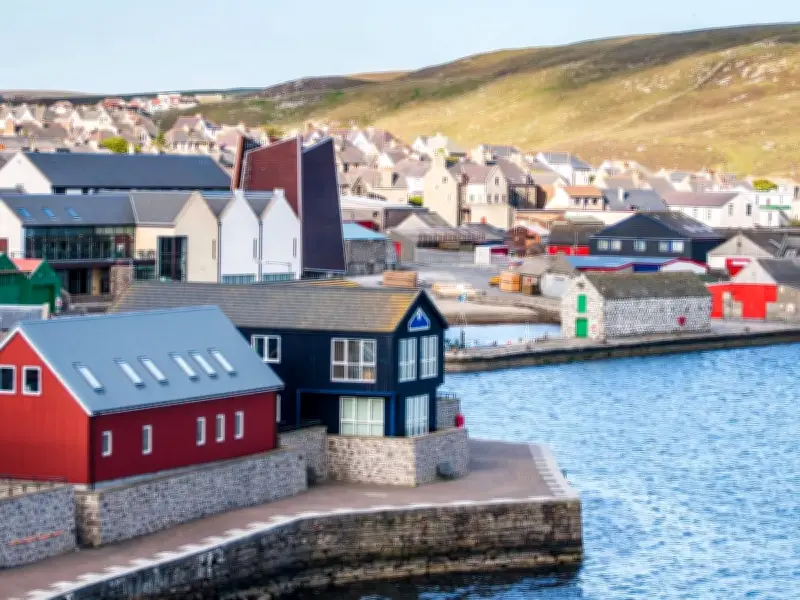
Lerwick, on Scotland's Shetland Islands, is often called "Little Norway" because of its strong historical ties to Scandinavia, offering visitors a winter escape with Norwegian-style scenery without leaving the UK.
Norse Heritage and History
The town remained under the Kingdom of Norway until 1469, and its name translates to "bay of clay" in Norwegian. During World War 2, Lerwick served as a key base for the "Shetland bus - Little Norway" operation, where small Norwegian fishing vessels docked to carry out secret missions and evacuate refugees from Nazi-occupied Norway.
Lerwick resembles Norwegian coastal towns, with traditional Scandinavian architecture and red timber-framed houses.
Visitor Impressions
On Facebook, some visitors said that "the landscape looks much more like Norway than Scotland." Another visitor on Tripadvisor noted that Lerwick has "numerous fascinating buildings including old warehouses which go right down to the edge of the water."
One commenter described Shetland as "a fantastic set of islands with wonderful scenery," while another added: "Shetland is wonderful. It's all about scenery. Along with Orkney, it has a completely different feel to the rest of Scotland with its Norse heritage. (They both belonged to Norway until 1472.) The Shetland Museum in Lerwick is excellent."
Exploring Lerwick
According to Shetland's official website, the town is ideal to discover on foot, with plenty to do. "Lerwick is a stunning town full of history and beautiful buildings, all telling a story. Some of the most interesting buildings are the Lodberries overlooking Lerwick Harbour."
Lerwick offers many opportunities for scenic walks, historical attractions, and family activities. Other UK towns resembling famous European destinations include Lynmouth, nicknamed "Little Switzerland" for its beauty.