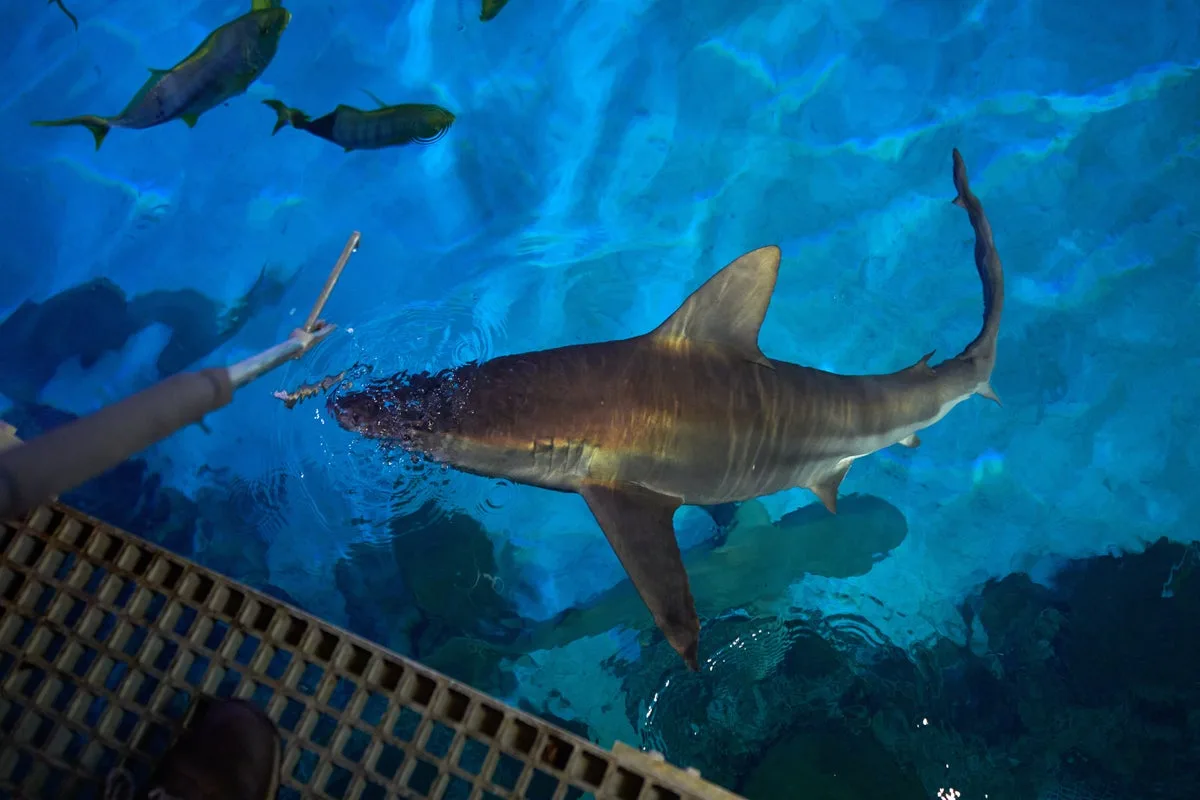
In the heart of the Nevada desert, an unexpected marine spectacle unfolds as sharks in Las Vegas consume hundreds of pounds of fish each week. The Shark Reef Aquarium, located within the Mandalay Bay Resort and Casino, goes through over 300 pounds (136 kilograms) of fish weekly to sustain its diverse aquatic population.
A Shark Dietitian's Unusual Role
Becky O'Brien, a lead aquarist at the facility, never imagined she would become a "shark dietitian" working with marine life in a 1.3 million-gallon tank inside a bustling casino. Her team cares for more than 3,400 animals, feeding 15 different shark species three times weekly with restaurant-quality seafood.
"They eat, I would say, better than the tourists on the Strip," O'Brien remarked, referencing the gourmet dining options in Las Vegas's famous tourism district. The aquarium has proven to be a significant attraction, drawing over 21 million visitors to Mandalay Bay since its opening in 2000.
Nutritional Science Behind Shark Diets
Samantha Leigh, a professor specializing in marine animal nutritional physiology at California State University, Dominguez Hills, explains that sharks require protein and lipid-rich diets to maintain fatty livers essential for buoyancy control. In natural habitats, sharks consume everything from microscopic zooplankton to seals and other sharks, but in captivity, they receive carefully curated meals.
The Mandalay Bay sharks are fed a varied mix of mackerel, herring, blue runner, and sardines to mimic wild dietary diversity. Some fish are wild-caught while others come from sustainable fisheries, ensuring ethical sourcing practices.
Feeding Techniques and Animal Training
Aquarists employ clever techniques to ensure sharks receive necessary nutrients. Vitamins are hidden inside fish, similar to concealing medicine in peanut butter for dogs, to prevent the animals from rejecting them. The sharks also undergo behavioral training where they touch targets or move to specific tank areas to receive food rewards.
Lunchtime serves dual purposes: nourishment and health monitoring. Staff can assess shark conditions based on eating patterns—refusal might indicate illness or breeding interest. During March to June breeding seasons, male sharks often eat less while females become particularly ravenous beforehand.
Conservation Efforts and Species Protection
The aquarium houses endangered species like zebra sharks, whose populations have declined dramatically due to fishing and coral reef habitat loss. Through global partnerships, the facility transports zebra shark eggs to Indonesia for rewilding programs aimed at restoring wild populations.
O'Brien hopes public feedings inspire future generations to "care about the ocean and then hopefully protect it, to love it as much as we do." This educational mission complements the aquarium's conservation work.
Extended Lifespans in Captivity
Many sharks at Mandalay Bay live significantly longer than their wild counterparts. Jack Jewell, the aquarium's general curator, points to a sand tiger shark estimated at 33-36 years old—approximately a decade beyond typical wild maximum ages. As sharks age and struggle to catch prey naturally, aquarists essentially become "food delivery drivers" providing essential nutrition.
Visitor Experiences and Aquatic Personalities
Recent visitors observed sharks, sea turtles, and lookdown fish—silver fish named for their downward gaze while swimming—navigating a decorative shipwreck in the massive tank. During feedings, bow mouth guitarfish with uniquely shaped mouths for crushing crustaceans swim vertically to pluck fish from aquarist Lukas Seoane's tongs.
Individual personalities emerge during meals. One "bossy" female guitarfish consumed over 4 pounds (1.8 kilograms) in a single feeding while a younger male patiently waited his turn. Seoane humorously noted, "Every time I'm done feeding these guys, I think I want to go out and get some sushi. If it's good enough for them, it's good enough for me."
The Shark Reef Aquarium demonstrates how specialized care, nutritional science, and conservation commitment sustain marine life in an unlikely desert location, offering both entertainment and education to millions of Las Vegas visitors annually.