Heptonstall, a village perched hundreds of feet above Hebden Bridge in West Yorkshire, draws literary pilgrims and history lovers to its famous grave and ancient church ruins. The village sits on the outskirts of Hebden Bridge, a market town known for its thriving arts scene and a high street populated exclusively by independent shops and local businesses.
Heptonstall, however, exudes a different atmosphere, one that feels darker and more ancient, as though transported back through the centuries. Many visitors choose to spend a day trip exploring it or stop by while staying in the larger neighbouring town, particularly those eager to discover its hidden treasures.
13th-century ruins and a rebuilt church
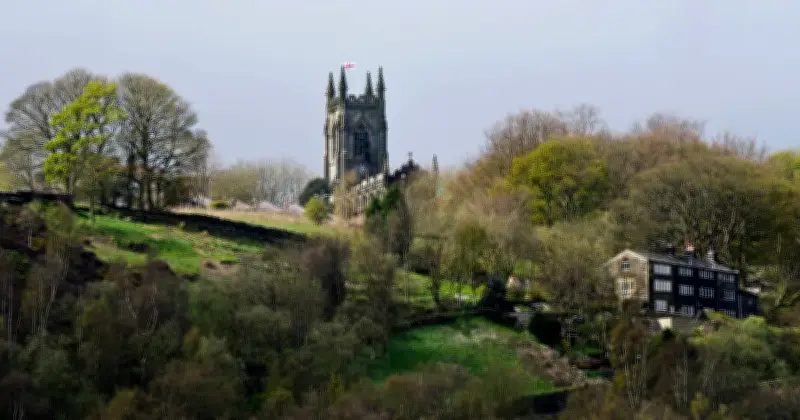
One of the main attractions is the atmospheric 13th-century ruins of what was once St Thomas à Becket's Church. The remnants cast a brooding presence over the surrounding area, having been ravaged by a fierce storm in 1847.

The church was reconstructed in the 19th century, only to fall into disrepair once more, meaning that in a single location you can witness the skeletal remains of the same building from two entirely different eras. The site simultaneously evokes both a 13th-century and a 19th-century place of worship.
The ruins are regularly maintained and freely accessible to the public. Owing to its distinctive hilltop setting and ancient character, the surrounding roads are narrow and offer virtually no parking for visitors.
Sylvia Plath's grave
Nestled within the graveyard of St Thomas's Church lies the resting place of a globally celebrated author. Visitors flock to the village to pay their respects to Sylvia Plath, who is buried in the graveyard extensions, following her death in 1963.
The celebrated writer and poet took her own life at just 30, leaving behind two children, whom she had with fellow poet Ted Hughes. Despite their separation at the time of her death, the couple remained legally married, and he therefore stood as her next of kin.
Hughes held sole authority over where and how she was laid to rest, selecting Heptonstall, which held close ties to his family heritage in West Yorkshire. This appeared a curious choice given that Plath was American, having been born in Boston, and had never resided in or near the village.
The grave has long been a subject of controversy, as the headstone bore her married name, Sylvia Plath Hughes. Members of the public, upon learning of his alleged infidelity, have repeatedly vandalised the stone over the years, chiselling away the 'Hughes' portion of her name.
Following a recent visit, one tourist wrote on Tripadvisor: "Beautiful little village with cobbled streets, two churches, one with Sylvia Plath's grave, and a lovely tea shop, Townsgate Tearoom, with indoor and outdoor seating."
"We drove up from Hebden Bridge and parked outside the village on the roadside. Very easy to spend a couple of hours here."
Winding cobbled streets are lined with charming cottages and a welcoming local pub, The White Lion, which provides the perfect retreat for visitors seeking shelter from the chill.