

Gulf Crisis Sparks Travel Industry Turmoil as Confidence Plummets
Leading travel industry figures have issued stark warnings about the impact of the escalating Gulf crisis on passenger confidence and holiday plans. The US-Israeli attack on Iran and subsequent reprisals against Gulf states have created what one executive describes as "Covid part two" levels of disruption.
Airspace Closures Trigger Widespread Flight Chaos
The crisis escalated dramatically on 28 February when Iranian drones and missiles targeted key infrastructure across the region, forcing the closure of airspace at global hubs including Dubai, Abu Dhabi and Doha. Since then, major airlines Emirates, Etihad and Qatar Airways have struggled to restore normal schedules, with countless passengers experiencing repeated flight cancellations.
Julia Lo Bue-Said, chief executive of the Advantage Travel Partnership representing over 700 travel agencies, revealed the scale of the disruption: "Every day that it goes on, our members have more re-bookings for flights to the UAE that aren't operating. To be honest, it feels like Covid part two. Navigating inconsistent airline policies as to when customers can amend, when they can cancel, has been a minefield. Prices have gone up, so that's causing some distress as well."

Industry Predictions: Short-Term Pain Versus Long-Term Shifts
Travel veterans are divided on how long the disruption will last and what lasting impact it might have. Richard Slater, with four decades in the industry, predicts a relatively brief period of uncertainty: "Based on previous conflicts in 1991 and 2003, I'd say perhaps four to six weeks of disruption." His company, Henbury Travel of Macclesfield, has already rebooked clients from Asian itineraries using Etihad to destinations like Tenerife instead.
However, the crucial question remains whether travellers will permanently avoid the Middle East and eastern Mediterranean regions. Ashley Quint, director of TravelTime World in Hertfordshire, reports: "I've already had enquiries about moving from Turkey, Cyprus and Oman to potentially the western Mediterranean. I can see that continuing."
Booking Trends Reveal Mixed Picture
Industry leaders report contradictory patterns in new bookings. Richard Slater observes: "Initially, it will knock confidence. People are understandably unsure. We'll probably take a short-term hit in bookings, as we did during the ash cloud and other crises." He notes the real test will be whether customers continue paying their balances, with some travel agencies offering zero deposits seeing different behaviour patterns.
Contrastingly, Julia Lo Bue-Said reports: "Feedback so far from members has actually been the new business is pretty steady. People want to book, they're still looking to travel, not seeing any indication at all of any full-scale cancellations and people still want their holidays."
Destination Shifts and Future Predictions
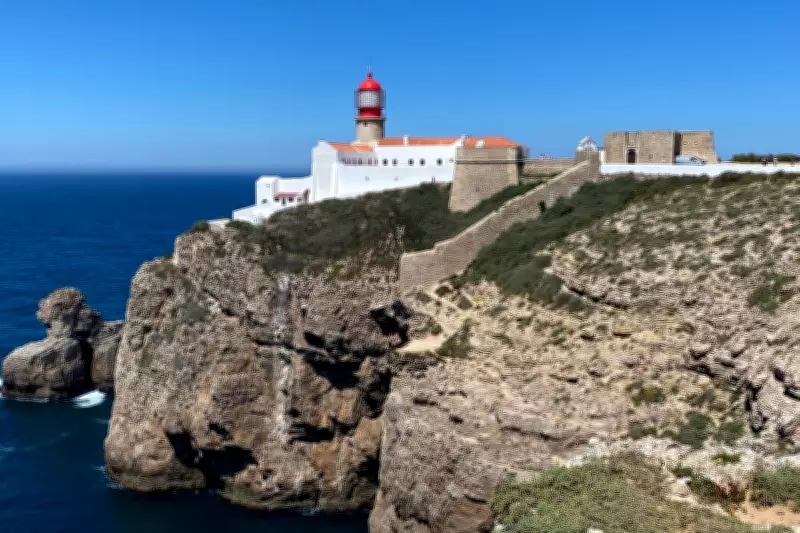
Industry experts anticipate significant geographical shifts in holiday preferences. Ashley Quint forecasts: "I sense people will be looking for dependable destinations: classics like the Spanish islands, Italy, Croatia and Portugal for short haul. Maybe an uptake in Caribbean for the summer, and, for the slightly more adventurous, the likes of Canada and parts of Latin America."
He also predicts increased interest in cruising among travellers previously focused on all-inclusive resorts in Turkey and Greece. Meanwhile, airfare dynamics are expected to shift dramatically: "I'm fully expecting air fares heading east to skyrocket as everyone starts funnelling through the Far East, as well as pressure on places like the Maldives and Mauritius where a lot of traffic came through the Middle East."
Recovery Prospects for Gulf Airlines
Despite current challenges, some industry veterans believe Gulf carriers will bounce back. Richard Slater asserts: "When this is contained, I think Gulf airlines will recover fairly quickly. They have the resources and marketing power to restore confidence." However, Ashley Quint cautions that even after airspace reopens, "it's going to be difficult to convince people to connect, and there won't be enough capacity on the direct services."

The travel industry now faces what Julia Lo Bue-Said calls "the million-dollar question": how long will this disruption continue? With comparisons to pandemic-era chaos and predictions of destination shifts, the Gulf crisis has created unprecedented uncertainty for travellers and industry professionals alike.





