Female Holidaymakers Face Significant 'Safety Tax' When Travelling Abroad
New research has revealed that female travellers frequently modify their behaviour and appearance while on holiday, with more than half admitting to making such adjustments specifically because of their gender. The comprehensive study conducted by travel company Holiday Extras has identified what it terms a 'safety tax' – a substantial gap between how safe women feel and how freely they can act during their trips.
The Alarming Statistics Behind Travel Behaviour Changes
The survey found that 52 per cent of women acknowledged altering their usual conduct during their most recent holiday due to safety concerns related to their gender. This behavioural adjustment manifests in various ways, including modifying clothing choices, changing how they move through destinations, and avoiding certain activities they might otherwise enjoy. The research quantified a significant 38 per cent average disparity between women's perceived safety and their ability to act freely while travelling – a gap officially dubbed the 'safety tax' by researchers.
To better understand these dynamics, Holiday Extras developed the Female Traveller Safety Index (FTSI), which evaluates both how secure women feel in specific destinations and the extent to which they believe they must modify their behaviour. This innovative index provides crucial insights into the complex relationship between objective safety statistics and subjective travel experiences for female holidaymakers.

Destination Rankings: From Gold Standards to High Adaptation Hubs
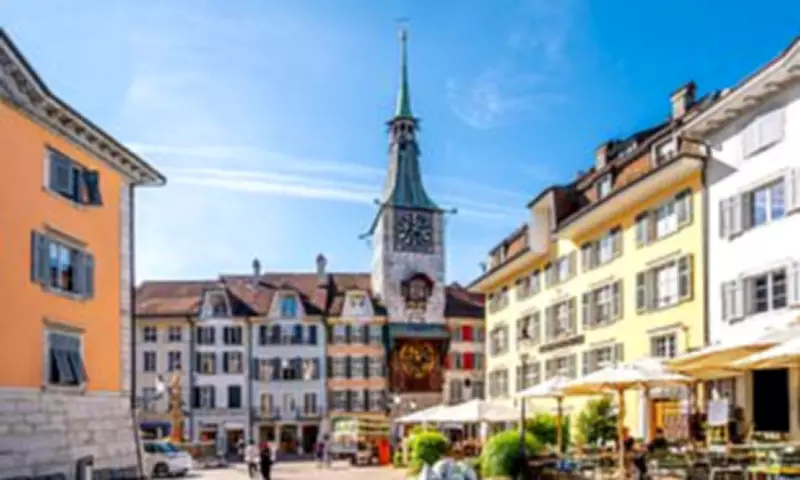
Switzerland emerged as the clear leader in the safety rankings, achieving what researchers described as the 'gold standard' for female traveller security. An impressive 83 per cent of women reported feeling 'very safe' when visiting the Alpine nation, with none of the survey participants indicating they felt unsafe during their stay. Crucially, female travellers in Switzerland reported minimal need to adjust their behaviour, resulting in one of the lowest 'safety tax' scores recorded in the study.
Malta achieved an exceptional 100 per cent traveller safety score, placing it alongside Switzerland as a premier destination for women seeking security and freedom during their holidays. Portugal also performed strongly in the rankings, with experts highlighting it as another impressive destination for female travellers.
Romania was identified as another favourable location, with 70 per cent of respondents reporting they didn't need to change their behaviour at all while visiting. Researchers noted that Romania 'stands out as a destination where safety and freedom closely align,' suggesting a rare harmony between security and autonomy for women travellers.
Destinations Requiring Significant Adaptation
Croatia presented a more complex picture, described by researchers as 'safe, but not carefree.' While 67 per cent of women reported feeling secure in the Adriatic nation, a substantial 42 per cent still avoided going out alone – the highest environmental adjustment recorded in the entire study. This suggests that even in statistically safe destinations, women may still feel compelled to restrict their activities.
The United Arab Emirates presented another nuanced case, with 57 per cent of female travellers feeling very safe but 19 per cent modifying their clothing to align with local cultural norms. This places the UAE in what researchers categorised as 'High Adaptation Hubs' – destinations that feel secure but require significant behavioural adjustments to local customs.
Morocco emerged as requiring the highest psychological adjustment from female travellers, with 21 per cent reporting they felt the need to remain constantly alert throughout their trip. This heightened state of vigilance represents a significant psychological burden that affects the travel experience even in destinations that might otherwise offer appealing cultural and scenic attractions.
Expert Analysis and Industry Implications
Elizabeth Hogg, chief operating officer at Holiday Extras, commented on the findings: 'It is hugely positive that so many women feel safe when they travel. Switzerland, Portugal and Malta in particular stand out as destinations where women feel very confident.'

'But what is striking,' Hogg continued, 'is that more than half of women still adjust their behaviour while abroad. That might mean avoiding going out alone, staying extra alert or even changing how they dress. Feeling safe and feeling completely free are not always the same thing.'
The research also identified what it termed 'Perception Laggers' – destinations like Poland and the Netherlands that are statistically safe but where women nevertheless report feeling less secure in public spaces. This disconnect between objective safety data and subjective experience highlights the complex psychological dimensions of travel security for women.
Understanding the Safety Categories
According to the Holiday Extras Female Traveller Safety Index, destinations fall into several distinct categories:
- Safe Havens: Switzerland and Malta represent the 'gold standard' where safety and freedom align most closely
- High Adaptation Hubs: The UAE and Egypt offer security but require significant adaptation to local customs and norms
- Perception Laggers: Poland and the Netherlands demonstrate a gap between statistical safety and women's subjective feelings of security in public spaces
This groundbreaking research provides valuable insights for both travellers and the tourism industry, highlighting the ongoing challenges women face when travelling and identifying destinations that offer both security and freedom for female holidaymakers.