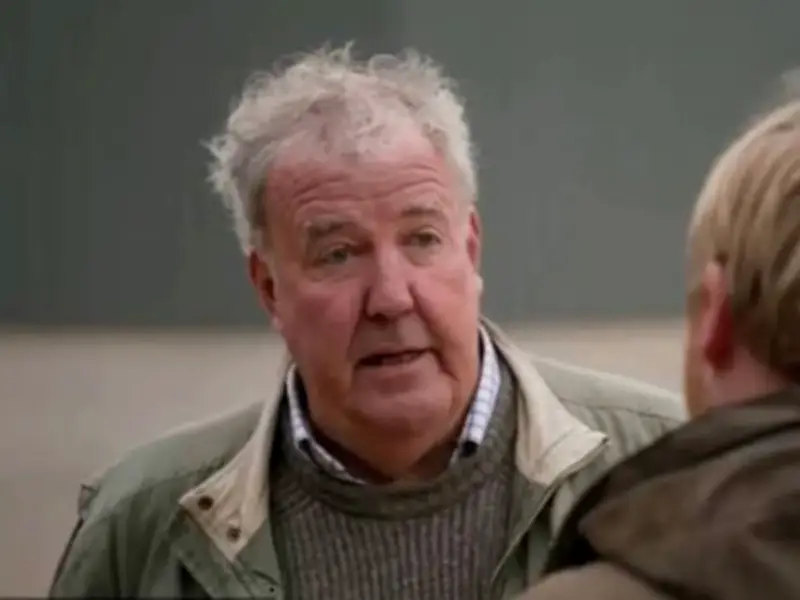
Jeremy Clarkson has said queues at his Diddly Squat Farm shop have disappeared after a new car park was added, as he responded to criticism of the Cotswolds in a newspaper column.
The Clarkson's Farm presenter, who has lived in the area for three decades, was writing in The Sun about claims that the region might not suit American actress Sydney Sweeney. He disputed several points, including suggestions of poor internet connectivity and a lack of accessible supermarkets.
Car park ends long-standing queues
Jeremy said he had submitted his latest column using an internet connection that was "substantially better" than the one at his London flat, and revealed that his nearest Co-op was just a ten-minute journey away.
Responding to complaints about congestion, he wrote: "And then I went on a ten-minute trip to the Co-op, past my farm shop where there aren't any queues because I finally have a car park."
The car park has been the subject of ongoing planning discussions. Jeremy previously obtained temporary permission for the facility at his Oxfordshire farm, granted in 2023 for three years. In July, Oxfordshire County Council backed an application to extend its use until 2030 due to the "expected ongoing demand" generated by the Amazon Prime Video programme.
Planning uncertainty hits wider business
West Oxfordshire District Council is expected to make the final decision on the latest application. However, the parking arrangements are not the only planning matter affecting the television personality.
Jeremy recently warned that uncertainty surrounding decisions by his local authority was placing his wider business activities under strain. He said he had struggled to obtain permission to improve the surface of a field used by customers visiting his pub, despite being offered materials to strengthen it ahead of the winter weather.
He said the uncertainty was affecting hundreds of employees, alongside independent businesses that rely on visitors attracted to the farm. "Nearly 300 people are employed by my various enterprises these days," he wrote. "And all of them want to know if their jobs are secure."
Rural upbringing defence
In his latest defence of the Cotswolds, Jeremy also rejected the notion that its rural location represented an obvious disadvantage for potential residents. He pointed out that Sweeney had been raised in an equally rural area of Washington State, writing: "Oh, and I've checked. Ms Sweeney, right, was raised in a lakeside home in a very rural part of Washington State where - and I know this because I've been there - it also goes dark at night."