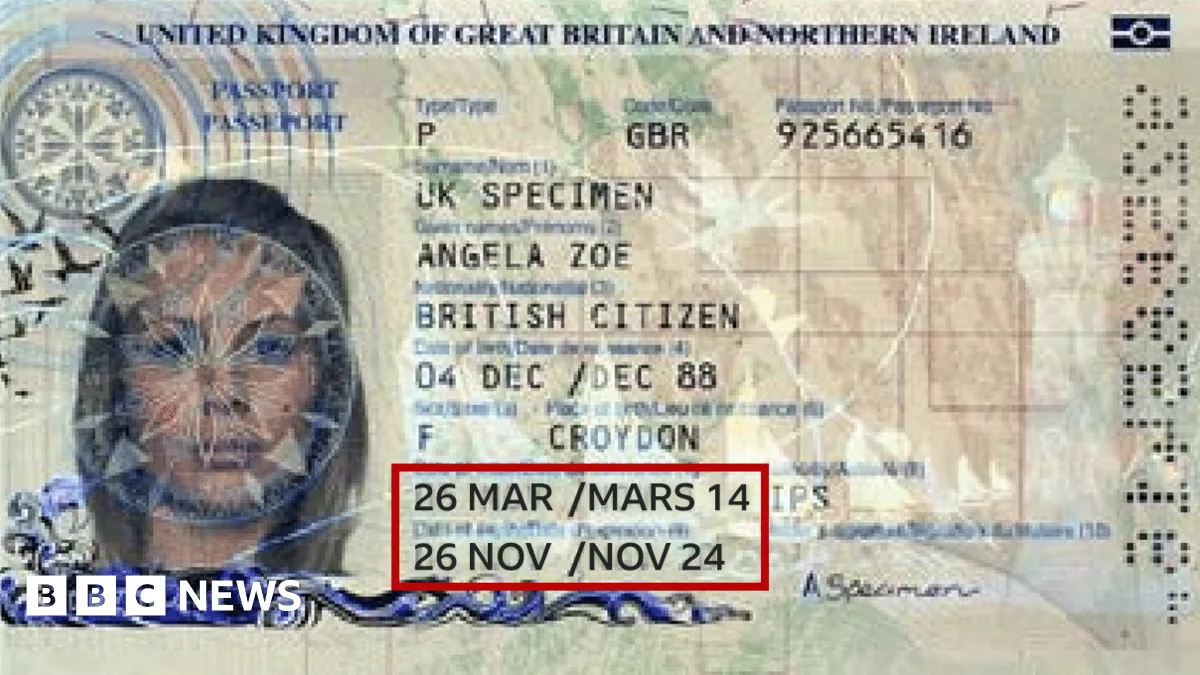
UK travellers heading to the European Union are being reminded of the '10-year passport rule' that has been catching people out since Brexit. Under the new regulations, passports must have been issued less than 10 years before the departure date, even if they still have several months of validity left.
The rule applies to all EU countries, as well as Iceland, Norway, Liechtenstein and Switzerland, but not Ireland. It stems from the fact that before 2018, the UK passport office used to carry over up to nine months of validity from an old passport to a new one, meaning some passports can be valid for up to 10 years and nine months but are now invalid for European travel.
Nathan Barnes, a 31-year-old paramedic from Norwich, was refused boarding on a flight to France despite checking in online and passing through security. 'My passport had been issued more than 10 years previously,' he said. 'They just said sorry you can't board, off you pop.'
Jane Opher, a 61-year-old architect from London, had a similar experience when travelling to Barcelona. Her passport, issued on 10 February 2014, was valid until 10 August 2024, but she was refused boarding because it was more than 10 years old. 'It was very stressful – I was traumatised,' she told the BBC.
Rory Boland, Travel Editor at Which?, advised travellers to check their passport validity when booking, not at check-in. Simon Calder, travel correspondent at the Independent, estimated that 'easily a couple of hundred people a day' are being turned away, potentially affecting over 100,000 people per year. He has urged airlines to do more to warn passengers.
Passengers with invalid passports can renew them online or via a paper application, with standard renewals taking up to three weeks. Emergency appointments are available at passport offices offering one-day or one-week fast-track services.