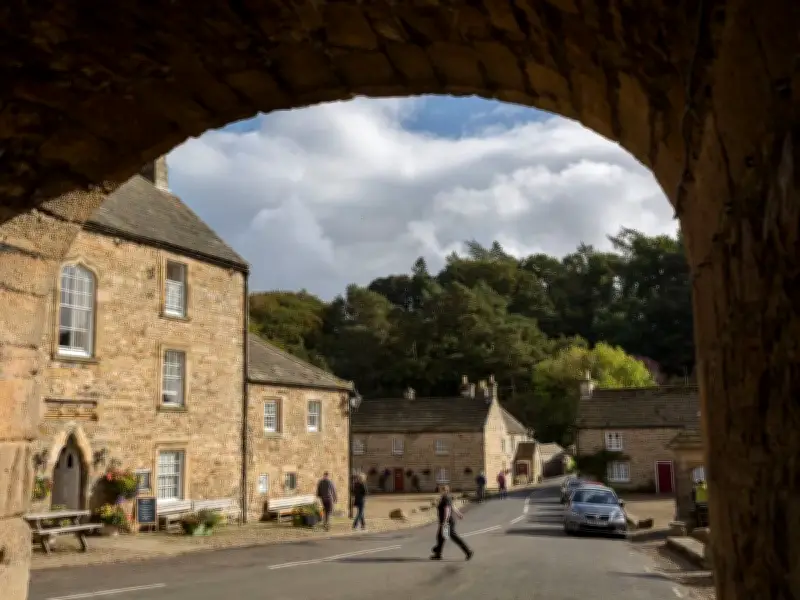
Blanchland, a honey-stone village in Northumberland, remains seemingly unchanged for hundreds of years and is regarded as one of the prettiest in the North of England. Established in 1165 by white-robed French monks, its name derives from the French word 'Blanche', meaning 'white'. The village sits on the cusp of the Northumberland and Durham border, making it an ideal base for exploring the North Pennines Area of Outstanding Natural Beauty.
Historic pub at the village heart
At the centre of Blanchland stands the Lord Crew Arms, one of the oldest hotels in the country, dating back to the 12th century. The inn's stone walls hold centuries of history, including a famous tale from the Jacobite Rebellion. In 1715, General Thomas Foster hid behind the inn's great fireplace to evade capture, and legend claims the hotel is haunted by the ghost of his sister, Dorothy Foster.
Inside, the pub offers traditional features such as stone wall interiors, rustic wooden beams and roaring open fires. Guests can enjoy a pint, hearty pub food, or an overnight stay. One recent visitor wrote in a Google review: "Wonderful few days away. Staff were amazing. Food is incredible. Very interesting and historic little village. We stayed in a cosy room with a nice big bed and space adequate for our stay. All so clean and well maintained."
Another shared: "This really is a gem of a place. We found it by luck, and so happy we did. It's steeped in history, sympathetically done to showcase the historical features. The town and setting are stunning, and the staff was a joy from beginning to end."
The abbey and its legend
Blanchland Abbey was founded by Walter de Bolbec in 1165, marking the beginnings of the area. Although it did not become an abbey until the late 13th century, it has endured numerous challenges. In 1327, the abbey granges were pillaged during the Anglo-Scots wars, yet the abbey itself remained unscathed. Legend has it that during a raid, monks prayed for protection, and a mist shielded the monastery from view, leaving it untouched.
Today, the building serves as the active St Mary's Church, open to visitors outside of prayer times and church events. After visiting, one person shared on Tripadvisor: "Literally and figuratively, this was a cool spot to visit. The pews have personal pillows for each of the congregation. They are very likely created by the members themselves. An old building indeed with a lot of interesting history. The attached cemetery has some very interesting headstones also."