

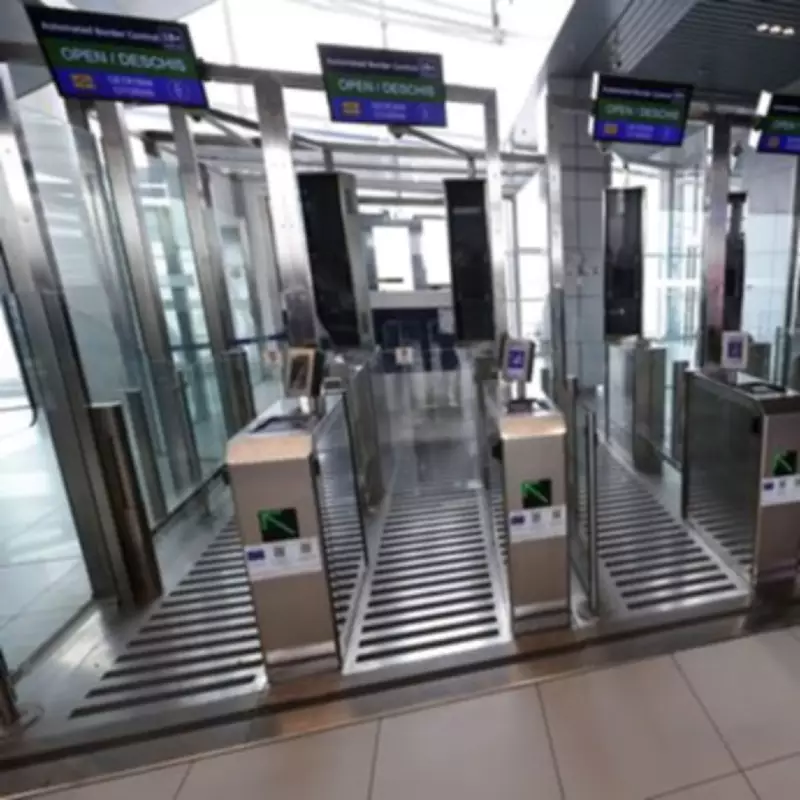
The European Union's Entry-Exit System (EES), which launched in October 2025, has already ensnared approximately 4,000 holidaymakers, primarily due to widespread confusion over the 90/180-day rule. This new digital border control system, designed to streamline entry and exit processes for non-EU residents such as British travellers, has instead sparked reports of lengthy airport queues and significant misunderstandings among tourists.
Digital Tracking Exposes Miscalculations
George Cremer, a software developer and digital nomad who created the app Schengen Simple to assist non-EU nationals, highlighted that the EES's automated tracking has brought previously unnoticed errors to light. "Before EES, many miscalculations went unnoticed because border officials had to manually check passport stamps," Cremer explained. "Now every entry and exit is tracked digitally, and the system flags overstays automatically. So that 4,000 figure certainly includes a large number of people who genuinely believed they were compliant."
The data revealing these overstays comes from eu-LISA, the EU agency responsible for managing border control systems. Cremer's app aims to clarify the 90/180-day rule, which limits non-EU nationals to 90 days of visa-free travel within the Schengen Area over any rolling 180-day period.

Common Mistakes with the 90/180-Day Rule
Cremer identified three frequent errors that have caught travellers off guard. The primary issue is the misconception that the rule operates on a fixed reset basis. "Most people think the 90 days work like a visa stamp: use up your days, leave, and the clock resets. It doesn't," he stated. Instead, the system uses a rolling window, meaning that every day, it looks back 180 days to count how many were spent in the Schengen Area. For instance, a week in Portugal in January reduces the allowance available for a summer holiday.
Another common misunderstanding is that each Schengen country tracks days separately. Cremer clarified, "All 29 Schengen countries share one 90-day pool. A weekend in Paris and a month in Spain are counted together." Additionally, some travellers erroneously believe the rule splits the year into two halves, but it is not 90 days per half-year; the 180-day period continuously rolls backward from each day.
Planning Ahead for Busy Travel Seasons
With the EES set to be fully implemented by April 10, 2026, and travel seasons like Easter and summer approaching, Cremer warned of the need for forward planning. "The other thing people miss is forward planning. Using up days over Easter could leave you short for a holiday you've already booked in July," he cautioned. His app, Schengen Simple, helps users factor in future trips to avoid overstays.
Despite intentions to simplify border processes, the EES has introduced complexities that require travellers to be more vigilant. As implementation varies across EU countries, staying informed about the 90/180-day rule is crucial to prevent disruptions and ensure compliance with the new digital system.






