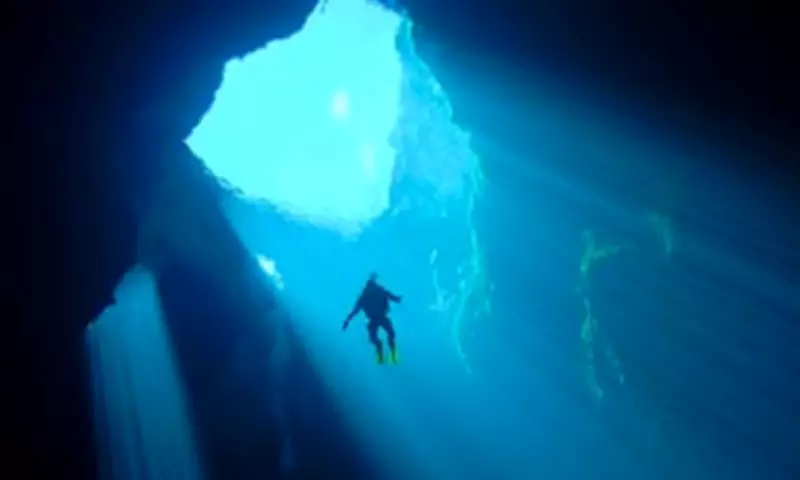
Diving beneath the surface of an ocean, lake, river or sea is often described by scuba enthusiasts as one of life's most exhilarating experiences. Whether exploring shipwrecks, swimming alongside schools of fish or navigating underwater cave systems, the hidden world below offers a unique blend of adventure, beauty and discovery. But beneath the allure lies significant danger. Cave diving, in particular, is considered one of the most hazardous forms of scuba diving, and over the years even highly experienced divers have lost their lives in waters that appeared safe.
Earlier this month, five Italian tourists died while exploring underwater caves around 160 feet below the surface in the Maldives. A sixth person, a Maldivian military rescue diver, later died from decompression sickness during recovery efforts. The tragedy echoes similar incidents elsewhere. In Croatia in 2022, Czech tourist Dan Frolec, 55, lost a friend during a scuba expedition in an underwater cave in the Adriatic Sea, while another diver died during the rescue operation. In 2014, Finnish divers Jari Huotarinen and Jari Uusimäki were killed while diving more than 100 metres deep inside a vast cave system in Norway's Plurdalen Valley.
Yet underwater caves are far from the only natural environments that can prove deadly. Every year, hundreds of people lose their lives after falling into, or entering, cold, fast-flowing or unpredictable waters. Earlier this week alone, ten people – including eight teenagers, a grandfather in his 60s and a woman in her 70s – died after getting into difficulty in lakes and at sea during the UK's record-breaking heatwave. Following these incidents, experts have warned of the dangers posed by underwater cave networks and open-water swimming spots, stressing the importance of proper planning, safety precautions and avoiding risky social media trends.

Oliver Moheda, of Total Artist Management, said: 'A major concern is the influence of viral social media content that showcases hidden caves, cliff-diving spots and underwater systems without properly communicating the serious risks. These include rapidly changing tides and underwater currents, poor visibility, limited oxygen availability, disorientation and panic in confined spaces, as well as local safety warnings being ignored. As public interest in adventure travel continues to grow, there is an increasing need for greater awareness of environmental hazards, responsible tourism and the importance of following local safety guidance before entering unfamiliar waters.'
As summer travel gets underway, we've highlighted 15 of the world's most dangerous swimming spots and underwater cave systems – six of which are in the UK.
1. Porth yr Ogof – Brecon Beacons, South Wales
Located in South Wales, Porth yr Ogof is one of the UK's largest cave entrances and a popular spot for caving and wild swimming. However, the underground river system can become extremely dangerous after heavy rain, with powerful currents and hidden chambers posing serious risks to swimmers and divers. Several fatalities have been recorded at the site over the years, including 17-year-old army cadet Kevin Sharman in 2002, and 21-year-old trainee cave diver Paul Heinz Esser, who went missing in 1971 before his body was retrieved 40 years later in 2019.
2. The Spar Cave – Isle of Skye, Scotland
Hidden along the Isle of Skye's rocky coastline, the Spar Cave is known for its narrow sea cave entrance and crystal-lined walls. The cave, accessible only at low tide, can quickly become hazardous as rising water levels cut off escape routes, while slippery rocks and the surrounding rough sea only add to the danger. Vlad Trestian, Travel & Tourism Expert and Director at Balkan Trails, warns: 'Visitors to the area can become trapped behind cliffs or cut off from exiting the cave. What makes this cave so deceiving is that the seemingly peaceful entrance can turn deadly in mere minutes once waves start rushing through the narrow passageway.'

3. Fingal's Cave – Isle of Staffa, Scotland
Widely considered one of Scotland's most famous natural wonders, Fingal's Cave is renowned for its unique basalt columns – a formation similar to Giant's Causeway in Northern Ireland – and echoing interior. Although visually breathtaking, the cave is exposed to unpredictable Atlantic swells and dangerous waves, making access via boat a difficult and potentially risky mission, especially during poor weather conditions.
4. Mossdale Caverns – Yorkshire Dales, England
Located in the Yorkshire Dales, the Mossdale Caverns are considered one of Britain's most dangerous cave systems. In 1967, the nation saw its worst ever cave disaster when six cavers died within the network as a result of torrential rainfall rapidly filling the tunnels. Experts have since warned visitors of tight passages, freezing water and sudden flooding that continue to make the caverns extremely hazardous.
5. The Strid – River Wharfe, North Yorkshire
At first glance, The Strid appears astonishingly serene, but there is a reason it is regarded as one of Britain's deadliest stretches of water. Here, the River Wharfe narrows into a fast-flowing channel with powerful underwater currents and hidden rock formations. A fall into this body of water is considered among locals nearly 100 per cent fatal, with many people believed to have drowned over the decades. In 1988, honeymooners Barry and Lynn Collett, both in their late twenties, fell into the river; their bodies were recovered days and weeks later. And, nearly 120 years ago, in 1910, eight-year-old Aaron Page slipped on the adjacent mossy rocks and was swept away, never to be found. Vlad added: 'This stretch of river has earned a particularly frightening reputation because it is probably the most misleading section of river in all of Britain. People can easily get lulled into taking unnecessary risks when visiting this area such as attempting to take photos or crossing the river because the river appears shallow and easy to traverse. Unfortunately, the river banks themselves are quite unstable, and if someone falls into the water he/she will likely be sucked beneath the overhang immediately.'
6. Sandford Lock – River Thames, Oxford
Sandford Lock, near Oxford, has long held a reputation as one of the most dangerous parts of the River Thames. Strong currents, deep water and changing river conditions have contributed to numerous fatal drownings over the years, particularly among swimmers and boaters unaware of the strength of its flow. The most infamous tragedy involved Oxford University students Michael Llewelyn Davies and his friend Rupert Buxton, who both drowned in the river in 1921. Vlad said: 'Locks produce irregularly timed bursts of intense hydraulic pressure that can catch a person off guard, potentially dragging them towards the sluice gates or trap them in rotating water flows. Additionally, even though the Thames may appear warm enough to cause no problems, it actually remains cold enough to cause muscle cramps and/or hypothermia very quickly.'
7. San Francisco Maru – Chuuk Lagoon, Micronesia
Dubbed the 'Million Dollar Wreck', the San Francisco Maru is a Japanese shipwreck resting around 50 metres below the surface in Chuuk Lagoon. The site attracts experienced wreck divers due to its preserved wartime cargo that includes mines and tanks, but its depth and potential for nitrogen narcosis make it unsuitable for inexperienced divers.
8. The Devil's Caves – Ginnie Springs, Florida
The Devil's Caves at Ginnie Springs are among the most famous cave diving sites in the United States. But while its crystal-clear water attracts divers from around the world, its complex underwater passages, restricted visibility and risk of becoming disoriented have led to numerous deaths over the decades. According to research by the International Journal of Aquatic Research and Education, around ten divers die each year while exploring the caves. Vlad warned: 'One of the main threats posed by Devil's Caves is caused by limited space, silt-filled pathways and multiple tunnel systems, making it relatively simple for novice divers to make mistakes while navigating the caves and end up lost or stuck. Over confidence is another major threat from recreational divers who feel they understand the difference between open water diving and cave diving.'
9. Lake Titicaca – Bolivia and Peru
Nestled along the border between Bolivia and Peru, Lake Titicaca is the world's highest navigable lake and a popular destination for divers exploring submerged ruins and ancient artefacts. However, the lake's high altitude creates lower oxygen levels, which increases the risk of altitude sickness and makes diving conditions more physically demanding. Vlad said: 'While not as obviously hazardous as some of the previous examples listed; Lake Titicaca poses a similar risk in terms of serious injury and death. This is largely attributed to being at an altitude greater than 3,800 metres, meaning that oxygen available to the body is reduced compared to what most travellers are accustomed to. Therefore, swimming or diving at this elevation places additional stress upon the cardiovascular system. Symptoms associated with acute mountain sickness include: dizziness, nausea, shortness of breath etc, which can quickly progress into serious medical emergencies when combined with exposure to cold water.'
10. Snake Ridge – Gunung Api, Indonesia
Snake Ridge, near the volcanic island of Gunung Api, is famous for its dramatic underwater lava flows and rich marine life. However, strong currents, sudden depth changes and unpredictable underwater conditions make the site challenging even for experienced divers – particularly during periods of increased volcanic activity.
11. The Shaft Sinkhole – Mount Gambier, Australia
The Shaft Sinkhole near Mount Gambier is considered one of Australia's premier cave diving locations, where divers descend through a narrow opening into a deep underwater chamber illuminated by sunlight that cuts through the surface. However, the site's extreme depth and enclosed environment require specialist training and equipment.
12. Samaesan Hole – Samaesan Bay, Thailand
Samaesan Hole is a deep dive site in Thailand known for steep underwater walls and its abundance of marine life. The site can experience powerful down currents capable of pulling divers to dangerous depths, while low visibility and strong tidal movement increase the level of risk.
13. The Temple of Doom – Tulum, Mexico
The Temple of Doom is a cenote cave system near Tulum, popular with skilled cave divers. Divers enter through a narrow opening before descending into a vast underwater network of tunnels and chambers. Experts warn its confined spaces and total darkness can make it particularly dangerous for anyone without advanced cave diving experience.
14. The Blue Hole – Dahab, Egypt
The Blue Hole in Dahab is widely regarded as one of the world's most dangerous diving sites. The sinkhole plunges more than 100 metres deep and has claimed the lives of many divers attempting to navigate 'The Arch' – a submerged tunnel linking the hole to the open sea. Depth, nitrogen narcosis and overconfidence are often the main drivers behind fatalities there. It's estimated that between 130 and 200 divers have perished at the site over the years.
15. Jacob's Well – Wimberley, Texas
Jacob's Well is a striking underwater cave system in Texas that attracts swimmers and cave divers alike. But beneath its calm surface lies a series of narrow chambers and tight passages where divers can easily become trapped. Up to nine experienced divers died exploring the cave network between 1964 and 1984, though the official figure is estimated to be slightly higher.