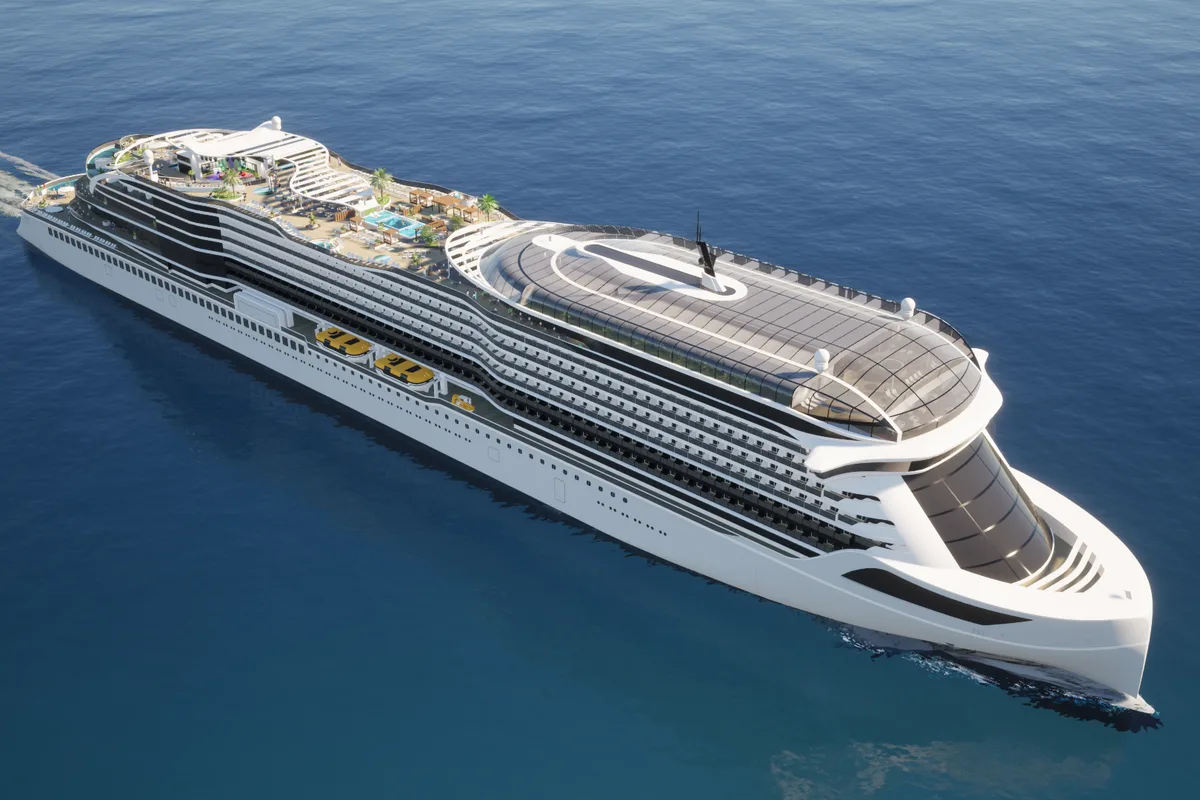
Meyer Werft, the German shipyard behind vessels such as Anthem of the Seas and Disney Destiny, has unveiled concept designs for the world's first fully battery-powered cruise ship. The project, known as 'Project Vision', was presented at the Seatrade Cruise Global industry trade show.
The proposed ship would be 275 metres long, accommodate 1,856 passengers and have a size of around 82,000 gross tonnes. The battery system, supplied by Corvus Energy from Norway, could reduce greenhouse gas emissions by up to 95 per cent.
Project Vision eliminates the traditional vertical shaft for exhaust treatment and the funnel, allowing for a new sun deck design with unobstructed views. Thomas Weigend, chief sales officer at Meyer Werft, said: 'If ordered this year, the shipyard could already deliver the first fully battery powered vessel in 2031.'
Newer cruise ships are already adopting more sustainable technologies. Vessels such as P&O Cruises Arvia, MSC World Europa and Star Princess use liquefied natural gas (LNG), while Viking Libra, launching in November 2026, can operate on hydrogen power for part of a voyage. Norwegian-focused lines like Hurtigruten and Havila Voyages are moving towards hydrogen and have completed voyages on biofuels; Havila's ships can run on battery power for up to four hours.
Some cruise ports now offer onshore power for ships when docked, allowing them to turn off diesel engines. Dover was named the UK's first net-zero port this week, attributed to initiatives such as onsite solar power and sustainably sourced hydrotreated vegetable oil.