

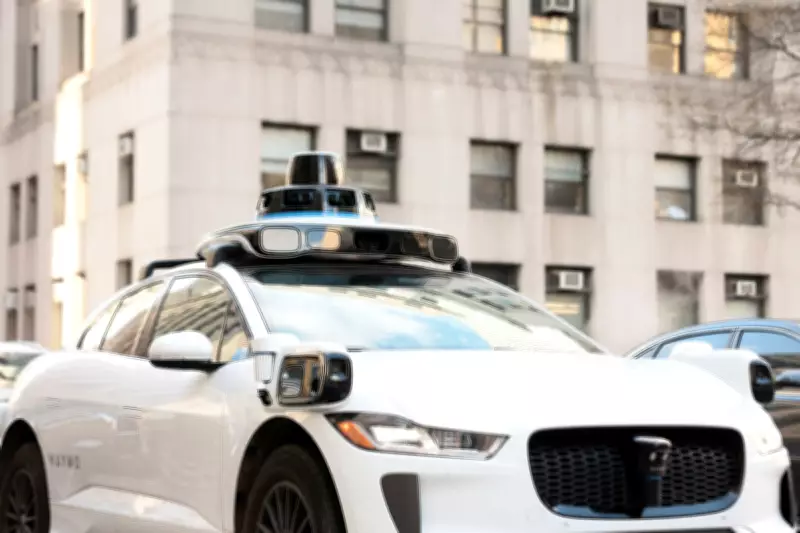
Waymo's Autonomous Taxis Commence Self-Driving Operations in London
Waymo's self-driving taxis have officially begun operating autonomously on the streets of London, marking a significant milestone in the deployment of autonomous vehicle technology in the United Kingdom. The company, which originated as Google's self-driving car division, announced that its vehicles are now permitted to navigate journeys without human intervention, following an initial testing phase where human drivers were present to monitor performance and adapt to local road conditions.
Progressive Rollout Towards Fully Driverless Vehicles
Currently, the autonomous taxis will retain a safety driver in the front seat as a precautionary measure, ready to take control if any issues arise during operation. However, Waymo has outlined ambitious plans to phase out these human supervisors later this year, transitioning to entirely driverless vehicles that operate without any onboard personnel. This stepwise approach is designed to ensure rigorous validation of the technology's performance on UK roads, particularly in mastering the unique nuances of London's complex urban environment.
"The Waymo Driver is officially navigating London!" declared Dmitri Dolgov, co-chief executive of Waymo. "Our core driving AI is generalising very well. Autonomous testing is now underway with specialists behind the wheel as we master local nuances and validate performance on UK roads—a key step toward rider-only deployment."

Government-Backed Initiative for Enhanced Safety and Accessibility
Waymo has garnered substantial support from the UK government, which views the introduction of autonomous vehicles as a catalyst for improving road safety, increasing travel accessibility, and attracting new investment to the country. The company asserts that its self-driving taxis can significantly enhance safety by eliminating human error, a leading cause of road accidents. Data from over 100 million autonomous miles driven by Waymo vehicles in other regions indicates a superior safety record compared to human-driven cars.
James Gibson, executive director of Road Safety GB, emphasised the potential benefits in a statement released during Waymo's trial launch: "Autonomous vehicles, such as Waymo, hold the potential to significantly improve road safety because, quite simply, the human driver is removed. The data shows that the Waymo vehicles have performed far safer compared to human drivers. Rolling out autonomous vehicles in a progressive yet measured way will be the best approach. The road safety profession and wider society should embrace it. It could lead to a future that our vision zero aspirations envision."
The deployment represents a pivotal advancement in urban mobility, with Waymo positioning itself at the forefront of transforming transportation in one of the world's busiest cities. As the technology continues to evolve, stakeholders are closely monitoring its impact on traffic patterns, regulatory frameworks, and public acceptance, anticipating a future where autonomous vehicles become an integral part of London's transport ecosystem.






