

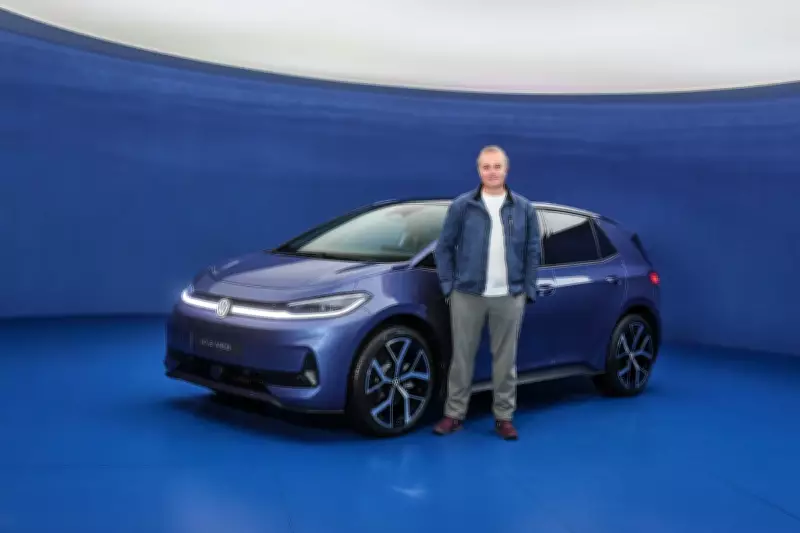
Volkswagen ID.3 Reborn as Neo with Buttons Return and 391-Mile Range
Volkswagen has comprehensively overhauled its electric ID.3 hatchback, renaming it the ID.3 Neo in a move that signals more than a mere mid-life refresh. This updated model, revealed on Wednesday 15 April 2026, builds on the success of one of Europe's most popular electric cars, which saw around 78,000 sales across the continent in 2025 alone.
Exterior Design Evolution
From the outside, the ID.3 Neo features a redesigned front end with slimmer LED headlights and a cleaner, more horizontal layout. According to Volkswagen design chief Andreas Mindt, this gives the car a "smile," a characteristic that will appear on all new Volkswagens. A new lighting signature includes a light bar linking the headlights and, on higher specifications, an illuminated Volkswagen badge.
The sides show a subtler evolution, with Volkswagen removing some of the contrasting black trim elements in favour of more body-coloured surfaces. This creates a more mature and cohesive look, with the roofline and rear end appearing longer and more streamlined. The rear also gets a tidier finish, as the boot lid is now painted in body colour rather than black, visually aligning the car closer to Volkswagen's traditional hatchbacks.

Interior Revolution with Buttons Return
Inside, Volkswagen claims the ID.3 Neo takes its biggest leap forward. The interior has been comprehensively reworked with a new dashboard layout, improved materials, and a stronger focus on usability. Softer-touch materials aim to lift cabin quality, while customer feedback has driven a key change: the return of physical buttons.
Climate control functions now sit on a dedicated control strip, and a proper rotary volume knob makes a welcome return. The touch-sensitive pads on the steering wheel have been replaced by buttons, addressing a major criticism of earlier ID models and making everyday use more straightforward.
Technology and Digital Upgrades
The digital experience has been enhanced with a larger 10.25-inch driver display offering clearer graphics and multiple layout options, including a retro-inspired view echoing the dials of the original Golf. A new, larger infotainment screen runs Volkswagen's latest 'Innovision' system, complete with an integrated app store for downloading additional features and services.
Optional retro interfaces include a tape player display for music and a 70s-style TV screen for navigation. New technology includes a digital key for smartphone or smartwatch access, and connected services bundled into a VW Connect package for up to ten years from first delivery.
Performance and Efficiency Boost
Under the skin, the ID.3 Neo moves onto Volkswagen's updated MEB+ platform and introduces a new electric motor focused on efficiency. This reduces energy consumption, extending range without necessarily increasing battery size. Buyers can choose from three battery sizes: 50kWh, 58kWh, and 79kWh, paired with power outputs of 168bhp, 188bhp, and 228bhp respectively.
The entry-level version offers up to 259 miles of range, rising to around 307 miles for the mid-size battery and up to 391 miles for the largest pack. Charging performance has improved, with the largest battery supporting DC rapid charging at up to 183kW, allowing a 10 to 80 per cent charge in about 26 to 29 minutes.
Practicality and Advanced Features
Practicality remains a key appeal, with the Neo continuing as a five-seat hatchback offering a 385-litre boot, expanding to 1,267 litres with the rear seats folded. An optional towbar-mounted bike carrier can handle loads up to 75kg, and a new vehicle-to-load function allows the car to power external devices like e-bikes via an adapter connected to the charging port.
Available options include:

- Panoramic roof
- Augmented reality head-up display
- 360-degree camera system
- Premium Harman Kardon sound system
- Massage seats and upgraded ambient lighting
Trim Levels and Driver Assistance
The line-up has been simplified to three trim levels: Trend, Life, and Style, replacing the previous Pure, Pro, and Pro S versions. All models come with adaptive cruise control, lane assist, and a suite of safety systems. Higher trims add larger wheels, upgraded interior finishes, and more advanced lighting technology.
On the road, the ID.3 Neo introduces a new generation of driver assistance systems, including Connected Travel Assist, which can react to traffic lights and automatically bring the car to a stop at red lights. One-pedal driving is now standard, allowing drivers to slow the car just by lifting off the accelerator.
Volkswagen will open order books for the ID.3 Neo in April, with first customer deliveries expected from July. This update not only refreshes a popular model but also provides clues about future all-electric Volkswagens, marking a significant step in the brand's electric vehicle strategy.





