

Valve's Steam Machine Console Shows Promising Signs with Major Controller Delivery
Valve appears to be advancing steadily toward the launch of its highly anticipated Steam Machine console, with recent developments indicating a potential 2026 arrival. A newly uncovered shipment manifest reveals that the company has received a substantial batch of wireless PC controllers in the United States, widely believed to be the all-new Steam Controller. This discovery, brought to light by hardware analyst Brad Lynch, suggests that Valve is actively preparing for the console's release, even though the shipment does not include the actual hardware units.
Controller Shipment Hints at Imminent Launch Plans
The arrival of a large quantity of Steam Controllers is a positive indicator for the Steam Machine's launch timeline. Valve is expected to bundle these controllers with the console, while also offering them for separate purchase. This move aligns with the company's strategy to compete directly in the living room gaming market against established giants like PlayStation and Xbox. Announced in November, the Steam Machine is part of a trio of new hardware from Valve, which also includes the Steam Frame VR headset, designed to rival the Meta Quest.
Unlike previous attempts, the Steam Machine is purpose-built as a compact console, small enough to fit under a television for sofa-friendly gaming. Powered by a custom AMD chip, it promises smooth 4K gaming with upscaling technology to enhance image clarity and performance. However, the path to launch has not been without challenges. In early February, Valve acknowledged that rising memory and storage costs necessitated a reevaluation of the console's launch timing and pricing. By early March, the company reaffirmed its commitment to a 2026 release in a blog post, but details remain fluid.

Release Date and Pricing Face Uncertainty Amid Supply Chain Issues
Valve maintains that the Steam Machine will debut in 2026, though a first-half release now seems unlikely. Delays have been attributed to a global component shortage, exacerbated by soaring demand from AI data centers. This supply crunch has already impacted Valve's other products; as of April 2026, all variants of the Steam Deck handheld console have sold out in the UK. The product page for the OLED model warns of intermittent stock issues in some regions due to memory and storage shortages, with even the older LCD version currently unavailable.
These shortages could pose similar challenges for the Steam Machine, which relies on comparable RAM and storage supply chains. If Valve is struggling to keep the Steam Deck in stock, launching a more powerful living-room console during a difficult memory market might complicate its rollout. Valve has indicated to Eurogamer that it plans to distribute the Steam Machine similarly to the Steam Deck, selling it directly through Steam and via regional partners, potentially with a gradual, invitation-only initial release.
Pricing details remain unconfirmed, but Valve has suggested the Steam Machine will be "comparable to a PC with similar specs" and positioned near the entry level of the PC space, aligning with other consoles on the market. However, skyrocketing RAM prices have impacted production costs, delaying any concrete announcements. Speculation has emerged from a Czech retailer, Smarty, which listed prices in source code for 512GB and 2TB models at approximately £708 and £796, respectively. These figures are speculative and likely include a mark-up, but they align with earlier predictions that the console could rival the PS5 Pro in price.
Specifications and Design Features Unveiled
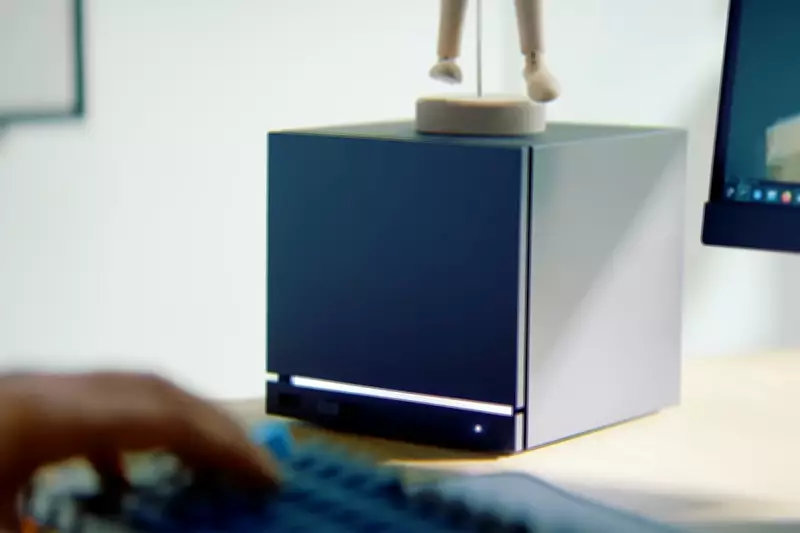
The Steam Machine is essentially a compact living-room PC disguised as a console, measuring about the size of a 6-inch cube. It runs SteamOS and supports features like fast suspend and resume, cloud saves, and a Steam Deck-style interface. Design elements include a customizable LED light strip on the front, a built-in power supply, and a magnetic, removable front plate, with Valve planning to release 3D files for user customization.

Connectivity is robust, with twin display outputs via HDMI 2.0 and DisplayPort 1.4, four USB-A ports, a 10Gbps USB-C port, Gigabit Ethernet, Wi-Fi 6E, and Bluetooth 5.3. The console also includes a dedicated wireless receiver for pairing with the new Steam Controller. Valve has confirmed that while SteamOS is the default, users can install other operating systems, offering flexibility to run third-party apps and games outside of Steam.
In terms of performance, the Steam Machine delivers over six times the horsepower of the Steam Deck, targeting 4K gaming at 60fps with FSR upscaling. It uses a semi-custom AMD processor and graphics chip, with support for ray tracing, HDR over HDMI and DisplayPort, and variable refresh rate features like AMD FreeSync. Two models will be available at launch: a 512GB version and a 2TB version, both expandable via microSD cards and featuring 16GB of RAM with room for NVMe SSD upgrades. Early demos, such as one by The Verge running Cyberpunk 2077, suggest performance comparable to a PS5 Pro.
Steam Controller Enhances Gaming Experience
The Steam Controller is designed to work across all Steam devices, pairing directly with the Steam Machine. It features magnetic thumbsticks for improved responsiveness and durability, along with a magnetic charging puck that doubles as a wireless adapter. Options for Bluetooth or USB connectivity are available, and the controller includes motion controls through Grip Sense, which activates gyro aiming based on how it is held. Valve developer Pierre-Loup Griffais noted on the Friends Per Second podcast that the console supports HDMI-CEC, allowing it to control TV power and be powered on from the controller, a feature that was challenging to implement on a console PC.
Despite these advancements, Valve has cautioned that compatibility may not be perfect at launch, particularly for multiplayer games using kernel-level anti-cheat software, which can hinder performance on SteamOS even with Valve's Proton compatibility layer. As the gaming community awaits further updates, the Steam Machine represents Valve's bold entry into the competitive console market, blending PC flexibility with console convenience.





