

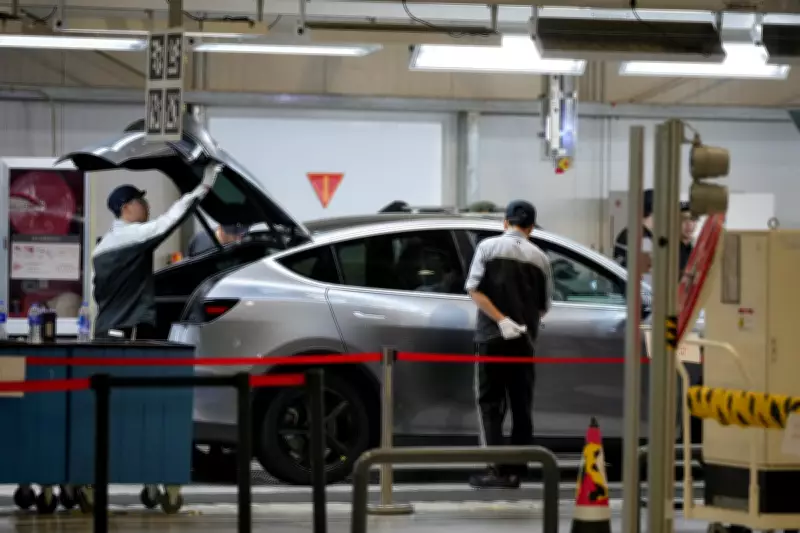
Tesla Executive Highlights Shanghai Factory's Role in Robot Manufacturing
Tesla Inc. leadership has identified its Shanghai factory operations as a pivotal element in addressing the complexities of mass-producing humanoid robots. This announcement comes as the American electric vehicle manufacturer intensifies its strategic pivot toward robotics and artificial intelligence.
Key Statements from Tesla's Vice President
Wang Hao, Tesla's vice president and president of Tesla China, articulated this perspective during a government-organized tour of one of the company's Shanghai facilities. He emphasized that CEO Elon Musk has previously highlighted achieving production at scale as a fundamental hurdle in manufacturing humanoid robots.
Wang expressed confidence that the Shanghai manufacturing arm "is a golden key to solving this challenge," though he did not elaborate on the specific mechanisms through which the operation will bolster Tesla's robotic business. The Shanghai factory, which commenced operations in 2019, delivered 851,000 electric vehicles in 2025, representing over half of Tesla's global deliveries for that year.

Strategic Shift Toward Robotics and AI
Musk has been urging investors to redirect their attention from traditional car sales to what he envisions as a promising AI-driven future. This future includes robotaxis transporting millions without drivers and robots performing tasks such as plant watering and elderly care.
To underscore this transition, Tesla announced the discontinuation of its older Model S and Model X car models in the second quarter, with plans to repurpose its Fremont, California factory for producing Optimus robots. According to London-based technology research firm Omdia, Tesla shipped fewer than 500 general-purpose embodied, intelligent robots in 2025, yet the company remains at the forefront of AI advancements in the industry.
Expansion and Historical Context
Tesla entered the mainland Chinese market in 2013, with the Shanghai factory delivering its first made-in-China vehicles in late 2019. In 2025, a separate factory in Shanghai initiated production, marking Tesla's entry into commercial energy storage manufacturing in China. This expansion underscores the region's growing importance in Tesla's global operations.
The integration of Shanghai's manufacturing expertise is poised to play a critical role as Tesla navigates the challenges of scaling up humanoid robot production, aligning with Musk's broader vision of an AI-centric future.






