Valve's Steam Machine Console Delayed by AI Datacentre RAM Shortage
Valve has officially postponed the release of its highly anticipated Steam Machine console and increased its projected price, attributing the setback to a global shortage of RAM and storage components. In a recent blog post, the company announced that the compact gaming PC will now launch in the first half of 2026, a delay from the originally planned first quarter.
"When we announced these products in November, we planned on being able to share specific pricing and launch dates by now. But the memory and storage shortages you've likely heard about across the industry have rapidly increased since then," Valve stated. "The limited availability and growing prices of these critical components mean we must revisit our exact shipping schedule and pricing."
Impact of AI Datacentres on Component Costs
The rapid expansion of AI datacentres has more than doubled the price of RAM in recent months, creating a significant bottleneck for hardware manufacturers like Valve. This shortage has directly impacted production costs for the Steam Machine, forcing the company to delay announcing concrete pricing details. Valve had initially aimed to release pricing information by this point but is now reassessing due to these market pressures.

Following the success of the Steam Deck in 2022, Valve is targeting the living room market dominated by PlayStation and Xbox with the Steam Machine. This console is part of a trio of new hardware, which also includes the Steam Controller and the Steam Frame VR headset, designed to compete with offerings like the Meta Quest.
Steam Machine Release Date and Pricing Speculation
Valve confirms the Steam Machine will arrive in the first half of 2026, with the delay driven by the global component shortage. The company plans to distribute the console "the exact same way as Steam Deck", selling directly through Steam and via regional partners, potentially following a gradual, invitation-only launch similar to the Steam Deck's rollout.
In terms of pricing, Valve has indicated it will be "comparable to a PC with similar specs" but "positioned closer to the entry level of the PC space", aiming to be in the "same ballpark as other consoles" on the market. Speculation arose from a Czech retailer, Smarty, which listed prices in source code for the 512GB model at approximately £708 ($953) and the 2TB model at £796 ($1072). However, these are unofficial estimates and may include mark-ups, as Smarty is an authorised third-party seller.
Steam Machine Specs and Design Details
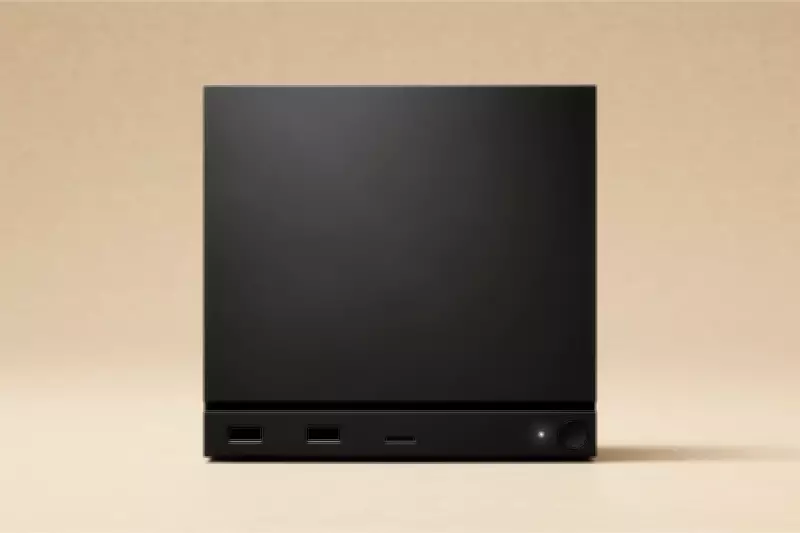
The Steam Machine is designed as a compact living-room PC, about the size of a 6-inch cube, making it easy to fit under a TV or on a desk. It runs SteamOS and supports features like fast suspend and resume, cloud saves, and a Steam Deck-style interface. Key design elements include a customisable LED light strip on the front, a built-in power supply, and a magnetic, removable front plate with plans for 3D-printable designs.
Connectivity options are robust, with twin display outputs via HDMI 2.0 and DisplayPort 1.4, four USB-A ports, a 10Gbps USB-C port, Gigabit Ethernet, Wi-Fi 6E, and Bluetooth 5.3. The console also includes a dedicated wireless receiver for pairing with the new Steam Controller, which features magnetic thumbsticks for responsiveness and a magnetic charging puck that doubles as a wireless adapter.
Valve emphasizes that the Steam Machine is not locked down like traditional consoles; users can install other operating systems and bootloaders, allowing for third-party apps and games outside of Steam. In terms of performance, it delivers more than six times the horsepower of the Steam Deck, powered by a semi-custom AMD processor and graphics chip. It supports 4K gaming at 60fps through FSR upscaling, with models offering 512GB or 2TB of storage, expandable via microSD cards.

Internally, the console reportedly includes 16GB of RAM and room for NVMe SSD upgrades. It supports features like ray tracing, HDR over HDMI and DisplayPort, and variable refresh rate technologies such as AMD FreeSync. Early demos suggest it can run games like Cyberpunk 2077 at settings comparable to a PS5 Pro, though compatibility may be imperfect at launch, particularly for multiplayer games with kernel-level anti-cheat software.
Valve developer Pierre-Loup Griffais noted that the Steam Machine supports HDMI-CEC, allowing it to turn TVs on and off, and can be powered on from the controller, a feature that was challenging to replicate on a console PC. This positions the Steam Machine as a versatile alternative to mainstream consoles, blending PC flexibility with console convenience.