

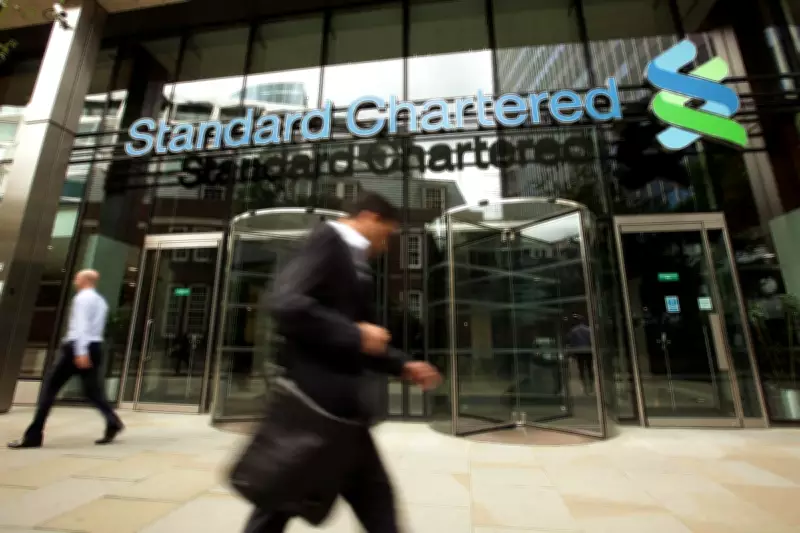
Standard Chartered has announced plans to cut approximately 7,800 jobs as it accelerates the integration of artificial intelligence across its global operations. The London-based banking giant confirmed that more than 15 per cent of its back-office roles will be eliminated by 2030.
Job Reductions and AI Integration
The move makes Standard Chartered the latest financial institution to reduce its workforce in favour of increased automation and advanced technologies. While the company did not disclose which specific locations would be affected, it operates corporate offices in Bengaluru, Shenzhen, and Warsaw.
Standard Chartered employs roughly 82,000 people, with the majority working in back-office functions. The bank stated: 'We are scaling practical uses of automation, advanced analytics and artificial intelligence to streamline processes, improve decision-making and enhance both client service and internal efficiency.'

Strategic Goals Under Bill Winters
The job cuts are part of a broader strategy led by Chief Executive Bill Winters to improve profitability, particularly in the bank's significant Asian operations. Standard Chartered aims to boost its return on tangible equity (RoTE) to more than 15 per cent by 2028, up from approximately 12 per cent in 2025.
The bank also intends to lower its cost-to-income ratio through this efficiency drive. Furthermore, it hopes that productivity improvements will raise income per employee by around 20 per cent by 2028.
Mr Winters commented: 'Our strategy is grounded in a simple belief: the world is becoming more connected, more complex and more cross-border. Our trusted ability to combine network and product capabilities to solve challenging cross-border problems is difficult to replicate. We are investing in the capabilities that will compound our competitive advantages and drive sustainable growth and higher quality returns over time, with clear targets in place.'
The announcement adds to growing concerns about AI's impact on employment. London Mayor Sadiq Khan has previously warned that AI risks becoming a 'weapon of mass destruction of jobs'.






