Carmakers that continue to focus on selling fossil fuel engines risk being “woefully behind” on technology by the end of the decade, according to RJ Scaringe, founder and chief executive of Amazon-backed electric vehicle (EV) maker Rivian.
Industry at a Crossroads
Scaringe said the automotive industry has reached a “fork in the road” between prioritising short-term profits and making the heavy investments—particularly in software—that will be necessary for long-term survival. In an interview in London, he noted that many manufacturers have chosen profits, ramping up production of petrol or hybrid pickup trucks and SUVs in the US and Europe.
Much of the automotive industry in the US and Europe has lobbied to slow the transition to EVs, favouring polluting but profitable cars with internal combustion engines. The retreat has been especially pronounced in the US, where the Trump administration has gutted incentives for EV production and purchase. According to Reuters, Ford, General Motors, Honda, Stellantis, and Volkswagen—all with large US operations—have collectively written off more than $70bn (£53bn) from their previous EV investments.
Short-Term Gains, Long-Term Risks
Scaringe warned that focusing on profitable petrol cars could backfire on manufacturers. “That looks really good financially for 2026, 2027, maybe even 2028. But as you get to the end of the 2020s and into the 2030s, I think we’re going to find a lot of companies are unfortunately woefully behind in terms of their technology,” he said.
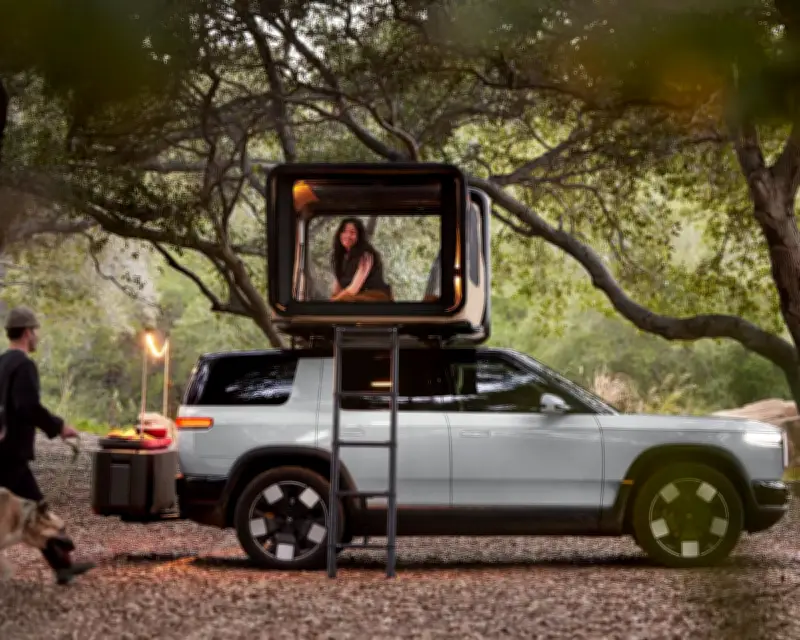
The turn against EVs has created uncertainty about demand for Rivian, which has just begun deliveries of its R2 SUV in the US. Scaringe described the R2 as “make or break” for the company as it strives to achieve profitability for the first time.
Rivian’s Financial Position
Rivian was founded in 2009 and delivered its first EV in 2021, the same year it went public. The company lost $3.6bn in 2025 amid heavy investment in the R2 and autonomous driving technology. Its market value, which soared above $100bn at its initial public offering, has since fallen to $21bn. However, Scaringe could receive share awards worth up to $5bn if he can push the share price to targets well above its all-time high.
Software as the Key Differentiator
Scaringe highlighted that the “more damaging and more dangerous aspect” of the shift away from EVs is not the delayed transition from petrol engines to batteries, but the failure to develop the software that increasingly controls every aspect of the vehicle. He explained that petrol cars are stuck with a design that scatters computer chips throughout the car—from the engine to seats and wing mirrors—rather than a centralised architecture that can be easily modified. Relying on a single computer reduces production costs by “thousands of dollars,” Scaringe said.
Strategic Partnerships and Market Outlook
Rivian’s heavy investment in digital technology and software has partially paid off. Alongside Amazon’s investment, which includes a deal for up to 100,000 delivery vans, Rivian and Germany’s Volkswagen agreed to a $5.8bn electric tech and software joint venture in 2024. Uber also invested $1.25bn in a deal that could lead to the sale of 50,000 robotaxis.
Scaringe believes Rivian can help increase EV adoption in the US despite the White House’s opposition. Electric cars made up 7.8% of all US car sales in 2025, and Scaringe said the R2 alone could eventually boost the market share by three or four percentage points. “The objective is to be a very large company” with annual sales in the millions, he stated.
Scepticism About Consumer Demand
Scaringe expressed scepticism about carmakers’ claims that buyers do not want EVs, arguing that the dominance of Tesla’s Model 3 and Model Y in the US is a “sign of a market starved for great choices.” Chinese carmakers dominate the global EV industry but are locked out of the US by prohibitive tariffs. Rivian also plans to sell the R2 in the UK and mainland Europe, though that will not happen for at least a year.