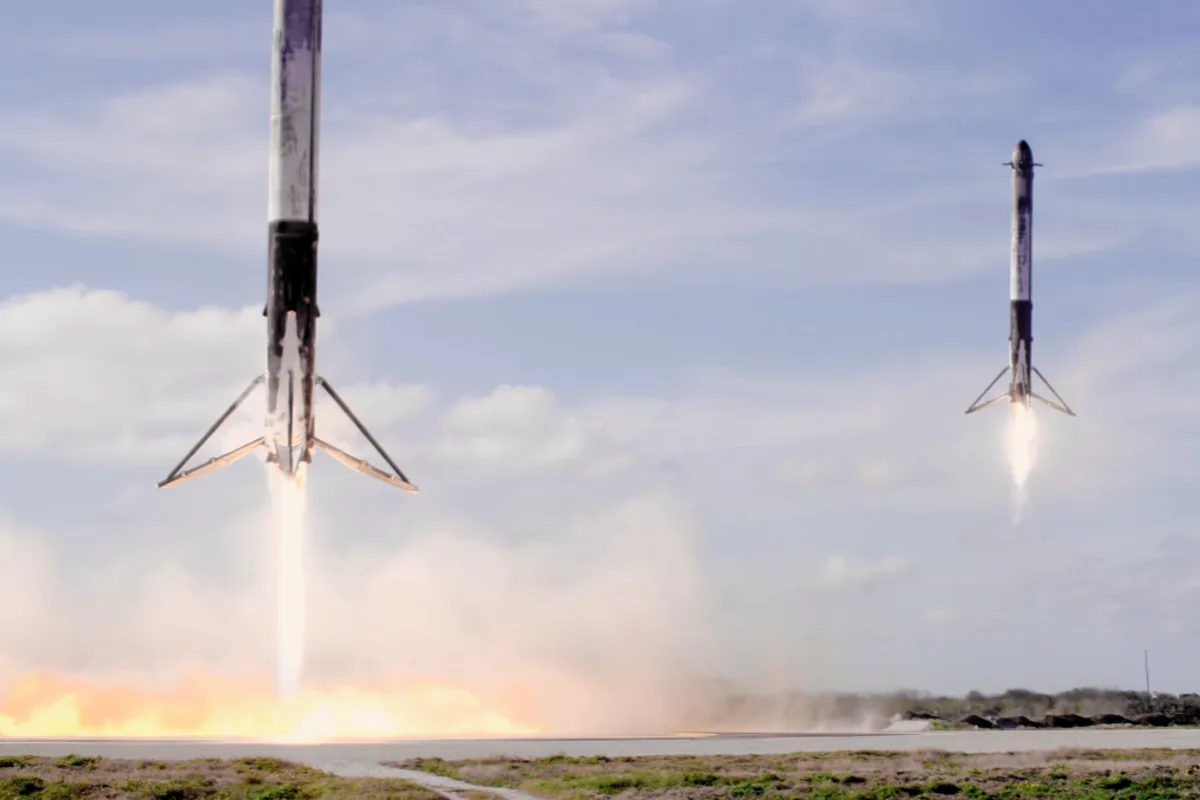
Elon Musk is planning to launch an average of one rocket every hour into space within five years, according to the US Federal Aviation Administration. The government agency revealed the ambitious launch cadence after meeting with SpaceX President Gwynne Shotwell, who told FAA Administrator Bryan Bedford on Wednesday that Musk’s company plans to increase its annual rate from 170 rocket launches in 2025 to 10,000 by 2031.
The FAA said that SpaceX would need to demonstrate improved reliability in order to be granted licenses for such a high number of launches, Reuters reported. SpaceX already holds the record for the most number of rocket launches in a single year, having delivered 165 spacecraft to orbit last year, as well as five suborbital Starship launches. That figure was more than double the number of orbital missions by China in 2025, and represented around 85 per cent of all US rocket launches.
The latest launch goal was revealed as SpaceX prepares for what could be the largest initial public offering (IPO) in history. Musk’s firm unveiled its IPO filing on Wednesday, which values SpaceX at $1.25 trillion. As part of the filing, SpaceX revealed that it intends to expand its dominance in space, with Musk already controlling more than two thirds of all active satellites.
Among the future plans listed in the IPO were in-orbit data centres, factories on the Moon and Mars, space tourism, and asteroid mining. “We believe space represents the largest economic frontier in human history,” the IPO stated. “We currently stand alone in our ability to deliver revolutionary breakthroughs across spaceflight and exploration, global connectivity, and artificial intelligence, enabling an age of abundance that we believe has the potential to propel an unprecedented expansion in the global economy.”
The success of the IPO could depend on the outcome of an upcoming test of Starship, which will see the world’s biggest rocket perform its first orbital flight test of 2026. It will be the first test of Starship Version 3 – an upgraded rocket system that SpaceX plans to use to transport crew and cargo as part of Nasa’s Artemis IV mission to the lunar surface in 2028.