The Humanoids Summit Tokyo opened on Thursday, featuring mechanical hands dexterous enough to thread a needle, childlike dancing robots, and adult-sized delivery assistants. Among the dozens of companies present, including Boston Dynamics and Toyota, Chinese newcomers like Booster Robotics and LimX Dynamics dominated the spotlight.
These Chinese firms have taken technology initially developed in Japan and the US, fine-tuning it for cheaper mass production. This mirrors trends in other Japanese industries, from consumer electronics to electric vehicles, where Japan initially led but failed to produce major commercial solutions. Tim Hornyuk, author of 'Loving the Machine,' described this as 'Galapagos syndrome,' where innovative Japanese products evolve in isolation and fail internationally.
One example is the Mini Pi Plus robot from China's High Torque, which dances and wiggles but cannot yet perform industrial tasks. It starts at $5,500. Tokyo-based GMO is working on a humanoid with camera eyes for Japan Airlines cargo handling, using inner robotics from Chinese firm Unitree. This aims to address Japan's labour shortage by having robots work interchangeably with humans.
Japan's finesse in manufacturing and a public receptive to robotics make it a breeding ground for development. A Pew survey found only 28% of Japanese are anxious about AI, compared to 50% in the US. Honda demonstrated a motorised four-fingered hand that could thread a needle, with assistant chief engineer Keisuke Tsuta confident in its durability and power over Chinese rivals.
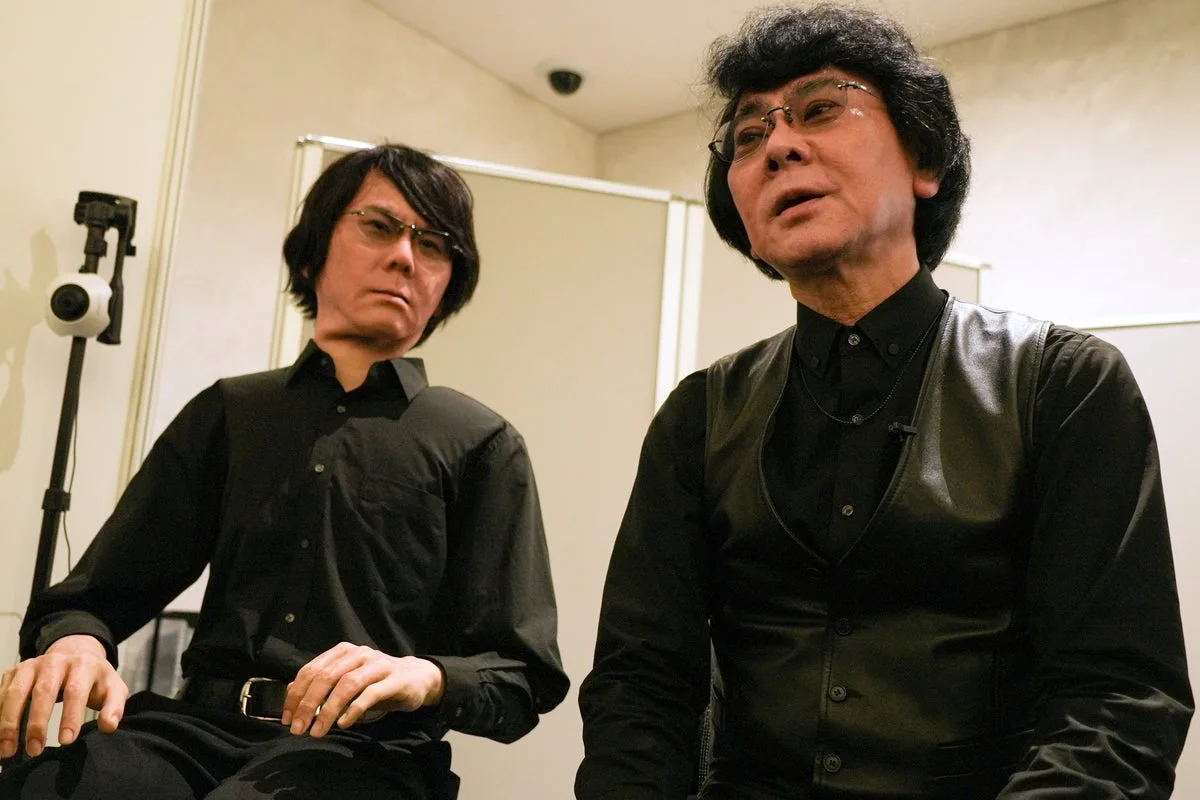
Osaka University Professor Hiroshi Ishiguro, who has worked on humanoids for decades, stressed that Japan's culture is ideal for integrating robots into society. His robotic clone answered questions about coexistence, saying, 'Robots are the mirror of human beings.' Ishiguro added, 'As long as people identify with what I have produced, I am a success.'