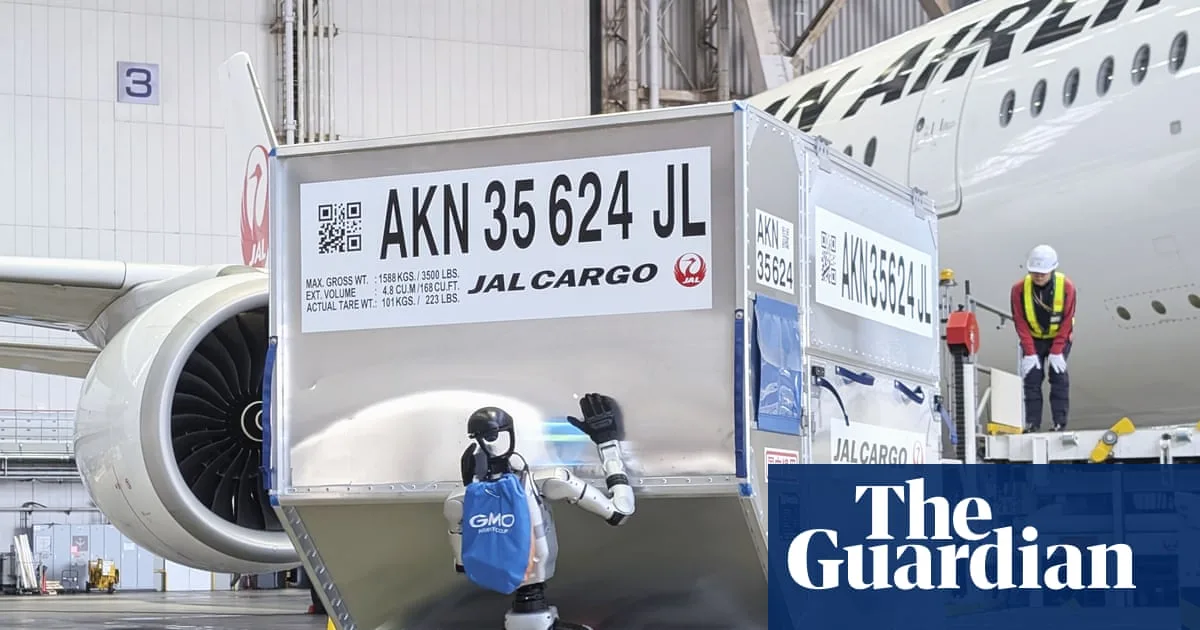
Japan Airlines is to introduce humanoid robots at Tokyo’s Haneda Airport on a trial basis from the beginning of May, as the country grapples with a surge in inbound tourism and an acute labour shortage.
The Chinese-made robots, manufactured by Hangzhou-based Unitree, will handle baggage and cargo on the tarmac. Standing 130cm tall, they can operate continuously for two to three hours before needing to recharge.
The trial, run in partnership with GMO Internet Group, is expected to run until 2028. The companies hope it will reduce the physical burden on human employees, who are increasingly stretched by record tourist numbers and a declining workforce.
Yoshiteru Suzuki, president of JAL Ground Service, said the robots would “inevitably reduce the burden on workers and provide significant benefits to employees”, though key tasks such as safety management would remain human-led.
The initiative comes as Japan faces a demographic challenge: more than 7 million people visited the country in the first two months of 2026, following a record 42.7 million last year. Estimates suggest the country will need more than 6.5 million foreign workers by 2040 to meet growth targets.
Tomohiro Uchida, president of GMO AI and Robotics, noted that while airports appear highly automated, back-end operations still rely heavily on human labour and suffer serious shortages. The firms are also planning to use the robots for tasks such as cleaning aircraft cabins.