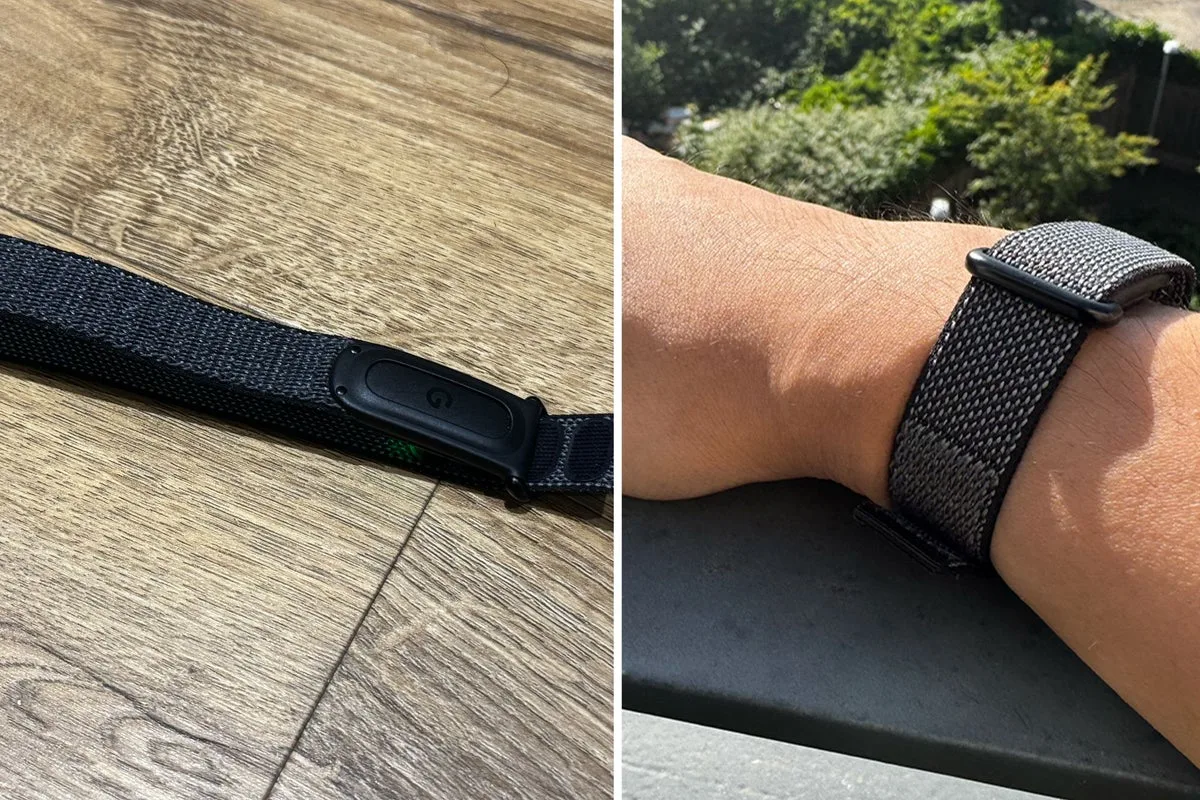
For years, Whoop has dominated the screen-free fitness tracker market, focusing on recovery and requiring a subscription. But Google’s new Fitbit Air, priced at £85, offers a cheaper alternative with no subscription and similar passive health tracking.
After two weeks of wearing both the Fitbit Air and Whoop 5.0 simultaneously, testing sleep, fitness, and recovery metrics like heart rate variability and respiratory rate, the Fitbit Air proves a strong contender. Its companion app, rebranded as Google Health, features an AI coach that personalises recommendations based on user data and conversations.
The Fitbit Air’s design is simpler and more comfortable than the Whoop. The tracker is a tiny pebble (17mm wide, 8.3mm thick) that slots into a Velcro band, making it easy to put on and remove. In contrast, the Whoop 5.0 requires unthreading the sensor to change bands and a clunky battery pack for charging. The Fitbit Air is so lightweight it can be forgotten during wear, ideal for sleep tracking.

While Whoop offers more band customisation, including bicep straps and clothing, the Fitbit Air comes in four colours with additional active and leather bands available. Setup is straightforward via the Google Health app, which uses a chat interface with the AI coach to build a user profile based on goals like reducing body fat or stress.