The Silent Revolution on London's Streets
Past the imposing walls of Pentonville Prison we glide, maintaining a steady 18 miles per hour. Up Caledonian Road, turning left onto Hillmarton Road, then – after a brief pause – emerging onto Camden Road. All executed with impeccable lane discipline and perfect driving etiquette.
Instead of the usual cacophony of horns and gestures, we stop politely when a parked car's door suddenly swings open into our path. There's no cursing when pedestrians wander across the road without looking. We wait patiently for the 360 bus to complete its stop, drop passengers, and pull away again.
An Oasis of Calm in Urban Chaos
When surrounding vehicles erupt in angry honking over a minor delay, and emergency vehicles race past with flashing lights and screaming sirens, we remain in our serene bubble of tranquility. This peaceful atmosphere isn't due to a meditating cabbie or pharmaceutical assistance. The driver simply doesn't exist.

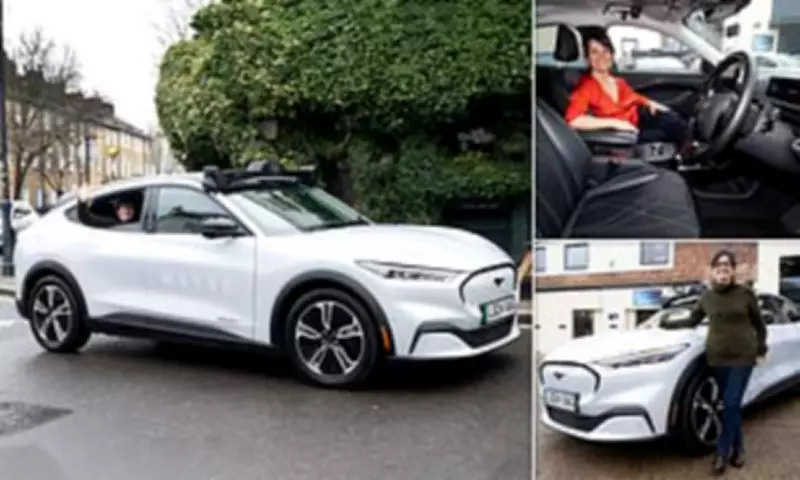
The steering wheel moves autonomously. Indicators activate themselves. Windscreen wipers spring to life at the first hint of rain. The accelerator depresses gently on its own accord. I'm experiencing London's streets from within a driverless Ford Mustang Mach E, powered by software from British AI company Wayve.
This company employs 1,000 people, has reportedly secured billion-dollar funding, and represents what many believe to be the future of British motoring.
Discreet Technology, Powerful Capabilities
Unlike previous autonomous vehicle prototypes that resembled Noddy cars with visible rooftop technology, this "robocar" appears remarkably normal. Only a sleek black bar above the windscreen – housing seven cameras providing 360-degree vision extending three football pitches in length – reveals its AI capabilities.
These cameras feed into an extremely powerful AI "brain" located in the boot, protected by such secrecy that photography is prohibited. Utilizing four types of sensors, the system navigates other vehicles, pedestrians, cyclists, and even pets without endangering passengers.
The British Approach to Autonomous Driving
By year's end, this AI software could become a regular feature in London's transport landscape – initially in driverless Uber taxis at slightly higher fares than traditional cabs, potentially later in private vehicles. Imagine commuting to work, heading to the pub, or completing the school run while reading the newspaper or enjoying breakfast in what was once the driver's seat.
This technology originates from Alex Kendall, an energetic 33-year-old New Zealander whose childhood combined mountain climbing with robot building. After completing a Cambridge PhD in computer vision and robotics, he dedicated himself to realizing fully automated vehicles.
"Our roads present unique challenges," explains Kendall. "London isn't orderly but a tangled medieval mess with roundabouts, constant roadworks, oblivious pedestrians, and 1.5 million sometimes-kamikaze cyclists."
Safety First: The British Regulatory Framework
Britain's stringent regulations under the 2024 Automated Vehicles Act require self-driving vehicles to achieve safety levels equivalent to or exceeding careful human drivers. During current demonstrations, while Wayve cars operate via AI, a safety officer must occupy the driver's seat – monitoring but not intervening unless necessary.
My safety officer, Vitor, previously worked as a live-in carer for spinal injury patients, making him exceptionally skilled at smooth driving. Once AI mode activates, however, he cannot speak, turn around, or even listen to passengers – his sole responsibility being to monitor and potentially press the emergency stop button.
This precaution seems wise considering the 2018 Arizona incident where an Uber autonomous vehicle struck and killed pedestrian Elaine Herzberg while its safety driver streamed television content.
How Wayve Differs from Competitors
Unlike rival Waymo, which plans to launch driverless taxis in London later this year, Wayve doesn't rely on remote telephone operators to resolve difficulties like locked passengers or disobedient vehicles. Kendall's AI software learns to drive like humans rather than memorizing specific routes.

"Our vehicles are adaptable," Kendall emphasizes. "They've navigated Paris's Arc de Triomphe, Swindon's Magic Roundabout, and Tokyo's Central Market. They can drive anywhere."
Recently, Kendall filmed himself being driven autonomously to Buckingham Palace to receive an OBE for AI services – though the video revealed the car taking a circuitous route and running a red light, drawing criticism particularly from London taxi drivers.
Industry Resistance and Public Concerns
Steve McNamara of the Licensed Taxi Drivers Association expresses skepticism: "It's a gimmick... not safe. A solution for a problem we don't have." He raises valid concerns about cleaning, lost property, cash payments, and the myriad unexpected requests taxis routinely handle.
Yet potential benefits include unprecedented calm, customizable climate controls, entertainment options beyond Talk Radio, and avoidance of unwanted political or football discussions during urgent journeys.
Passengers can even select driving styles ranging from "Calm" (cautious, grandmotherly driving) to "Bold" (quicker acceleration and more assertive turns described as "more London").
The Safety Debate and Economic Potential
Autonomous vehicle advocates highlight sobering statistics: 1.2 million global car accidents annually, UK fatalities or serious injuries every 16 minutes, and 94-96% of accidents caused by human error – problems they believe driverless technology will substantially reduce.
They also note most cars sit unused 97% of the time, while government forecasts predict the driverless industry could contribute £42 billion and 40,000 jobs to Britain's economy by 2035.
Less discussed are teething problems like San Francisco's December traffic chaos caused by driverless vehicle power outages, or recent incidents where autonomous cars confused bus advertisements with real people.
The Future of London Transport
Wayve represents one of Britain's best-funded and most promising tech companies, generating both excitement and apprehension among those wary of AI's rapid advancement. As one Wayve employee notes: "Everything new is daunting – computers, typewriters, cars replacing horses. It's progress that seems intimidating until we arrive."
Kendall stresses Wayve aims not to replace existing taxis but to provide another option – safer, more soothing, though potentially pricier. The technology likely appeals to time-pressed professionals and older individuals tired of buses, though perhaps not for unsupervised school runs with energetic children.
For many Londoners, adapting to becoming a nation of backseat passengers in autonomous vehicles may require gradual adjustment, but the driverless revolution has unmistakably arrived on Britain's streets.