China has unveiled an AI-powered humanoid robot that it plans to send to the Moon as part of its 2029 Chang’e-8 mission. Designed by the Hong Kong University of Science and Technology (HKUST), the 100-kilogram robot will act as a porter to transport and install instruments at various lunar locations ahead of a crewed landing.
The robot features a humanoid upper body with two arms set atop a four-wheeled module equipped with solar panels. HKUST professor Gao Yang said the robot's onboard artificial intelligence will be able to identify and trace objects, allowing it to formulate a strategy before executing a task.
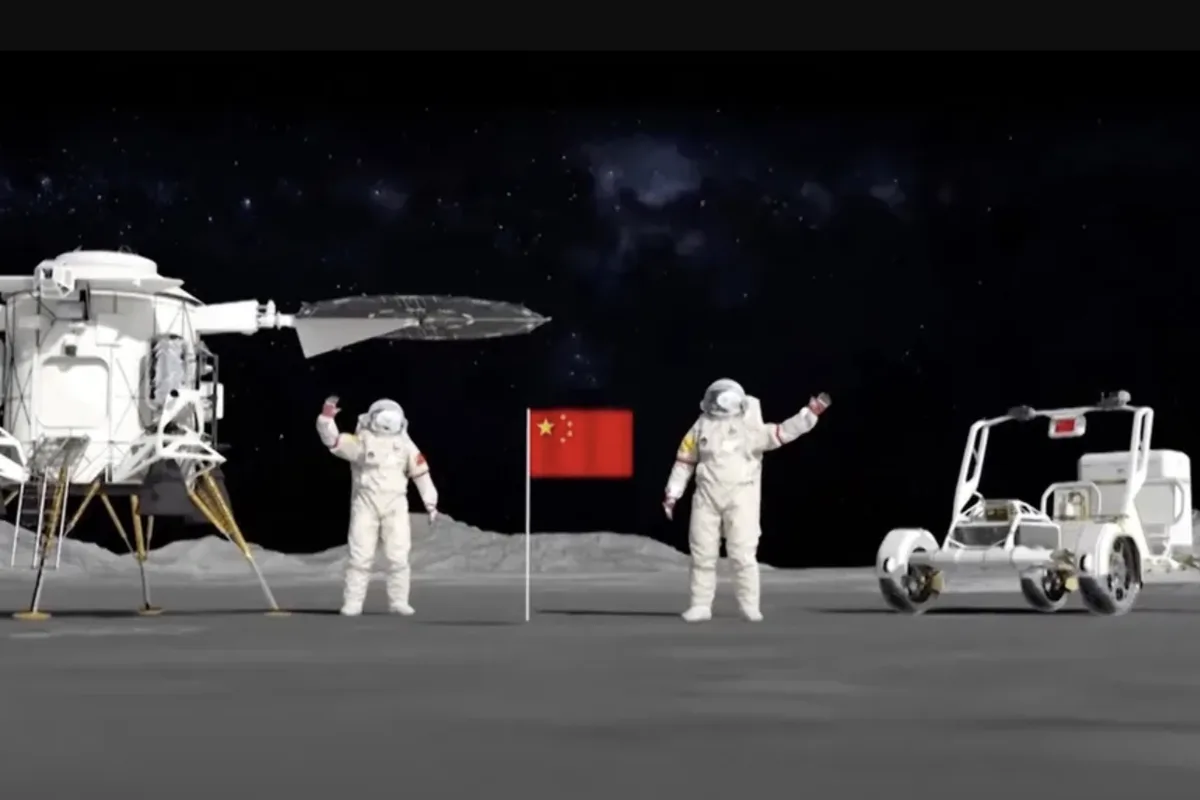
China is planning to send humans to the lunar surface by 2030, having pursued a highly ambitious space program over the last few decades. Meanwhile, NASA is aiming to return astronauts to the Moon by 2028 as part of the Artemis IV mission, though the timeline has shifted several times due to technical hurdles and development delays.
At a Senate Committee hearing in September, former NASA administrator Jim Bridenstine warned that the complexities of SpaceX's Starship Human Landing System could see the US fall behind China in the race to return humans to the Moon. He noted that the architecture requires multiple launches and relies on challenging technologies yet to be developed.