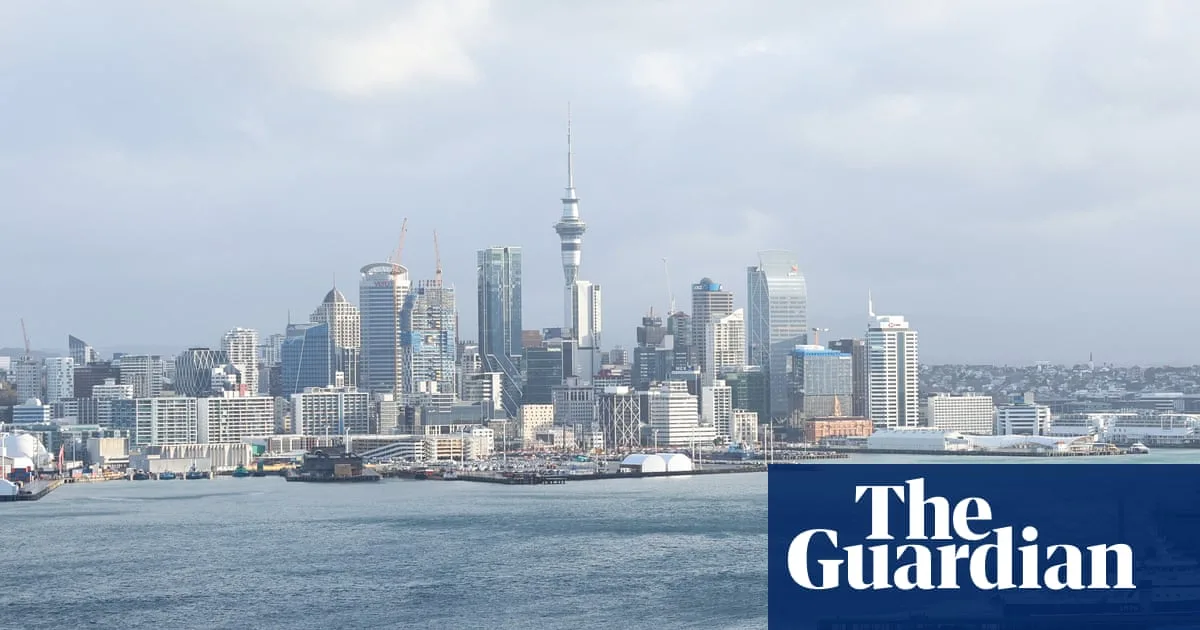
New research has revealed that the Mangatangi Fault, located about 50km south-east of Auckland's city centre, is active and could produce a 6.8 magnitude earthquake. The fault runs along the Hunua ranges near the southern suburbs of Pukekohe, Drury and Takanini. The study, published in the New Zealand Journal of Geology and Geophysics, shows the fault has ruptured within the past 10,000 years, classifying it as active under the definition of movement within the last 125,000 years.
Geologist Dr James Muirhead, a senior lecturer at the University of Auckland and co-author of the research, warned that a full rupture of the fault could have serious consequences for South Auckland and potentially central Auckland. This finding challenges the long-held assumption that Auckland is largely immune from intense seismic activity, which led to the city being exempted from earthquake building regulations in 2025 after lobbying by Mayor Wayne Brown.
The study marks the first time a faultline in Auckland or the Hunua Ranges has been radiocarbon dated, providing precise information on when it last ruptured. Dr Muirhead noted that the research highlights how little is known about the region's seismic history. However, Anna Kaiser, chief scientist for earthquake hazards at Earth Sciences NZ, said the study alone may not change Auckland's overall seismic risk relative to other regions but is important for refining the national seismic hazard model.
New Zealand experiences about 20,000 earthquakes annually, with most occurring in the South Island and lower North Island. The 2011 Christchurch earthquake, a 6.3-magnitude event, killed 185 people and destroyed much of the city centre. Dr Muirhead stressed that further research into Auckland's faultlines is needed to determine whether current building regulations are appropriate, as the city's hazard risk may be 'significantly higher' than currently believed.
In response, Minister for Building and Construction Chris Penk stated that emerging research would be considered but a single study does not warrant immediate regulatory change. Mayor Wayne Brown dismissed the research as 'nonsense', citing differences in geology between the fault area and central Auckland. Researchers emphasise the need for more investigation to prevent a Christchurch-style disaster in New Zealand's largest city.