
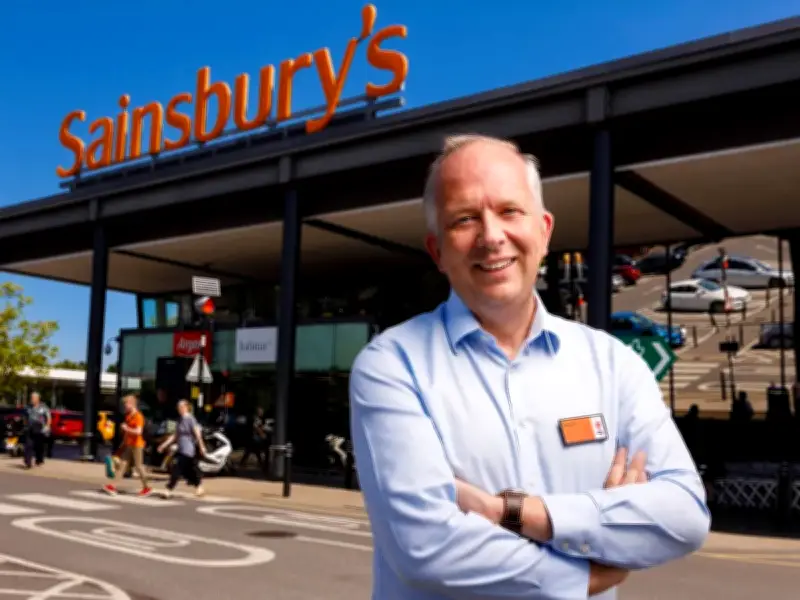
Sainsbury's has raised its full-year profit forecasts even as it reported a slowdown in sales growth and cautioned that trading conditions would remain "tough" in the months ahead.
Britain's second-largest supermarket said the "consistent strength of our customer offer" is driving sales growth and gains in market share, despite chief executive Simon Roberts acknowledging that "many households are finding things tough at the moment".
Profit target raised
Sainsbury's has lifted the lower end of its full-year profit target from £965m to £1.025bn, with an upper range of £1.065bn.
The FTSE 100 retailer's like-for-like sales growth eased in the three months to September, from 2.3 to 1.2 per cent. Grocery sales growth slowed from 3.5 to 2.2 per cent, while general merchandise and clothing sales improved marginally, from a decline of 3.7 to 2.9 per cent.
Focus on food
Since taking the helm at Sainsbury's in 2020, Roberts has steered the grocer towards a sharper focus on its food proposition. In July, Sainsbury's offloaded Argos – the struggling general retailer it owns – to Swift Partners for £120m, as reported by City AM.
The financial impact of this disposal pushed the firm to a pre-tax loss of £164m in the first half of the year, although its underlying pre-tax profit rose by five per cent to £366m.
Roberts told shareholders on Thursday that shedding Argos would help forge a "simpler, more focused Sainsbury's". The grocery chief added that strong demand for its premium Taste the Difference range is underpinning its food sales growth.
Premium demand strengthens
Sales within this segment increased by more than six per cent during the second quarter. The retailer's "restaurant-quality" Taste the Difference Discovery Range – positioned at an even higher price tier and featuring BBQ and Italian options – will shortly expand to 200 products, Roberts confirmed.
Appetite for premium food continues to strengthen despite reports of tumbling consumer confidence. Roberts said: "We know many households are finding things tough at the moment and we're making it easier for customers to enjoy good food every day, whatever their budget."
"That's why more people are choosing us for their weekly shop, driving continued volume growth in the first half."
Soaring energy and supply costs triggered by the Iran war are expected to push food inflation above six per cent by July next year, yet supermarket chiefs have thus far declined to confirm whether the conflict is placing pressure on their prices.
Tesco boss Ken Murphy has said he doesn't recognise industry inflation forecasts while Murphy stated earlier this year that grocery price rises have not been as severe as anticipated.
Market share and competition
Sainsbury's market share declined from 15.3 to 15.2 per cent in the year to October, according to Worldpanel data, positioning it behind market leader Tesco, on 27.8 per cent.
The supermarket's efforts to close the gap on its rival were thrust into the spotlight earlier this month when it emerged that it had held merger discussions with smaller rival Morrisons. The supermarket withdrew from talks in February after failing to agree on price, but the disclosure was widely interpreted within the retail sector as marking the beginning of a new round of consolidation amongst Britain's retailers.




