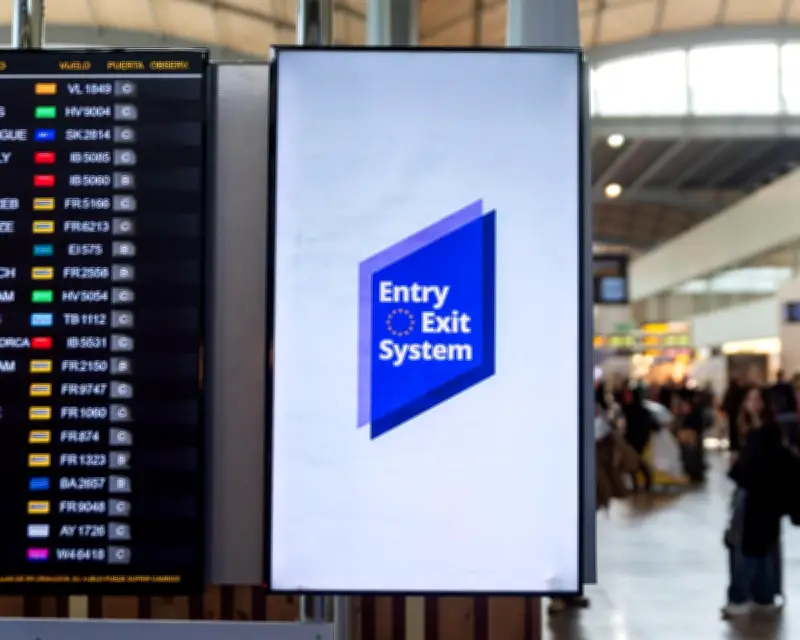
The European Union's new digital entry and exit system (EES) has led to significant delays and missed flights for holidaymakers, prompting travel industry groups to call for its suspension during the peak summer period. Since its full rollout in April 2024, the system requires most non-EU citizens, including those from the United Kingdom, to register biometric information such as fingerprints and facial photographs at the border.
What is the EES?
Introduced to streamline border crossings and enhance security, the EES was launched in October 2023 and fully implemented by April 2024. It applies to travellers entering the Schengen area, which includes 25 of the 27 EU member states plus Iceland, Liechtenstein, Norway and Switzerland. Citizens of Schengen countries, Ireland and Cyprus are exempt. The system will eventually replace manual passport stamping.
Upon arrival, travellers typically use self-service kiosks to provide their name, passport details, fingerprints, and entry/exit dates. For those travelling via the Port of Dover, Eurotunnel LeShuttle at Folkestone, or Eurostar at St Pancras International, checks are completed before leaving the UK. Returning travellers or those who have previously registered may experience quicker processing, though they still undergo checks and may need to re-register.
What Problems Have Occurred?
The rollout has been plagued by difficulties, resulting in lengthy queues and missed flights. In late 2023, Lisbon airport suspended the system after waits reached seven hours. In April 2024, approximately 100 passengers were stranded in Milan after a flight to Manchester departed without them due to three-hour queues. Last month, passengers missed a flight from Athens to Luton amid similar delays.
In an open letter to European Commission President Ursula von der Leyen on Wednesday, travel industry groups stated the situation had "reached a critical point," with waiting times increasing significantly since April, reaching up to five hours during peak periods. The letter was signed by ACI Europe, Airlines 4 Europe, and the International Air Transport Association (IATA).
Can the Checks Be Suspended?
Last week, the head of the company operating Rome's airports called for suspension to avoid a "disaster" during summer. ACI Europe noted that individual EU governments, not airports, have the authority to suspend the system. Its president, Stefan Schulte, urged politicians to stop pretending the EES is working fine, stating: "It is not."
In May, French police temporarily suspended checks at the Port of Dover as thousands faced long delays in hot weather. A port spokesperson said they invoked a clause in EES regulations allowing temporary relaxation of checks.
Advice for Travellers
Passengers are advised to arrive up to three hours before their flight, but this may not help if airlines open baggage check-in only two hours before takeoff. One family told the Guardian they missed their easyJet flight from Málaga due to long queues and paid £1,000 for new flights. Taking only cabin baggage can bypass luggage check-in delays.
If a flight is missed, airlines are not obliged to rebook passengers for free, as border delays may be classified as extraordinary circumstances under EU regulations, according to travel company Kayak. The Association of British Insurers (ABI) stated that travel insurance is unlikely to cover losses from EES delays. Admiral Insurance added: "We wouldn’t reimburse you for delays caused by the new EU entry/exit system, but we would help out if your trip was delayed due to severe weather or strikes."