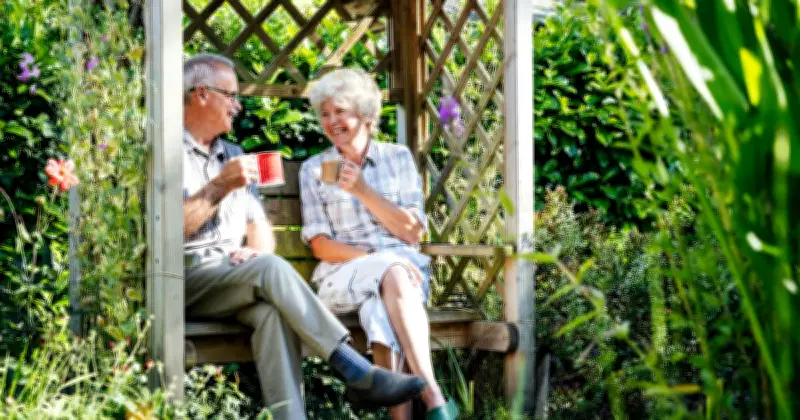
British families are being encouraged to move elderly relatives into garden log cabins to avoid exorbitant care home fees, a pioneering proposal that also fosters family closeness and offers a cost-effective housing solution. The trend, championed by Norwegian Log Cabin company CEO Ed Taylor, could help grandparents stay independent while enabling younger generations to save for a home.
How a log cabin changed one family's life
Ed Taylor was inspired after his wife Hannah's grandmother, Aileen, then 82, moved into a Norwegian Log Cabin in the garden of her daughter Rosie's home near Marlborough, Wiltshire, in 2012. Aileen, a piano teacher, was determined to avoid residential care. The 60-square-metre, two-bedroom cabin was specially designed to accommodate her piano and provided ample space for family visits. She lived there happily for two years until her death in 2015 at age 85, spending quality time with her daughters, grandchildren, and great-grandchildren.
After Aileen's passing, the cabin became a home for Rosie's daughter Charlotte and her partner Phil, who lived there for ten years. During that time, they saved enough for a house deposit and had two daughters, Penny and Flissy, now nine and six. The couple recently moved into their own home, crediting the cabin for enabling their savings.
Growing demand for granny annexes
Norwegian Log currently installs around 50 cabins annually across the UK, with about 90% used as granny annexes. The cabins are manufactured in Scandinavia and shipped to the company's Reading base in kit form. The firm, trading since 1984, now employs over 40 people and turns over close to £10 million a year, with substantial growth forecast as more Britons seek innovative housing for elderly relatives.
Taylor noted that an aging population and rising residential care costs are driving demand. He said: "The prospect of residential care is something that many elderly people, like Aileen, just will not entertain. But a purpose-built, single-storey log cabin in the garden of a loved one's home means that family is close by for care and reassurance but also brings the benefit of not living under the same roof, which is crucial for independence."
Secondary market and staycation boom
A secondary market exists for log cabins used as holiday accommodation, with Taylor forecasting significant growth as Britons increasingly opt for UK holidays over overseas travel. He added: "The trend for granny annexes is increasing and with that and the staycation boom we are predicting significant growth for the business in the coming years."
Taylor, who previously worked in construction, was so impressed by the cabin's quality and its impact on family life that he joined the company, eventually leading a management buyout with colleague Paul Williams and backers. He recalled: "I was working in the construction sector myself at the time and when my wife Hannah told me her grandmother Aileen was moving into a log cabin... I didn't know what to expect. I was probably imagining some kind of flimsy shed but when it arrived I was completely blown away by the quality of the product and by the impact it made on Aileen's life and all the family."
Easy planning and cost benefits
The log cabins benefit from relatively low costs and straightforward planning application processes, making them accessible for multi-generational living. Taylor emphasized: "It put her right at the heart and the thrust of family life, letting her spend lots of time with her daughters Rosie and Tina as well as all her grandchildren and great grandchildren. It really was a wonderful time."
As care home fees continue to rise, garden log cabins offer a practical alternative, keeping families together while providing independence for elderly relatives and a potential stepping stone onto the property ladder for younger generations.